TABLE OF CONTENTS:
Concept: — Introduction — Material Selection — Source Selection — Key Question — Hypothesis — Principles of Indexing and Research Structuring
Theoretical Framework: — Paul Schäfer — Dignidad Colony — Augusto Pinochet — Directors Leon and Kosinya — «The Wolf’s House»
Main Body: — Stop-Motion Analysis
Conclusion and Research Findings
Bibliography
Image Sources
1. Concept. Introduction
This visual exploration addresses several themes:
- Collective and personal trauma;
- Fragmented trauma;
- Bodily trauma;
- Original animation;
- Folklore;
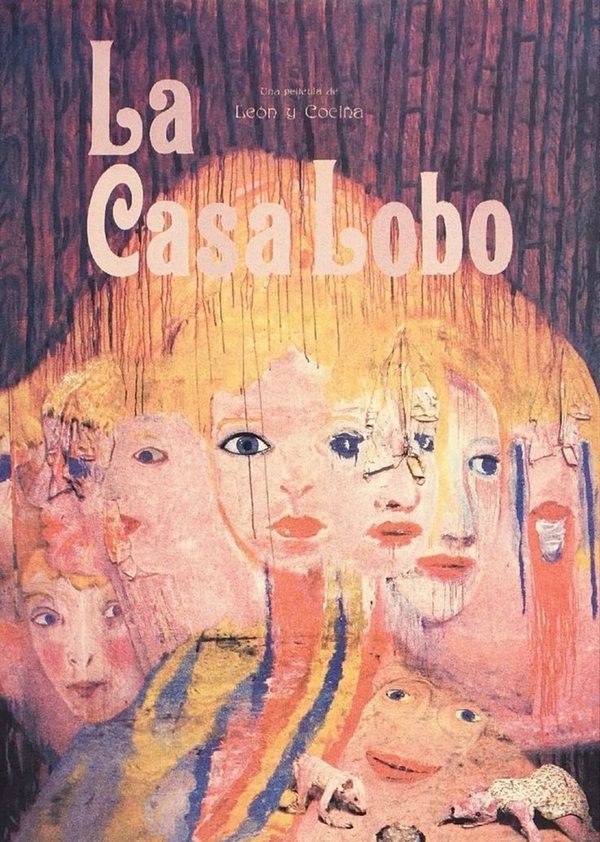
The visual study is dedicated to analyzing the representation of traumatic memory in the animated film «The Wolf House.»
The relevance of this topic stems from the growing interest in contemporary culture regarding issues of collective memory, trauma, and methods of its artistic representation. Animation holds particular significance in this context, as it is capable of visualizing unstable psychological states, the fragmentation of memories, and the distortion of perception. Unlike documentary film, animation allows for the conveyance of subjective experience through the transformation of space, form, and image material, rather than a literal reconstruction of an event.
The selection of this film is motivated by the fact that this work relates to a real story—the history of the Dignidad colony, a closed German commune in Chile. The film is not a direct historical narrative, but rather a visual metaphor for fear, isolation, and psychological control. The space of the house, the instability of the characters, and the materiality of the image form a distinct visual language through which the theme of traumatic memory is revealed.
Concept. Material Selection
The material selection principle for this research is based on analyzing key visual motifs in the film related to the representation of trauma and memory. The scenes chosen for this work are those where the transformation of space, the deformation of bodies, and the characters' interaction with the environment are most clearly evident.
Particular attention is paid to scenes featuring the imagery of the house, the wolf, pigs, and the bird in a cage, as well as the materiality and texture of the animation. I will be analyzing not the plot events, but the methods of image organization and the visual mechanisms that impact the viewer.
Concept. Source Selection
To establish a solid theoretical foundation and better understand the film’s narrative, I studied various articles concerning Chilean history in the late 20th century, Augusto Pinochet, Paulo Freire—the colony’s creator—and the Dignidad commune itself. I also researched literature focusing on the film’s directors—Cristóbal León and Joaquín Cosinha—their work in general, and the process of creating «Wolf House.»
Concept. The key question underpinning this research is:
How do directors represent the traumatic memory of real historical events in animation?
Concept. Hypothesis
The hypothesis is that the animated form of a film allows directors to depict memory as a process of constant return and transformation, primarily through the texturing and deformation of objects.
Concept. Principle of research structuring
The research will be structured in a simple and logical manner.
Following the concept, there will be an essential theoretical section that provides understanding of the plot and historical chronology while viewing the film. The theoretical section will contain several subsections:
— The biography of Paul Schäfer—the founder of the colony and a tyrant who destroyed hundreds of innocent lives.
— A more detailed account of the Dignidad colony itself and the horrors occurring within it.
— A brief digression on Augusto Pinochet as the dictator who supported Schäfer. — The biography and creative journey of the directors Leone and Coens.
— An introduction to stop-motion animation and the process of its creation.
Next, after the theoretical section, there will be the main part featuring an analysis of selected film scenes. To make the research easier to understand, I have also divided the analysis section into several of the most important and central themes of the film:
— The beginning of the film and the start of the animation. — The texture and materiality of the film. — The imagery of the House, the Pigs, and the Wolf. — The theme of isolation and control. — The theme of trauma’s consequences. — The main message of the film.
Finally, after the analysis, I will determine whether my hypothesis was correct and draw my conclusions.
2. Paul Schäfer
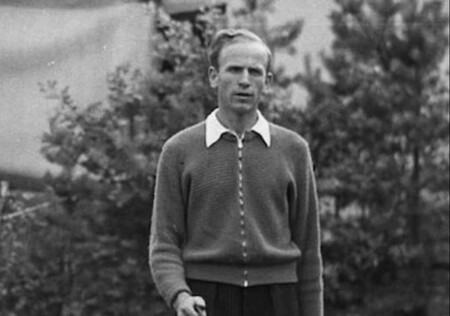
Paul Schäfer was a German religious preacher and founder of the Dignidad colony in Chile.
Born in Germany in 1921, he began his religious activities after World War II, establishing his own community focused on strict discipline and isolation from the outside world.
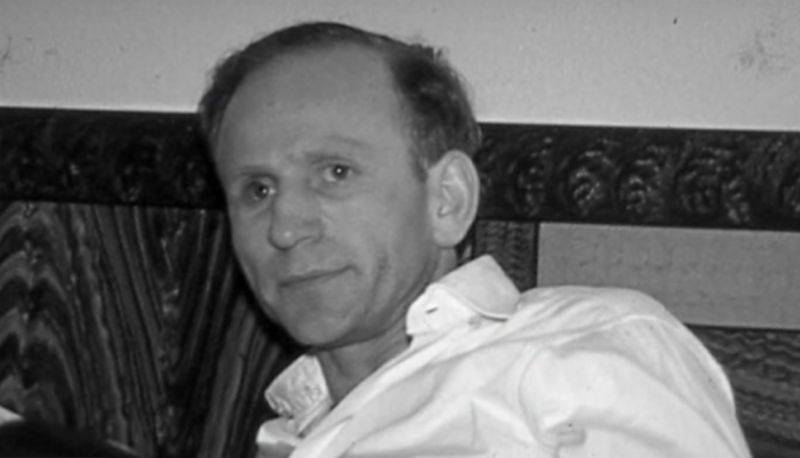
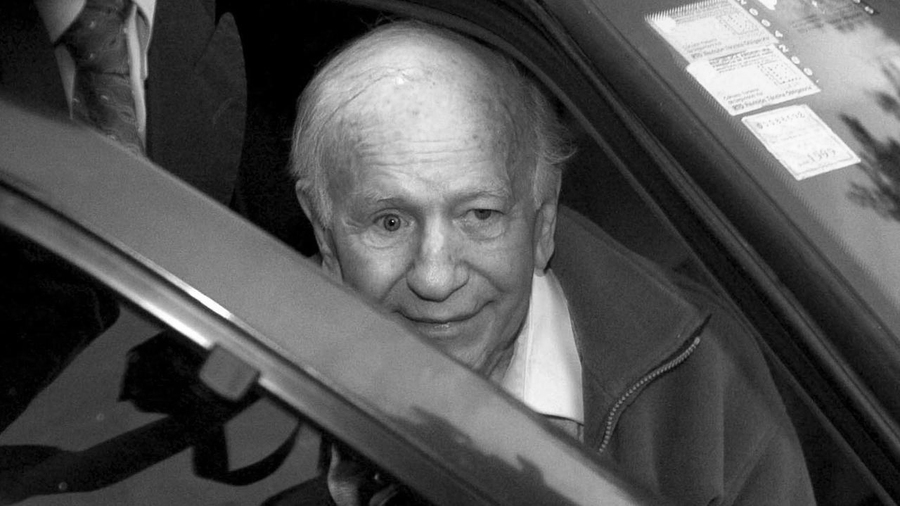
Photo by Paul Schafer (photographers and year unknown)
In the late 1950s, Schäfer was already accused of child abuse, which led him to leave Germany and emigrate to Chile with his followers.
In 1961, he founded the closed settlement of Dignidad, formally presented as a charitable agricultural commune for German refugees. In reality, the colony operated as an authoritarian system with strict control over the residents, isolation from the outside world, and the suppression of personal freedom.
Later, numerous instances of physical and sexual violence within the colony also came to light.
«Paul Schäfer was sentenced to 33 years in prison for sexual assault and torture of children.»
Dignidad Colony (or Villa Bauer)
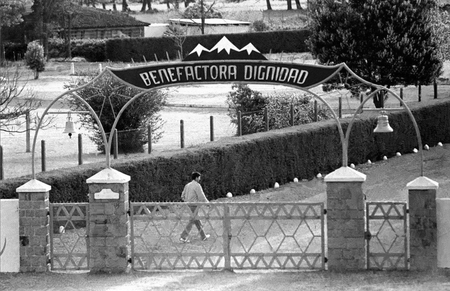
The compound was situated on a remote territory spanning 17,000 hectares and was virtually isolated from the outside world. The communal space was guarded, contact with the outside environment was severely restricted, and information about what was happening within the sect was meticulously concealed. The participants of the compound lived under a strict routine and were under constant surveillance by the leadership (hidden microphones, cameras, etc.).
«My naked male companions and I were tortured with electric shocks, blindfolded and with earplugs inserted, strapped to iron beds. If I screamed, we were lowered into a tub of ice water. Then the bare wire was pressed against our bodies again…»
©Werner Schmidtke (former inmate of Dignidad)
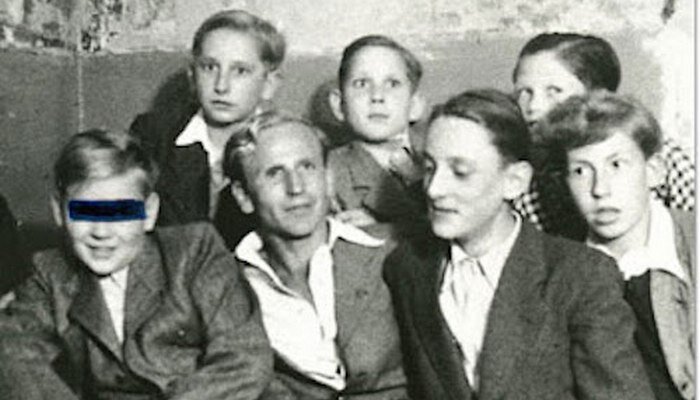
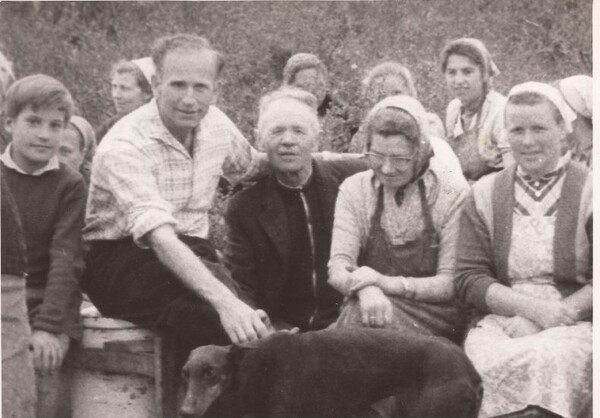
Photo of Paul Schafer with the commune residents (photographer and year unknown)
Within the commune, family relationships disintegrated: children were raised separately from their parents, husbands were separated from wives, and distinct social groups were formed based on gender and age. Schefer constructed a model of absolute power based on fear, religious rhetoric, isolation, and violence.
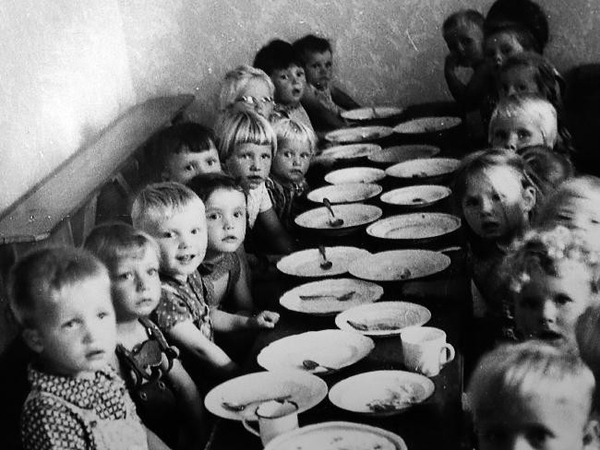
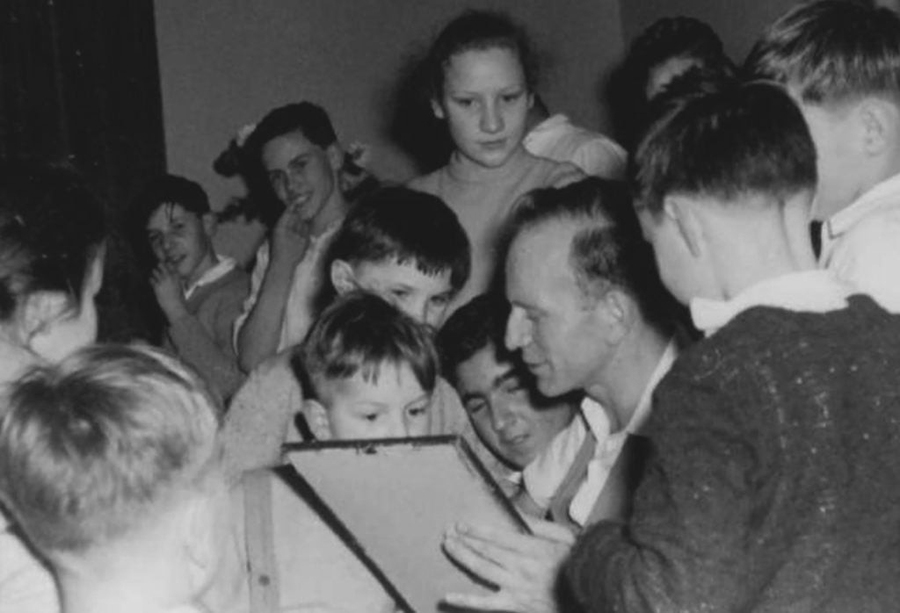
Photo of Paul Scheffer with children from the Dignidad colony (photographers and year unknown)
…the protests provoked P. Schefer and his followers to «intensify physical and psychological repression, including the use of beatings, electrical torture, solitary confinement, electric shock, and psychotropic drugs in necessary dosages to diminish physical capacity and the general will to leave.»
In the colony, people—both adults and children—performed slave labor for twelve or more hours in exchange for food and clothing. Escaped convicts and criminals maintained order, punishing any community resident who misbehaved with torture and solitary confinement.
Schefer himself eventually became a successful businessman, selling agricultural products created by the sect members to officials and high-ranking individuals.
The colony experienced its greatest prosperity for Paul after Augusto Pinochet took power.
«The barracks were cold, and it smelled like gas. Shouts and the sound of blows drifted from behind the door, occasionally muffled by the crackle of a stun gun. It was foolish of me to defend that girl; we probably won’t see her again. Perhaps it’s true that we’ll never get out of here. And death is the only ending for us.»
Support for Augusto Pinochet
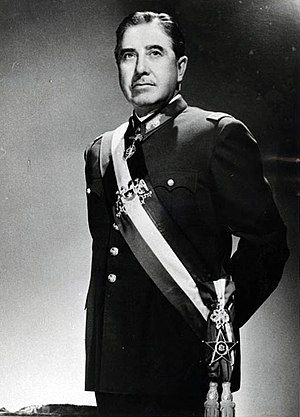
Following the military coup in 1973, Augusto Pinochet came to power in Chile, establishing a dictatorship that lasted until 1990.
«Augusto Pinochet came to power as a result of a military coup—one should not say that the legitimacy of his rule was questionable. Even after clearing the political landscape and eliminating competitors (including through force), the dictator sought either the support of the general population or, at the very least, the appearance of it.»
His regime was characterized by brutal political repression, censorship, persecution of the opposition, and systematic state-sponsored violence.
During Pinochet’s dictatorship, thousands of people were arrested, tortured, forced to flee the country, or simply disappeared without a trace. The government was built on fear, absolute control, and the suppression of any form of political dissent. State structures cultivated an atmosphere of constant surveillance where personal freedom and safety were nonexistent.
Only recent bitter experience—one that nearly led us to civil war—has forced us to understand that human rights cannot exist under a political and legal regime that paves the way for the ideological aggression of Marxism-Leninism, which today serves Soviet imperialism.
©Augusto Pinochet
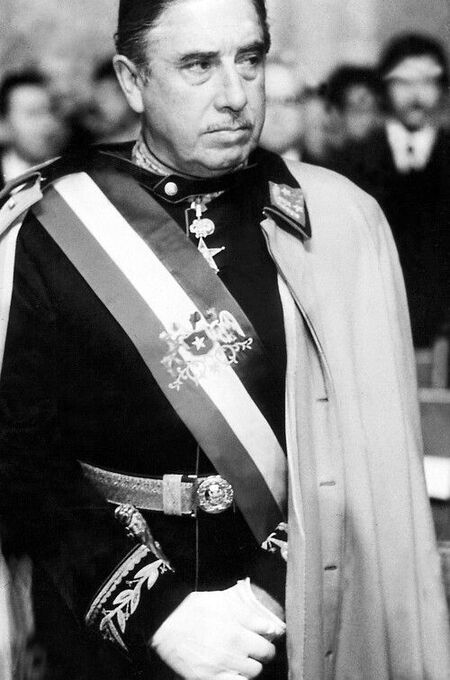
During Augusto Pinochet’s military dictatorship, the territory of the commune was used as a site for imprisonment and torture of opponents of the political regime.
«…P. Scheffer did not refuse cooperation with the A. Pinochet regime, the secret police DINA33, using the favor of the new authorities to his own benefit. In exchange for providing the Colony’s territory to conceal and eliminate political opponents, P. Scheffer was allowed to continue his religious activities (as well as commit sexual crimes).»