Concept
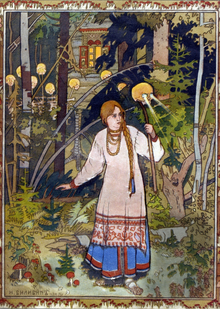
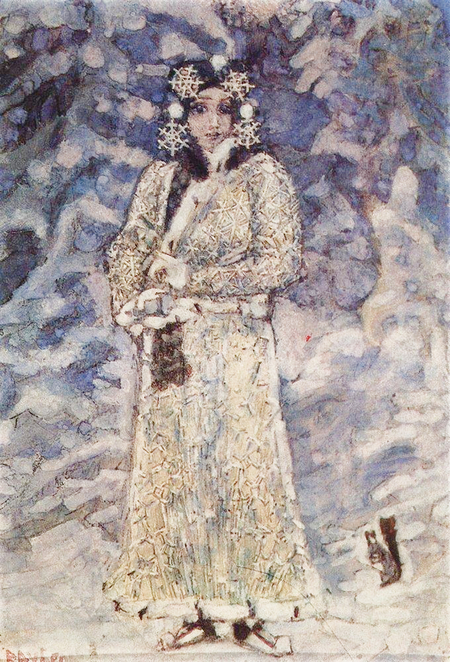
Snegurochka is one of the most recognizable «Russian» archetypes. A Russian person perceives her costume from childhood as something inherently folk: the braid, the kokoshnik, the fur coat, and the white and blue colors. However, in folklore, there is only a fairy tale about a girl molded from snow, and nothing is said about her clothing. Snegurochka’s appearance has been gradually formed through her depiction in paintings, the design of costumes for stage performances, and the modern interpretation of her image. Snegurochka’s appearance is created gradually, and today it differs significantly from the costume that theater designers devised using real elements of 18th–19th-century Russian attire.
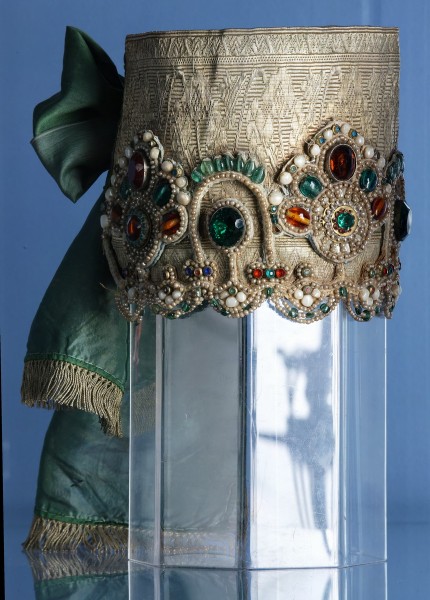
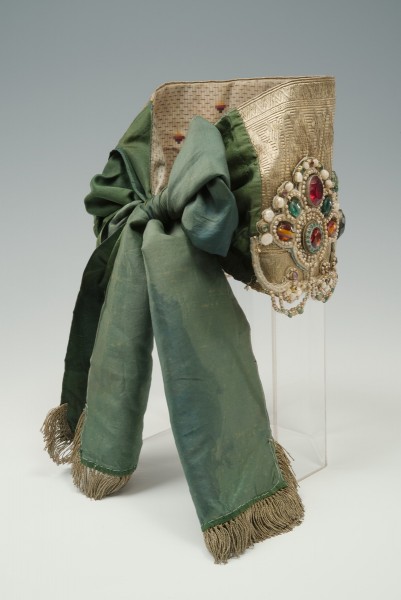
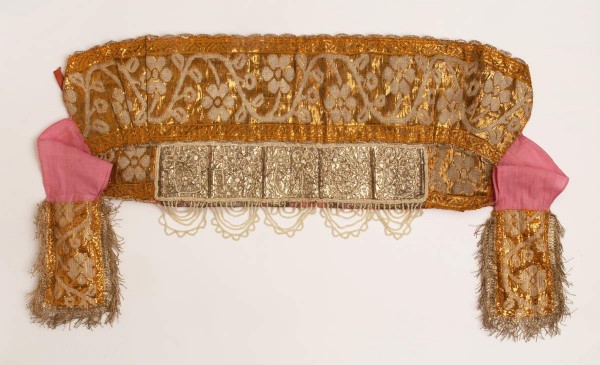
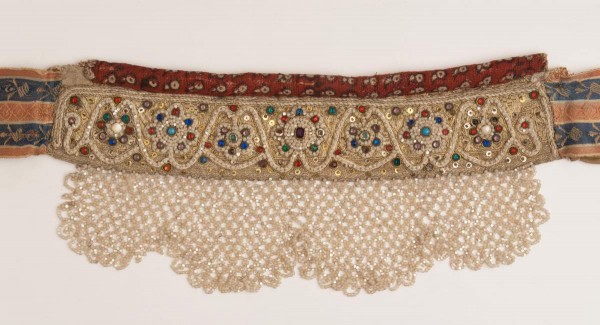
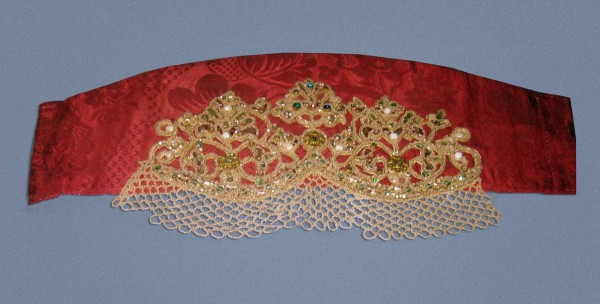
It is interesting that although Snegurochka’s image is assembled from elements of traditional Russian dress, over time these elements become merely decorative parts of an established figure and cease to be interpreted as a system of signs that could indicate the girl’s age, marital status, wealth, or place of residence. The kokoshnik, which almost invariably adorns the young Snegurochka’s head today, traditionally served as festive headwear for married women.
«From which elements of traditional Russian costume is the image of Snegurochka assembled, which elements of her historical image change, and what is preserved in our modern context?» — this is the key question of the visual research.
I am interested not in the history of the New Year holiday or the appearance of its symbol, but in what happens to the costume elements along this trajectory—which ones are preserved, which ones disappear, and how their meaning evolves.
The research hypothesis states that before becoming a Russian symbol of the New Year and celebration, the figure of Snegurochka undergoes a long historical journey. She combines various age-related and class elements of Russian costume, which retain their form over time but lose their original, purely Russian meaning: they no longer signify age and status, but instead denote a role in the celebration, symbolize a contemporary Russian character, and serve as inspiration for the fashion industry.
Principle of Categorization:
The research is structured chronologically, yet each chapter examines the evolution of the same elements of the Snow Maiden’s image: headwear, hair, clothing, and color and its symbolism. The first section is historical, exploring the origins of the costume elements. Sections two through five examine different stages of the Snow Maiden’s image. The second section covers the birth of the heroine’s visual representation in the hands of theatrical designers. The third section focuses on the stylization of the Snow Maiden’s costume in the paintings of artists from the 1890s–1920s. The fourth section explores the development of the Snow Maiden’s image as a symbol of the children’s Christmas tree, and the fifth section analyzes its interpretation in contemporary society. This categorization is constructed to demonstrate that the Snow Maiden’s image is not merely an attribute of a children’s celebration, but an image that has undergone a significant historical journey to become a Russian symbol.Material and Text Source Selection Principles
To achieve a comprehensive immersion in the topic, sources were analyzed that included both historical descriptions of Russian costume with illustrations and art historical articles, alongside contemporary media publications from the worlds of fashion and design. Ethnographic studies, N. Sosnina and I. Shangina’s illustrated encyclopedia, works by G. S. Maslova, and studies on the youth costume of the Russian North were used to describe traditional attire and the rules governing its wear. The history of the image and the New Year’s celebration is revealed in E. V. Dushechkina’s philological study, «The Russian Fir Tree.» The theatrical period is based on articles concerning the Abramtsev Circle and the work of Vrubel, while the Soviet period relies on O. Chagadayeva’s historical article, which was based on methodological compilations for children’s New Year’s trees from the 1930s. Articles from the media have been drawn upon for contemporary scenarios. The visual component of the research was collected from museum collections and open archives. The study initially focuses on authentic examples of late 18th to early 19th-century Russian costume from museum holdings. Subsequently, only images of Snegurochka are included in the research that have established or altered the canon of her image. These include theatrical sketches and paintings from museum collections, preserved stage costumes, Soviet postcards and Christmas ornaments, as well as modern official and mass-produced examples. The primary methodology is comparison—the entire visual spectrum relies on comparison with the indigenous Russian costume.
Section 1. Where do costume elements come from?
Traditional Russian costume is not just a collection of decorative elements; it is a system of signs through which clothing communicates a person’s age, marital status, wealth, region, and participation in rituals. The headdress dictates not only outward appearance but also social standing: a maiden’s headscarf or wreath leaves the hair uncovered, whereas the kokoshnik is primarily associated with married women and festive solemnity. This section examines four elements of the costume that laid the foundation for the image of Snegurochka—the headdress, the hair, the clothing, and the color. Artists have since borrowed these elements for Snegurochka, and their original meaning is gradually lost.