Navigation Menu
(1)Concept (2)Nothing to Wear: About the Brand (3)Product Advertising (4)Ad Builder (5)Ogilvy Headlines (6)Absurdity (7)Metaphor (8)The Power of Word and Sign (9)Shock (10)Extreme Consequences (11)The Nothing to Wear Advertising Campaign (12)Conclusion
Concept
Advertising is a communication tool between a brand and its audience, through which perceptions of a product are formed, its benefits are conveyed, and a specific image is created. To achieve these goals, various advertising tools are employed: metaphor and analogy, absurdity and surrealism, shock, the power of word and symbol, advertising headlines, product advertising, and other techniques. Each of these affects the viewer differently: some tools make the advertising message clear and persuasive, while others capture attention through unusual visual solutions, humor, or provocation. The selection of a specific tool depends on the product’s characteristics, the brand’s nature, the target audience, and the message that needs to be delivered.
This visual study is dedicated to examining advertising tools and the specifics of their application in contemporary advertising campaigns. Primary focus is placed on visual advertising, particularly print posters, as well as individual commercials. The material under review consists of campaigns by renowned international brands from various sectors: fashion, technology, cosmetics, consumer goods, and other fields. This selection allows for a comparison of how the same advertising techniques are used across different categories, helping to determine which visual and conceptual solutions make an advertisement expressive and memorable. In addition to analyzing existing campaigns, the study includes original sketches and proposed advertising solutions for the fictional brand «NOTHING TO WEAR.»
The central question of this study is to determine which advertising tools most effectively convey the unique characteristics of a marketed product and establish expressive communication with the audience. The hypothesis is that no universal advertising tool exists that is suitable for every product. The effectiveness of a tactic is defined by how accurately it transmits the core message, aligns with the brand’s character, and allows for the establishment of an emotional or conceptual connection with the audience. It is assumed that different tools possess varying potential for impact and can reveal the same product differently, depending on the chosen advertising concept and its method of visual realization.
The research is based on visual, thematic, and comparative analysis of advertising materials. The first part examines the primary advertising tools, their specific characteristics, construction principles, and methods of influencing the viewer. Each tool is supported by examples from existing advertising campaigns, an analysis of the techniques employed, and a breakdown of the visual solutions. The second part explores how the examined tools can be applied within the scope of a personal project: advertising ideas are formulated, concepts are developed, and poster sketches are created. In the concluding part, the resulting variations are compared, their suitability for the set advertising objective is assessed, and a tool is selected for the development of the final advertising campaign.
The following criteria are used to analyze advertising examples: the core idea and advertising message, the application method of the chosen tool, the connection between the visual image and the marketed product, the compositional solution, the use of text and graphic elements, the emotional impact on the viewer, and alignment with the brand’s character and target audience. When reviewing personal sketches, the possibility of adapting the tactic to the specifics of a particular product, its functional advantages, and its overall communication strategy is also taken into account.
The outcome of this visual study is the development of an advertising campaign for the brand «NECHOGO NADET'» based on one of the studied advertising tools. Thus, the research aims not only to study existing methods of advertising communication but also to practically test their capabilities.
About the Brand
NOTHING TO WEAR — a conceptual AI fashion-tech brand that offers an intelligent solution to the everyday problem of clothing selection. The brand merges artificial intelligence, personalization, and fashion, helping users build a wardrobe and create looks based on their individual preferences, style, and needs.
MissionTo liberate individuals from the daily dilemma of choosing clothing, transforming the wardrobe from a source of stress into a tool for self-expression.GoalTo create a technological fashion platform that simplifies clothing selection, helps users make rational use of their existing wardrobe, and makes personalized style more accessible.Brand PersonalityProvocative, bold, ironic, sarcastic, and occasionally cynical. The brand is unafraid to break the rules of fashion communication, utilizing absurdity, surrealism, and shocking visual imagery.Values — Technology — Personalization — Self-expression — Rationality — Irony — Freedom
The brand’s core idea is that your wardrobe shouldn’t be a problem.
Product Advertisement
Product advertising is a type of advertising communication where the advertised good or service is the central focus of the message. The primary goal of this tool is to showcase the product, detail its functional features, consumer benefits, usage characteristics, and unique qualities. The visual composition is typically organized to ensure maximum product visibility and to help the audience understand its value. Depending on the brand strategy, the emphasis can be placed either on functional properties or on the emotional and symbolic advantages of the product.


In our advertising, the product component consists of showcasing the AI fashion-tech solution as the primary communication object. It is crucial not to limit ourselves to abstract brand positioning but rather to demonstrate the specific problem the technology solves: helping users organize their wardrobe, select complete outfits, and simplify daily clothing choices. Simultaneously, the advertising visuals must maintain creativity without losing connection to the product’s real functionality. Thus, we merge the emotional appeal of the advertising concept with a demonstration of the service’s practical utility.

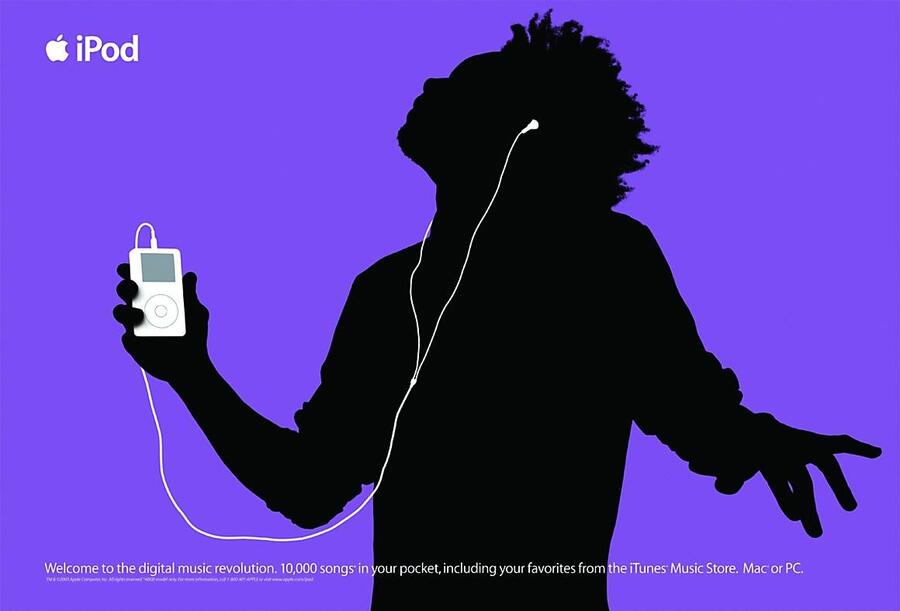
Apple — iPod Silhouette (2003)
Apple featured people dancing while wearing white headphones and an iPod. Set against a backdrop of bright colors, the device stood out due to its recognizable design, and the scene itself demonstrated the product’s core purpose—listening to music. The product remained the central element of the communication, but its functionality was revealed through the user’s image.
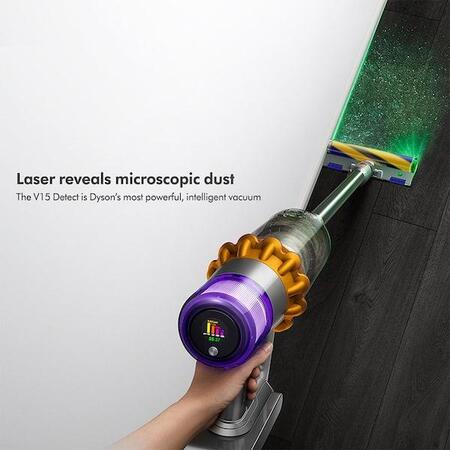
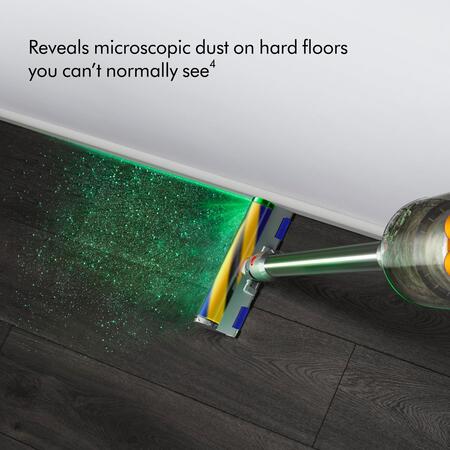
Dyson — The Laser Detects Hidden Dust
Dyson markets its vacuum cleaner by highlighting its ability to detect invisible dust using laser illumination. The visuals showcase not just an appliance, but a specific technological capability that differentiates it from its competitors. This is a strong example of advertising where a product’s unique feature becomes the central narrative.
Ad Campaign Builder
The advertising builder is based on the principle of creating advertising messages using a system of interchangeable or combinable visual and verbal elements. Within this approach, a unified compositional model is formed, consisting of stable components (corporate symbols, color palette, typography, visual style) and variable elements (product image, advertising narrative, headline, specific offer). The tool allows for the creation of a series of interconnected marketing materials while maintaining the integrity of the brand identity across various executions. Its key advantage is scalability: a single creative concept can be adapted for different products, audiences, advertising platforms, and communication objectives.


The bracelet forms the basis of the composition, encircled by the phrase «Choose an image with a touch, ” repeated multiple times. The repetition of the text creates a dynamic visual background while simultaneously amplifying the main marketing message. This technique demonstrates the potential for building a series of materials based on a constant element—the product—and variable text modules.
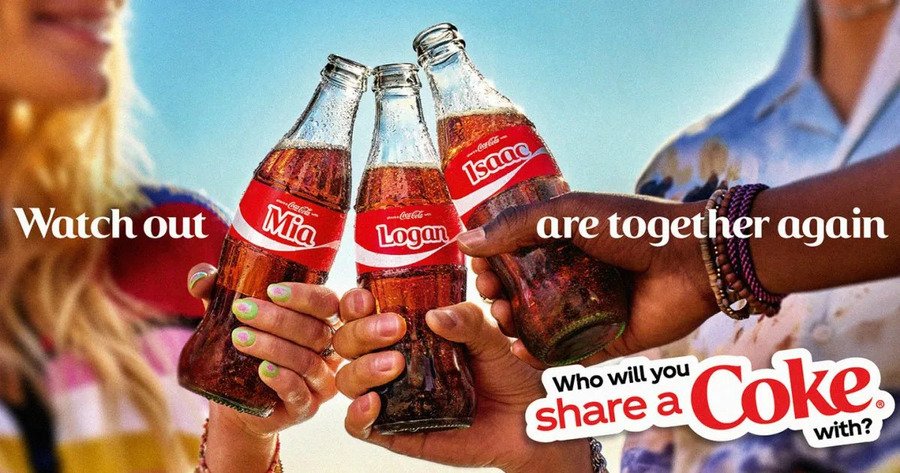
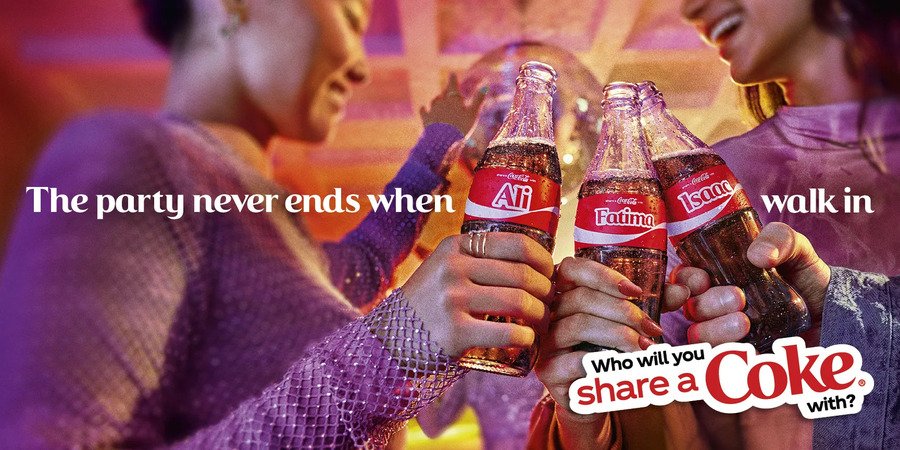
Coca-Cola, «Share a Coke» campaign
Coca-Cola replaced its traditional logo on bottles and cans with names, nicknames, and greetings. The basic packaging structure remained unchanged, while the inscription became the variable element. As a result, the brand gained a scalable advertising system that could be adapted for different countries and audiences.
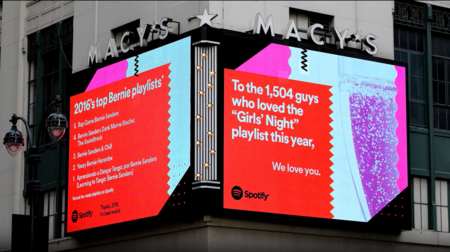
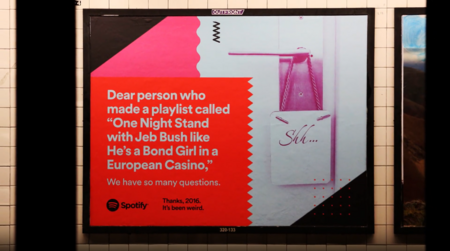
Spotify Wrapped (Annual Campaign)
Spotify utilizes a unified visual system into which new data regarding user music preferences is inserted every year. Personal statistics are transformed into individual cards that people share on social media, and the most interesting musical observations become the basis for outdoor advertising. Here, the advertising builder is constructed on a combination of consistent design and ever-changing user content.
Ogilvy Headlines
Ogilvy’s Headlines is an approach to creating advertising headlines based on clarity, specificity, and consumer benefit orientation. David Ogilvy considered the headline one of the most crucial elements of a marketing message because it must capture attention and prompt the audience to engage further with the advertisement. An effective headline doesn’t just grab attention; it also conveys meaningful information about the product to the potential consumer. Key principles include a concrete promise, accessible language, addressing the audience’s needs, and avoiding unnecessary ambiguity.


The poster features the headline, «No More Thinking About What to Wear.» It speaks directly to one of the most common everyday problems faced by the target audience—the constant need to decide on clothing. The headline requires no further explanation: the consumer immediately understands the exact problem the product solves. The visual image of the bracelet supports this promise, presenting it as a tool capable of freeing the user from daily struggles in outfit creation.
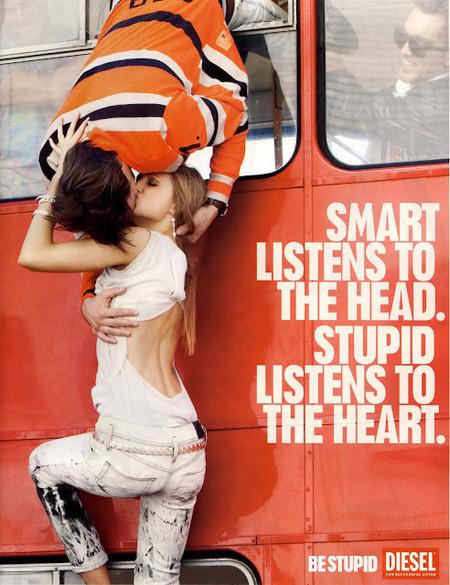
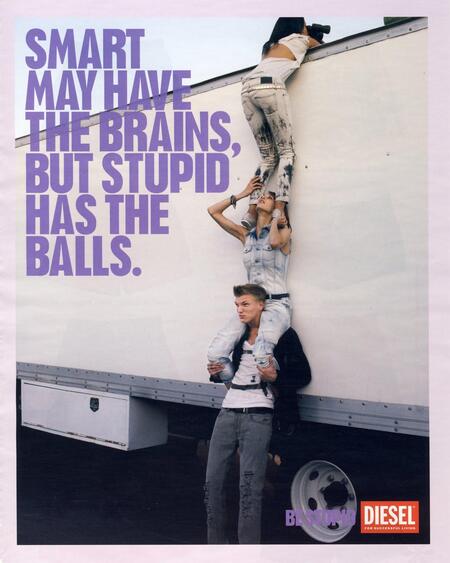
Diesel — Be Stupid (2010)