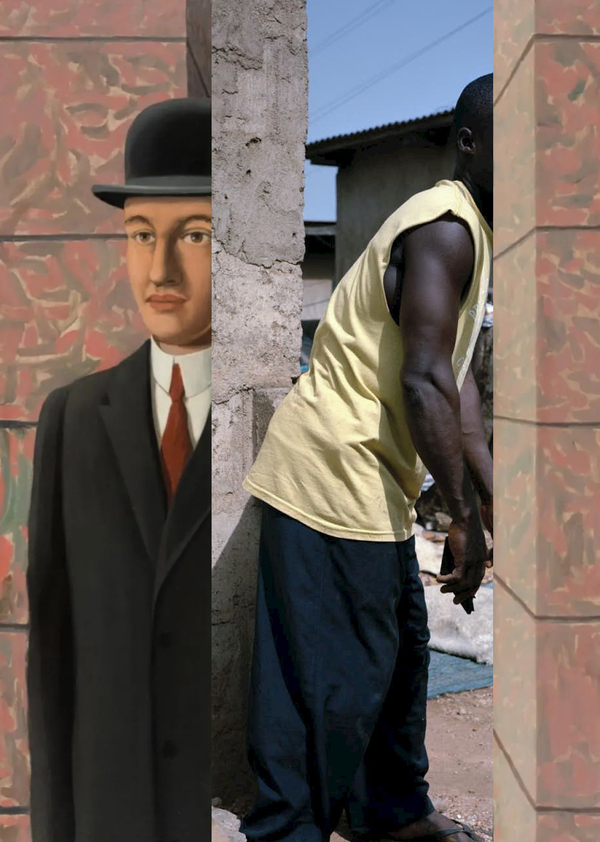
Vivien Sasssen is one of the most significant contemporary photographers, whose work resides at the intersection of fashion, documentary photography, and contemporary art. A Dutch native, she spent her early childhood in Kenya, where her father worked as a doctor at a clinic for polio patients. This experience shaped her unique perspective: «Bright sunlight, deep shadows, a market with dead sheep hanging upside down with tongues lolling out, other children who always wanted to touch my face and hair, the pure darkness that descended upon the village at night.» After returning to the Netherlands at the age of six, Sasssen experienced the traumatic feeling of losing her home—a feeling that left her with a constant sense of being an outsider, both in Europe and in Africa, which she forever considers her home.
The biographical gap between Europe and Africa fostered a sense of alienation in Sasssen, allowing her to separate from the colonial gaze.
Sassoon is acutely aware of the nature of the colonial gaze—the method of visual consumption that Western culture has employed for centuries, transforming the «ethnic Other» into an object of observation, fetishization, and exoticism. The classic colonial gaze demands identification, narrative, and biography: it seeks to know who this person is and what their story is. This form of documentarianism is taken to an extreme, resulting in the erasure of the observed Other’s subjectivity. Photography itself, as a technology, has historically been inextricably linked to imperialism and the colonial imaginary.
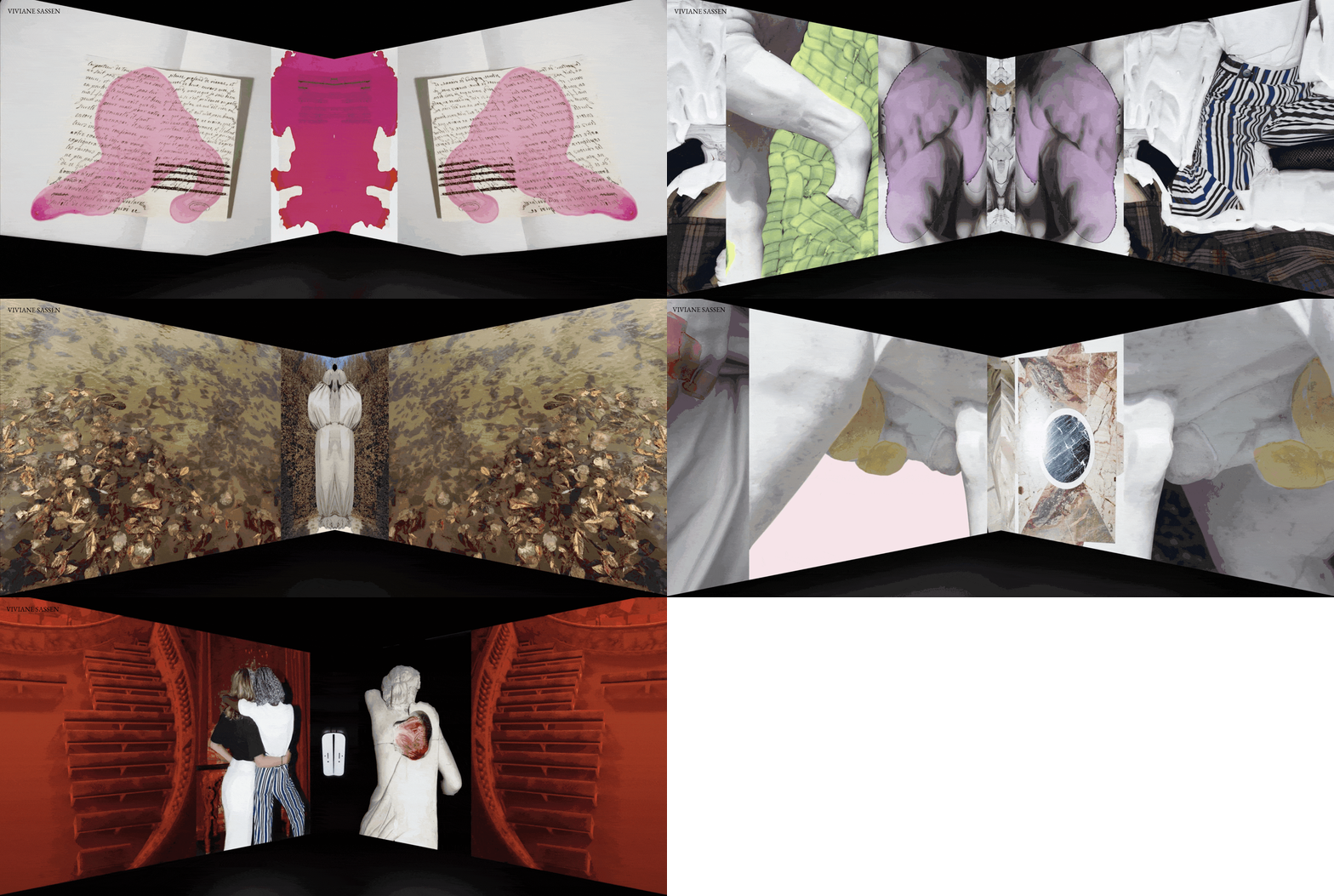
Excerpt from the homepage of Vivienne Sassen’s official website.
Sassonne refuses to satisfy this curiosity: she conceals the faces of her African models with shadow, foliage, or angle—transforming them from individuals with moving, meaningful life stories into archetypes, symbols, or «humans out of context.» Stripping the frame of its narrative does not de-individualize in the classical sense. Rather, it is a radical gesture that can be read as a critique of the apparatus of the gaze itself. This is where her paradoxical reception of irrational modernism lies; Vivienne Sassonne acknowledges Surrealism as one of her early influences, and clear references to 20th-century heritage are evident in her formal language of techniques: the interplay of light and shadow, the fragmentation of bodies, the surreal collage, flatness, and uncanny juxtapositions. However, unlike irrational modernism, which strove for pure form liberated from content, Sassonne applies this optic to the living human body, creating tension between formal abstraction and the ethical responsibility of representation. Thus, she takes the «weapon» of colonial optics (the camera) and turns it against the viewer.
The research hypothesis is as follows: the reception of irrational modernism in Sasssen is not stylistic but critical. Borrowing the visual language of surrealists, Sasssen rejects the Enlightenment promise of photography—"to show the Other as they are.» Instead, she creates what one critic in a review of Vivienne Sasssen’s work calls «a gaze that critiques the gaze"—where Black skin, obscured faces, and deformed bodies become mirrors in which the Western viewer confronts the blindness of their own experience. The irrational becomes an ethical gesture here.
Table of Contents:
1. Introduction 2. Absence of the Face 3. Corporeal Fragmentation 4. Chiaroscuro Automatism 5. Conclusion
The visual narrative of the work is structured thematically. Three of Sasson’s strategies have been highlighted: the masking strategy (concealing the face), the fragmentation strategy (dismembering the body), and the automatic form strategy (working with chiaroscuro). Each strategy is correlated with «prototypes» from the history of irrational modernism: René Magritte, Salvador Dalí, Hannah Höch, and Man Ray. Thus, the research adopts the structure of a sequential comparison that demonstrates how and why the trope is transformed by Vivienne Sasson. The analysis of textual sources—including interviews with the artist, reviews, and critical articles about her work—is based on juxtaposing what Sasson says about her method with how critics interpret that method, and how all of this fits within the broader theory of irrational modernism.
Absence of a face
Vivienne Sasson // «Ivy,» from the Parasomnia series, 2011
In René Magritte, the concealment of the face is connected to the crisis of the visible: objects obscure the person, and the image ceases to be a transparent carrier of meaning. Sasssen uses the same device, but differently. If Magritte’s hidden face produces a surrealist effect, for Sasssen it becomes a means of rejecting the colonial identification of the Other—it dismantles the accustomed logic of the documentary gaze and deprives the viewer of the ability to «read» the person as an object of visual knowledge.
René Magritte // «The Human Son,» 1964
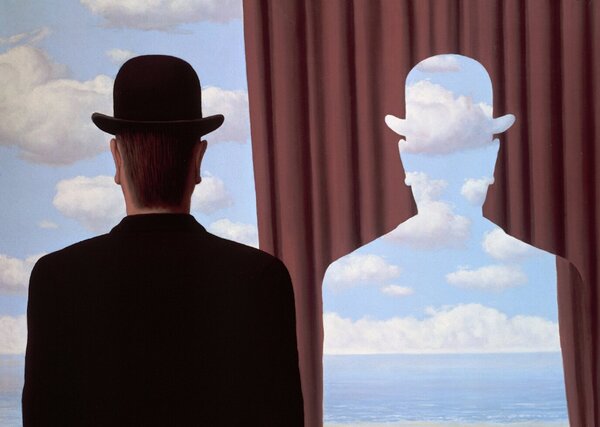
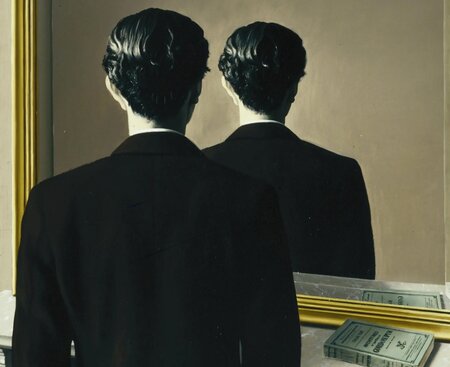
René Magritte: (1) «Decalcomania,» 1966 (2) «Reproduction Forbidden,» 1937
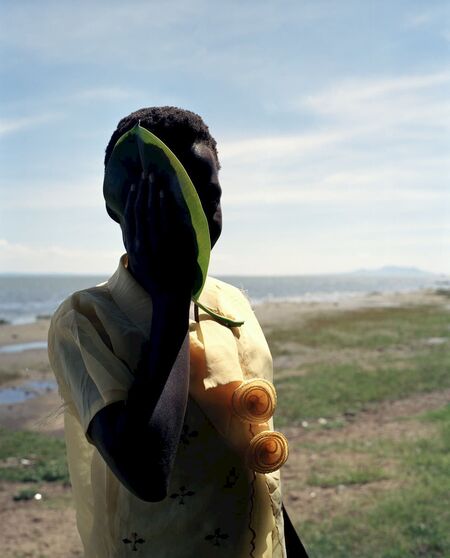
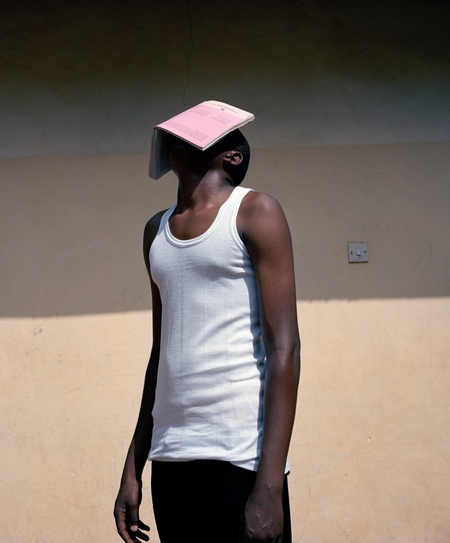
Vivienne Sasson: (1) «Leaf,» from the Flamboyance series, 2005 (2) «Codex,» from the Parasomnia series, 2010
«I don’t show my face because I don’t want the work to be about one specific person. I’m trying to create an archetypal image.»
In Sasson’s work, the face does not disappear completely—it is replaced by a sign, a surface, or an object. The sheet and the book function as kind of masks or even exaggerated elements of everyday practice, preventing the viewer from establishing a psychological connection with the model. In this way, the figure ceases to be perceived as an ethnographic character and transforms into an autonomous visual image.
Salvador Dalí // «Solitude, ” 1931
Corporeal Fragmentation
Vivienne Sassen // «Belladonna,» from the Parasomnia series, 2010.
Vivien Sasson’s fragmentation of the body deconstructs the notion of the human figure as a complete and unified image. The body dissolves into discrete plastic elements: limbs, curves, color patches, and planes. This technique denies the viewer a stable point of perception, shifting focus from the model’s identity to the structure of the form itself, moving the social into the artistic, and upon reflection—returning it to the social for a contrasting re-evaluation of the new vision.
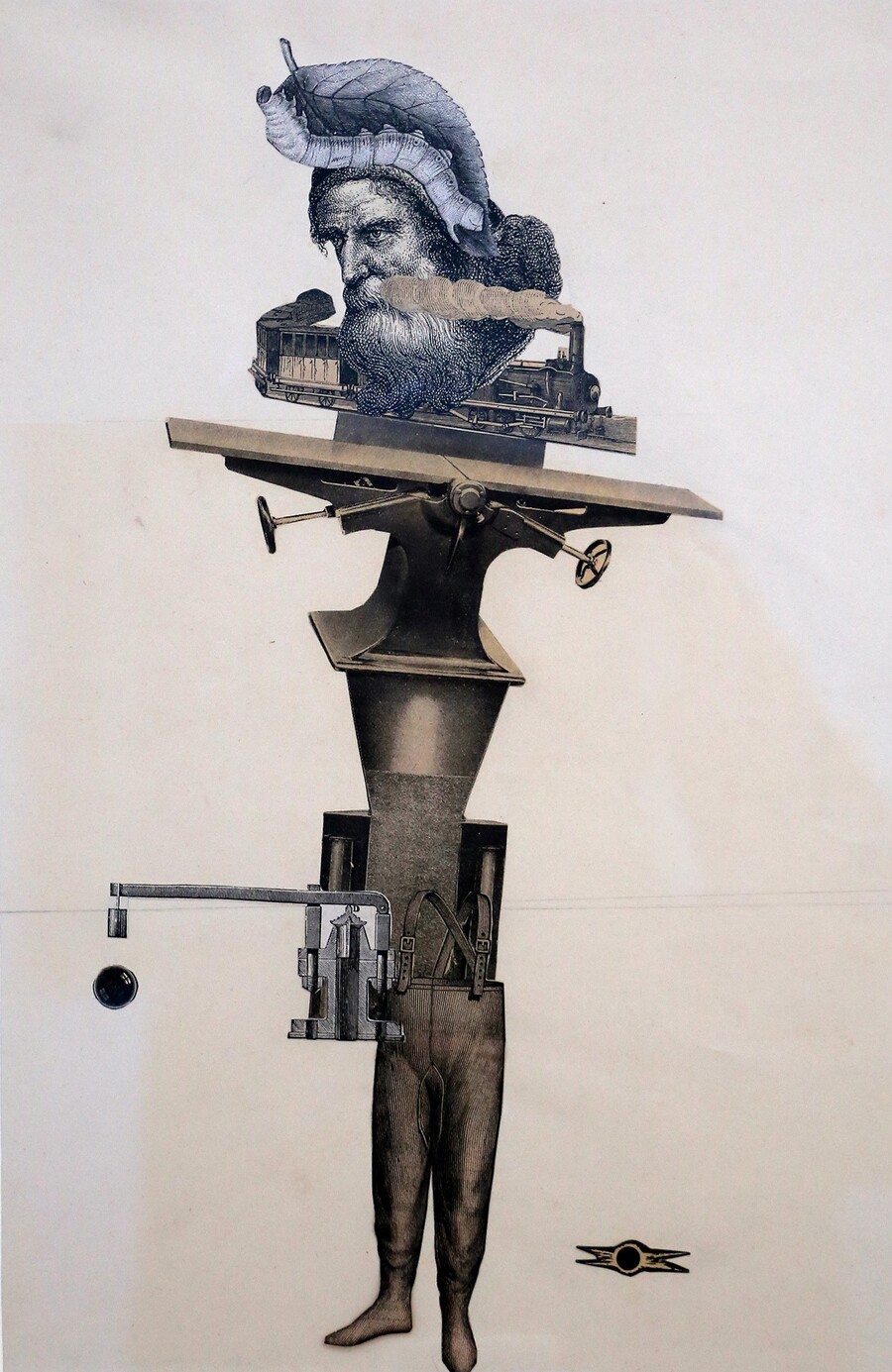
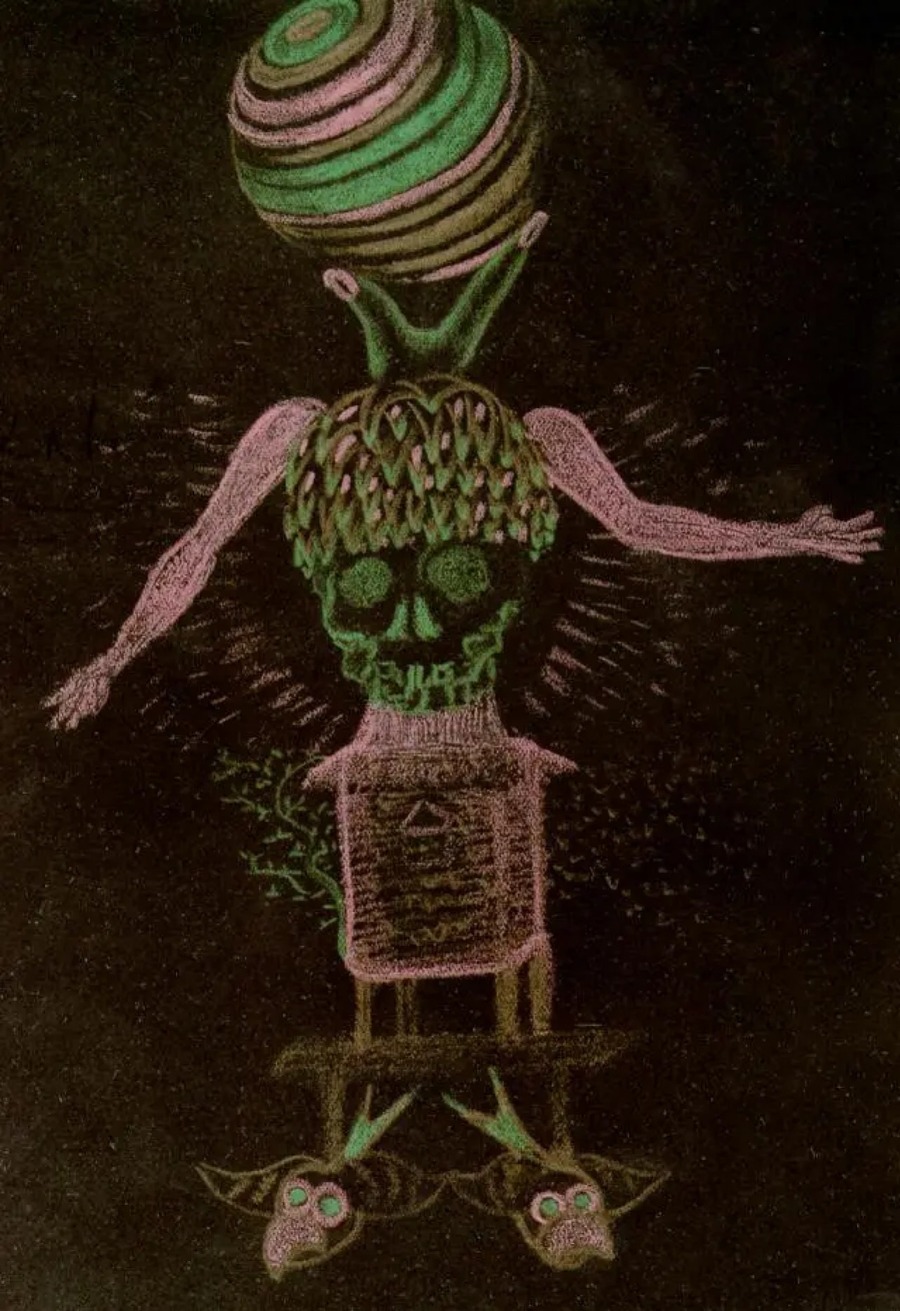
(1) Salvador Dalí // «The Exquisite Corpse,» 1935 (2) André Breton, Jacqueline Lamb, Yves Tanguy // «The Exquisite Corpse,» 1938
The modernist play practice of «the exquisite corpse» was built on the principle of automatism, collective bodily deformation, and a rejection of anatomical integrity.
Vivienne Sasson // «Traveller,» from the Flamboyance series, 2004–2008.
Sasson inherits this visual language, yet translates it from the space of play into the field of representing the real human body.
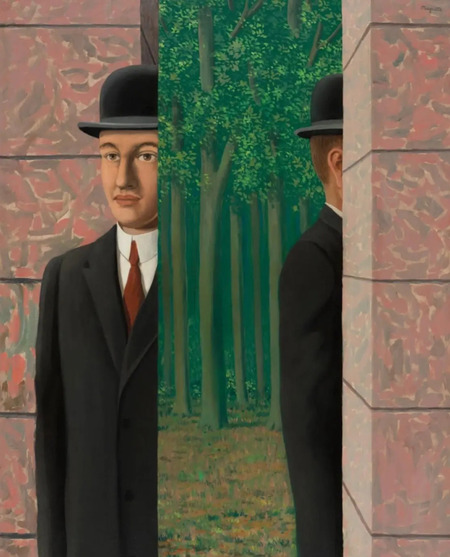
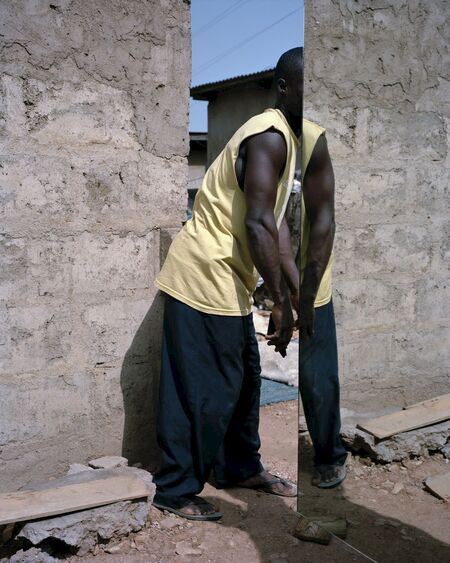
(1) René Magritte // «The General Scene», 1964 (2) Vivienne Sassen // «Mirror Person», from the Flamboyance series, 2007
René Magritte // «The Intermission,» 1928
In both cases, the body loses its stability and transforms into an abstract construction of forms. However, while Magritte’s deformation creates an irrational, dreamlike space with a narrative that can be extrapolated through the interaction and emotional coloring of the «hand-figure,» Sassen’s interwoven limbs—despite an rationally recognizable play—are perceived as a frozen tableau (there are no faces; the figure lacks a head, and the arms and legs compositionally fill the frame, while the clothing creates blocks of color). This materialist approach of «reducing» the body to its individual parts unconsciously works against the conventional way of perceiving the African body as an object of visual consumption.
Vivienne Sassen // «La Lute #2,» from the Parasonia series, 2011
Hannah Hoh // collage, created between 1925–1935
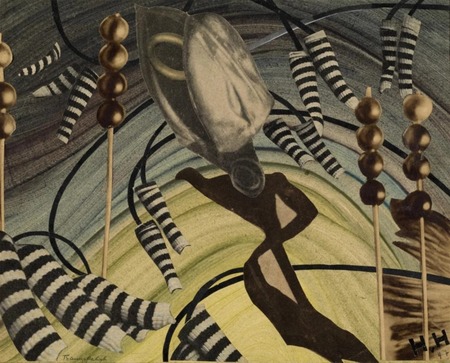
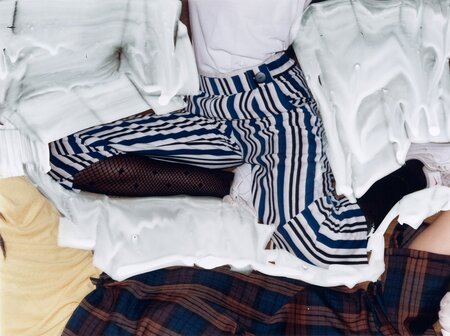
(1) Hannah Höch // «Dream Trip,» 1947 (2) Vivienne Sassen // «Game,» from the Venus and Mercury series, 2019