Media Goal
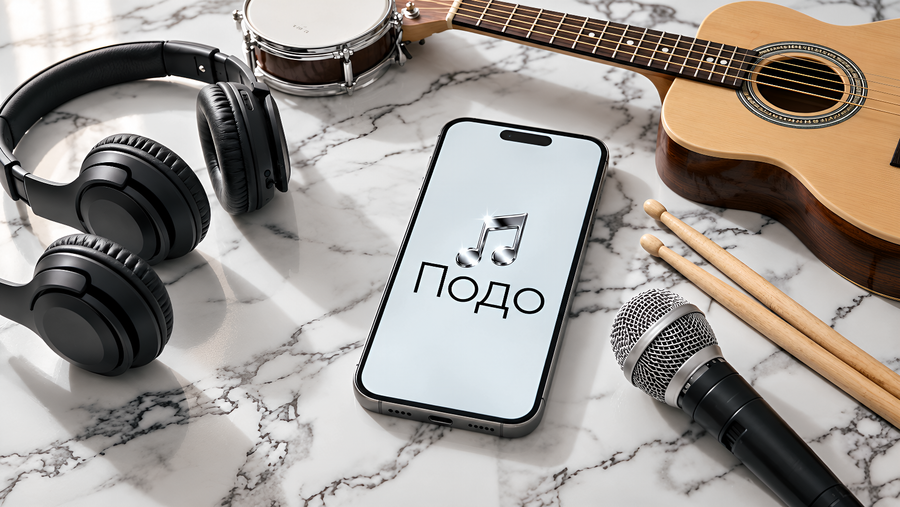
The goal of «Podo» is to help users quickly find music that suits their current life situation and to create a space for sharing real musical experiences.Users publish their own scenarios and tag them with parameters such as task, energy level, presence of vocals, time of day, weather, emotion, and environment. Thanks to the scenario system, other participants can find suitable playlists for a specific moment and discover new ways to use familiar music.«Podo» aims to make music discovery more practical, reduce the time spent endlessly scrolling through tracks and chaotic playlists, and foster a community where people share their musical choices and inspire one another.
Themes of the Future of Media
SEGMENT: Music MediaSUBTOPIC: Exchanging user playlists and searching for music based on a scenario system derived from the task, energy level, vocal presence, time of day, weather, and emotional state.«Podo» focuses on playlists created and curated by listeners themselves, helping users find suitable tracks not by song title or genre, but based on a specific situation—such as «working in a cafe and needing wordless background music,» «running at sunset,» or «cleaning my apartment.»
Competition Criteria
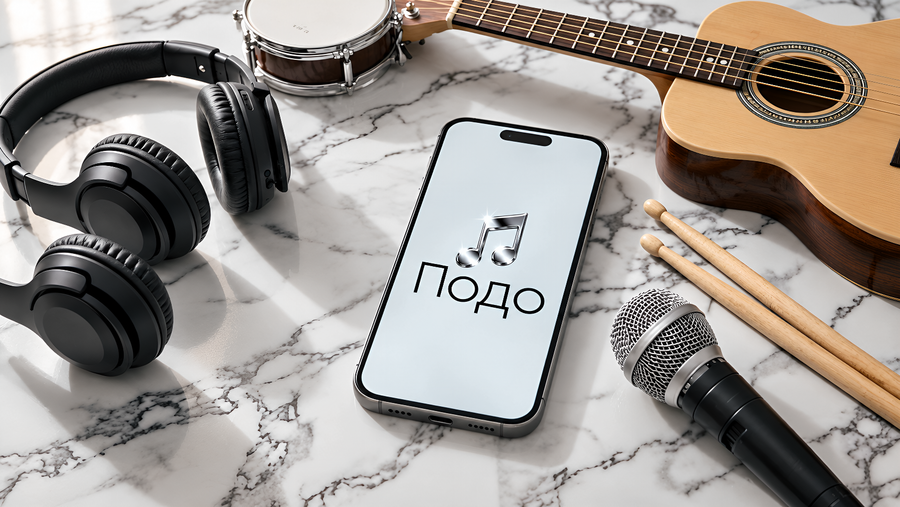
- Speed of Result Delivery This criterion reflects how quickly a user receives a completed playlist after making a request. Modern services already offer selections in seconds: you simply describe the vibe in words, and the AI generates the playlist.2. Simplicity of Language and Interface This criterion assesses how easily a user can formulate their request. The winner is the one that allows users to type in plain language, such as: «night drive, ” „energetic morning, ” or „calm jazz for work.“ Input simplicity directly impacts first-time usage conversion.3. Visual Structure and Presentation This criterion describes how clearly and aesthetically the playlist cards, scenarios, and navigation are designed. Clutter in the design reduces trust and makes selection difficult.4. Trust and Transparency This criterion shows how confident a user is that the playlist genuinely fits their situation. Media that adds a layer of community vetting or explains the selection logic gains trust.5. Community and Social Proof This criterion reflects whether the user can see that other people in similar situations have endorsed the playlist. Social proof is a powerful decision-making factor: people tend to trust the experience of others more than an algorithm.
Direct Competitors
- Yandex Music («My Wave») Core Concept: Hypercontextual recommendations—the system considers the time of day, the day of the week, and the device to suggest music suited to a specific moment, such as «calm jazz for work» or «rock and roll for a run.» «My Wave» can be activated with a free-text prompt: «for concentration, ” „for a walk, ” or „relaxation after a difficult day.“Why it’s a competitor to „Pod“: Yandex solves the same problem—curating music for the moment based on situational descriptions. Drawbacks compared to „Pod“: The algorithm infers context but does not ask directly. „My Wave“ builds recommendations based on user behavior rather than a direct request. It also lacks community verification—no one confirms whether the playlist genuinely fits the moment.Selection Criteria: searches for queries like „music for mood“ or „playlist for work“; media coverage from 3DNews and iXBT regarding the launch of hypercontextual recommendations; official announcements from Yandex Music.
- Sound («GigaMix») Concept: An AI-powered playlist generator. The user enters a text prompt describing a mood, genre, or activity, and within seconds, receives a 20-track playlist. The prompt can be refined by specifying the situation, genre, tempo, era, language, or mood.Why it competes with «Pod»: Sound is also planning an AI agent to select music based on mood and scenario. Drawbacks compared to «Pod»: Generation without validation. The playlist is created automatically without confirmation. There is no connection to a real-life situation.Selection criteria: search queries such as «music selection service by description, ” „neural network playlist“; Media — releases on CNews.
- Orpheus Concept: The app allows users to describe a vibe with words—such as «night drive» or «energetic morning”—and the AI instantly compiles a playlist tailored to that mood. It also features „My Vibe, ” an infinite stream of music based on individual taste.Why it’s a competitor to „Podo“: Direct fit for the niche: describing a situation with words and instant playlist generation. It is technically similar to „Podo“ but lacks community vetting. Disadvantages compared to „Podo“: Small user base. No community validation. No script structure. No UGC. Users do not publish their scenarios or playlists.Selection criteria (what we looked at): App stores—RuStore, application description; searches using terms like „music by vibe“ and „AI playlist generator.“
Indirect Competitors
- Spotify (DJ and Prompted Playlist) Concept: The DJ is an AI radio host that accepts voice and text prompts. Each track is accompanied by a description explaining the selection.Why it is a competitor to «Podo»: It captures the same audience time and attention, but through a different interface (voice, chat with the DJ). Disadvantages compared to «Podo»: Closed algorithm. The user cannot describe the moment directly. There is no community validation. Unavailable in Russia.Selection Criteria: Media—Spotify’s official newsroom, Billboard, Yahoo Tech; searching for «Spotify DJ prompts,» «AI playlist.»
- YouTube (AI Playlist Generator) Concept: The user inputs a text or voice prompt describing a mood, and the system automatically generates a playlist.Why it is a competitor to «Podo»: YouTube is the largest platform for background music listening. Drawbacks compared to «Podo»: Generation without verification. It is optimized for video. Music is a secondary product of the platform, not its core. It lacks scenario structure.Selection criteria: Media—QNA, Korean technology publications (Digital Today); searches for «YouTube AI playlist,» «YouTube playlist generator.»
- Apple Music (Playlist Playground) Concept: allows the generation of playlists based on prompts.Why it is a competitor to «Podo»: Apple Music is a major player with an audience actively seeking music for specific moments. Despite a slow start, the company will continue to develop this feature, presenting a potential threat. Disadvantages compared to «Podo»: early tests indicated that the tool struggles even with basic instructions—it includes songs of the wrong genre, mood, or language.Selection Criteria (where we looked): Media—Newsweek, The Verge (review); searches for «Apple Music AI playlist, ” „Playlist Playground.“
Potential Competitors
- Orphea Core Concept: An AI service that analyzes the audio DNA of tracks and operates atop streaming platforms. It allows users to describe music using words and find similar tracks through swiping.Why it is a potential competitor to «Podo»: It is technologically close—describing situations with words plus a swipe mechanic. If it adds community verification—it will become a direct competitor. Disadvantages compared to «Podo»: No community verification. Lacks parameter structure. Content is generated automatically, without an editor.Selection Criteria (how we analyzed it): searching for terms like «AI playlist generator» and «music discovery by mood»; reviews in tech media; and functionality analysis via the website.
- MeloTune Concept: An application for selecting music based on mood. It utilizes «400 moods» (emotion × energy) and over 200 genres. Users can describe their mood via voice in 13 languages or through text.Why it is a potential competitor to «Podo»: It is directly positioned as music that reads the moment. It competes for the same target audience that desires a precise match to a specific state. Disadvantages compared to «Podo»: No community vetting. Complex system. There are no people who curate and verify scenarios. It functions over Apple Music and Spotify but does not build its own community.Selection Criteria (what was examined): App stores—Apple App Store, and search queries like «mood music discovery, ” „music by emotion.“
- Major Music Media (Afisha, The Blueprint) Core concept: Publications that write about music, create playlists, and offer reviews. They have the potential to launch a «scenarios» column with an existing audience.Why they are a potential competitor to «Pod»: They have an audience and editorial resources to quickly launch an equivalent. While they aren’t doing this systematically yet, they could capture the niche with the right strategy. Disadvantages compared to «Pod»: This is editorial content, not a service for searching based on current circumstances. The editors create the playlists, not the listeners. There is no scenario structure.Selection criteria (where we looked): monitoring music publications; social media—specifically their content on Telegram and VK.
Conclusions and Insights
Analysis revealed that major players are already generating playlists based on situation descriptions, but no one offers community verification. This is the core differentiator for «Podo.» Community is the biggest gap. None of the competitors have a systematic verification process for selections by listeners. Furthermore, to improve the media experience, we could adopt voice input—this lowers the barrier to entry—and the swipe mechanism—for quick validation of whether something «works» or not. The key insight is that competitors are competing on algorithmic accuracy, whereas «Podo» competes on trust: the user describes a moment, receives a playlist, sees community endorsement, and understands why it fits.
Distribution Channel
The main platform is our proprietary website. The site is the core of «Podo.» This is where all editorial functions reside: a generative pipeline gathers sources, AI drafts scenarios, editors review the quality, fact-checkers verify the data, and publishers release the material.
Where «Pod» Attracts an Audience and How Exactly
- Telegram Every day, one scenario is presented with a ready-made playlist and a link to the website. Plus, a bot: the user writes the situation in the chat—the bot responds with a selection and directs them to the full script.2. VK A public group featuring scenario cards, polls asking «which scenario should we cover next, ” and discussions. Targeted advertising via TargetHunter to communities focused on productivity, sports, and academics.3. YouTube Shorts Short video cards: „What to listen to when cleaning and feeling angry, ” „Music for running at sunset.“ At the end: „Describe your moment on the website.“
Target Audience
«Pod» operates in two directions: B2C—for everyday individuals looking for music to match a specific moment—and B2B—for companies that require musical ambiance for client situations (cafés, hotels, coworking spaces, fitness clubs). This results in four customer segments: three in B2C and one in B2B.
B2C. Segment 1. «The Flow Worker» Who: Individuals aged 20–55 who work from home or in a co-working space, often wearing headphones, needing background music for concentration. Context: Weekdays, 10:00 AM–6:00 PM, at home or in a co-working space. They want something to «turn on and forget, ” but standard „work“ playlists quickly become tiresome or distracting. What they want: wordless background music that doesn’t derail thought or induce sleep. Time savings on music selection. Why they’ll be interested in „Podo“: They get a vetted playlist rather than an endless list of genres. What we offer: 2–4 hour playlists, verified by other users.B2C. Segment 2. „The Amateur Athlete“ Who: People aged 20–45 who run, go to the gym, or work out at home. They listen to music through headphones to maintain pace. Context: Morning or evening, outdoors, gym, or apartment. They want energetic music. What they want: music that perfectly matches the workout mood. They don’t want to waste time sifting through tracks. Why they’ll be interested in „Podo“: They receive a playlist vetted by other runners. What we offer: a filter by energy level and duration.B2C. Segment 3. „The Ambient Listener“ Who: Individuals aged 20–80 who listen to music while cooking, cleaning, or commuting. Context: Evening, kitchen, car, on the way home. They want music that suits the current mood. What they want: a selection that aligns with their emotion, without complex settings. Why they’ll be interested in „Podo“: They receive a playlist confirmed by others for that moment. What we offer: simple description tags: task, emotion, time, environment.B2B. Segment 4. „Music Background Business“ Who: Cafes, co-working spaces, hotels, fitness clubs, salons. Owners and managers responsible for the venue’s ambiance. Context: Daily client interaction. Music must match the time of day, occupancy level, and type of establishment. What they want: ready-made scenarios for different hours and situations, without manual curation. Why they’ll be interested in „Podo“: A QR code or widget for the venue with pre-set scenarios. What we offer: B2B widgets, venue-specific scenarios, content licensing, API.
Personas by Segment Person 1. Anya, 28, Analyst Segment: «Flow State Worker». Geo: Moscow, works from home 3 days a week. Context: sits at her laptop from 10 AM to 7 PM, wearing headphones; needs background music without lyrics. Problem: standard «work» playlists are distracting or quickly become boring. Podo Value: Describes a situation—receives a playlist that keeps her focused and is vetted by others. Uses: Website, Telegram BotPerson 2. Dima, 24, Amateur Runner Segment: «Amateur Athlete». Geo: St. Petersburg, runs along the embankment. Context: 3–4 times a week, in the evening, 30–40 minutes. Needs sustained energy level 8–9 without dips. Problem: spends 10 minutes choosing music and loses pace. Podo Value: Describes «running for 30 minutes at sunset, energy 8”—receives a ready-made playlist. Uses: Website, ShortsPerson 3. Kristina, 34, Marketer Segment: „Ambient Listener“. Geo: Yekaterinburg, lives with a partner. Context: prepares dinner in the evenings, cleans the apartment on weekends, listens while driving. Problem: wants music to match her mood but doesn’t know how to search for it. Podo Value: Describes „cleaning and wanting to feel angry”—receives a playlist confirmed by others. Uses: Website, Telegram ChannelPerson 4. Sergey, 41, Co-working Space Owner Segment: „Business with Background Music“. Geo: Kazan, 80-seat co-working space. Context: needs music that matches the time of day and doesn’t interrupt work. Problem: no time to curate music manually, licensing complexities. Podo Value: Ready-made scenarios for „Morning, ” „Day, ” and „Evening, ” plus a resident QR code widget. Uses: Website
Unique Selling Proposition
1. Music Vetted by the Community for Your Moment
«Pod» is the only media platform where every scenario has a community vote—"fits / doesn’t fit"—from other listeners.
2. Situation Instead of Genre
«Pod» encourages describing a specific moment through intuitive blocks, rather than relying on genre or artist. This lowers the barrier to entry and saves time spent on selection.
3. A Generative Pipeline with the Human at the Center
«Pod» is a media platform where content is generated by a pipeline, but the human remains in control—bridging the speed of automation with the editor’s responsibility and the community’s trust.