Concept
The Indian jewelry brand Bhavya Ramesh Jewelry utilizes traditional ornaments and cultural symbols, merging them with unconventional forms and fantastic imagery. The brand’s advertising materials feature characters with colored skin, intricate headwear, and silver adornments that evoke creatures from fictional worlds. Some campaigns are presented as short films where the jewelry is tied to the characters and the unfolding events.
The brand’s references to Indian culture are particularly compelling. Traditional symbols and mythological motifs retain distinct recognizable elements but are placed in an unfamiliar setting within the advertising. For instance, in Ancient Aliens, Indian mythological depictions are combined with the fantastical idea of extraterrestrial origins for divine beings. Models with vividly colored skin, unusual makeup, and substantial jewelry portray characters whose appearance resembles both mythological heroes and aliens.
Another example is Stare, a collaboration between Bhavya Ramesh Jewelry and the fashion brand NorBlack NorWhite. The collection is based on symbols associated with protection from the evil eye. In the promotional film, this theme is explored through unusual characters, natural locations, and scenes inspired by Indian folklore. The jewelry is incorporated into a narrative about scrutiny, protection, and feminine strength.
These examples explore how traditional cultural motifs are utilized in contemporary advertising and how their representation evolves. The focus is on the brand’s advertising imagery, its cultural origins, and its connection to the jewelry being showcased.
The research materials consist of promotional photographs from the Ancient Aliens collection, the film Paraloka, and the Stare advertising campaign. The selection of these materials is rooted in the fact that each incorporates Indian cultural motifs, yet the ways these motifs are presented across the media differ. In Ancient Aliens, fantastic imagery predominates; in Paraloka, there are staged scenes and movement; and in Stare, traditional protective symbolism becomes part of the advertising narrative.
For comparison, historical images and objects of Indian culture associated with the motifs found in the advertisements are used. Their selection is determined by the presence of documented cultural significance and the possibility of correlation with specific advertising materials.
Particular attention is paid to the form of the jewelry, the appearance of the characters, the composition, and the use of traditional symbols.
The research is based on comparing advertising images with their potential cultural sources and analyzing the ways jewelry is presented.
Initially, the brand history, product characteristics, and advertising formats are examined. Next, traditional Indian motifs found in jewelry are discussed, along with methods for presenting them in advertising campaigns. The final analytical section is dedicated to the role of fantastical imagery in advertising and its relationship to the presentation of individual collections.Table of Contents:1. Concept 2. Bhavya Ramesh Jewelry: Jewelry and Advertising 3. Indian Traditions in Bhavya Ramesh Jewelry 4. From Tradition to Fantasy in Bhavya Ramesh Jewelry Advertising 6. ConclusionWhen selecting textual sources, priority is given to official Bhavya Ramesh Jewelry materials, interviews with the brand’s founder, and publications covering the advertising campaigns under review. Materials from the history of Indian art and culture are used to verify the origin and meaning of traditional motifs. This approach allows for a clear separation between the ideas put forth by the brand and the interpretations that emerge during image analysis.
Key Question: How does Bhavya Ramesh Jewelry utilize Indian culture, mythology, and folklore to create unconventional advertising imagery?
Hypothesis: Bhavya Ramesh Jewelry combines traditional Indian symbols with fantastical imagery and contemporary visual techniques. In this way, familiar cultural motifs acquire new meaning, and the jewelry becomes part of unique narratives.
Bhavya Ramesh Jewelry: Jewelry and Advertising
Bhavya Ramesh Jewelry is an Indian jewelry brand founded by designer Bhavya Ramesh in 2018.Before working with jewelry, Ramesh studied engineering and engaged in handmade accessory creation. Her interest in traditional Indian crafts, especially the Banjara community’s jewelry, influenced her initial projects. Later, the designer began experimenting with conventional jewelry forms, focusing on their construction and interaction with the human body.The brand’s production is linked to workshops in Jaipur, where the jewelry is crafted with the participation of local artisans.

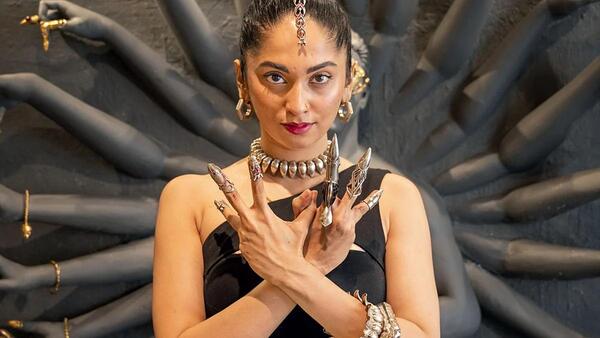
Pratik Chorge. «Bhavya Ramesh.» 2025.
Bhavya Ramesh Jewelry features rings that cover the fingernails, silver adornments connecting multiple fingers, large headpieces, and decorative hair elements. Some forms echo the contours of body parts, while others resemble claws, snakes, or fantastical objects.Silver is the primary material in the brand’s production. In an interview, the designer links the choice of material to its value and the possibility of creating intricate constructions.
These kinds of jewelry pieces significantly differ from typical small rings or earrings in both size and how they are worn.

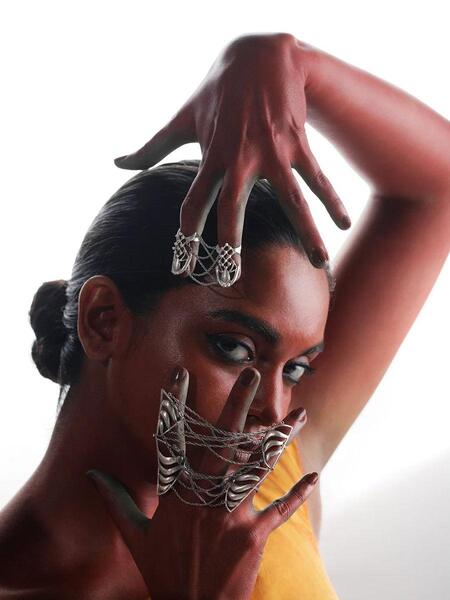
Bhavya Ramesh Jewelry × NorBlack NorWhite. «Stare.» Collection advertisement photograph. 2026. / Bhavya Ramesh Jewelry. «SpiderSpan.» Ring, advertisement photograph. Shooting year not specified.
Details about the pieces are featured in the brand’s promotional materials. To showcase its collections, Bhavya Ramesh Jewelry utilizes staged photography and short films featuring characters, costumes, and independent narratives.The Paraloka project takes place in an antique Indian mansion, where unusual characters appear. In the Ancient Aliens advertising photos, models with painted skin and intricate headpieces are depicted as fantastical creatures. The Stare campaign addresses the theme of protection from the evil eye and employs imagery connected to Indian folklore.
Bidjoy Shetti. «Paraloka.» Commercial Film for Bhavya Ramesh Jewelry. 2024.
In each case, the appearance of the characters and the surrounding environment are linked to the concept of the advertised collection. The jewelry is shown on models, incorporated into costumes, and becomes a noticeable detail in the staged scenes.
Indian Traditions in Jewelry: Bhavya Ramesh Jewelry
Indian artisanal traditions influenced Bhavya Ramesh’s creativity even before she founded her jewelry brand.One of her earliest sources of inspiration was the Banjara culture—communities known for their vibrant embroidery, metallic ornaments, and decorative use of elements in their clothing. In an interview, the designer shared that she studied their traditions and observed the work of local artisans.
She was particularly interested in the relationship of jewelry to everyday life and as a form of self-expression.
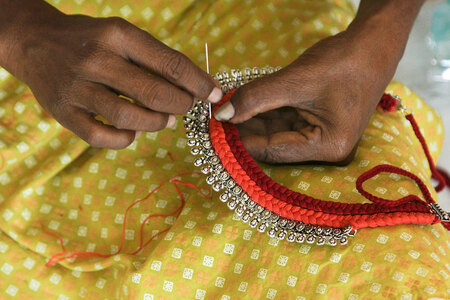

A traditional Bandajara ornament. Photo from the D’source educational project.
Banjara jewelry features silver and other metallic components, pendants, coins, beads, and connected decorative elements. These combine to form large, complex structures. Bhavya Ramesh Jewelry’s work also includes bold pieces that cover significant parts of the head, wrist, or fingers.However, surface similarity does not equate to an exact reproduction of traditional pieces. The brand’s modern constructions differ in fastening methods, proportions, and the placement of decorative details.
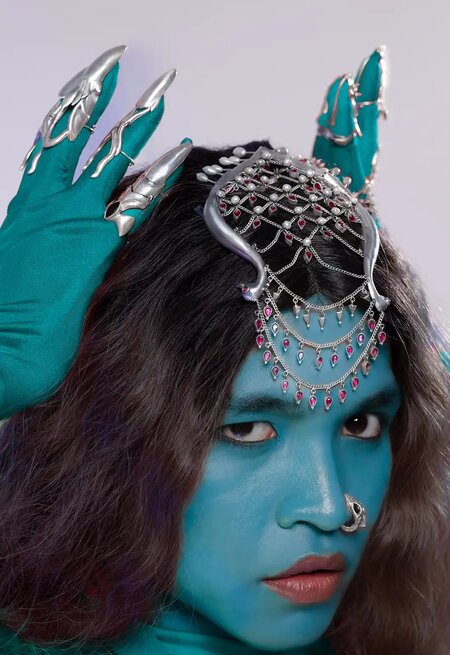

Bhavya Ramesh Jewelry. «Jhilmil.» Headpiece from the Ancient Aliens collection. / Bhavya Ramesh Jewelry. «Palki.» Headpiece from the Ancient Aliens collection.
Protective symbols common in Indian culture hold a special place in the brand’s creative work. The belief in the evil eye, or nazar, is tied to the conviction that a jealous or ill-willed gaze can inflict harm upon a person. Various objects are used for protection: amulets, depictions of eyes, special masks, as well as bunches of lemon and chili peppers, which can be seen near the entrances of homes and shops.


Bhavya Ramesh Jewelry × NorBlack NorWhite. «Gaze Ring.» Earrings from the Stare collection. 2026. / Charvi Mathur. «Nazar Battu Protective Masks at the Surajkund Fair.» 2020. Faridabad, India.
In the collaborative collection Stare, created by Bhavya Ramesh Jewelry and NorBlack NorWhite, protective artifacts form the basis of the jewelry. For example, the Tusk earrings mimic the curved shapes of tusks and horns from a protective mask. They are adorned with small pendants shaped like a lemon and a chili pepper.The brand directly references these sources in the product description. While the details of the traditional talisman retain their recognizable form, their size and materials have been adapted for wearable art.
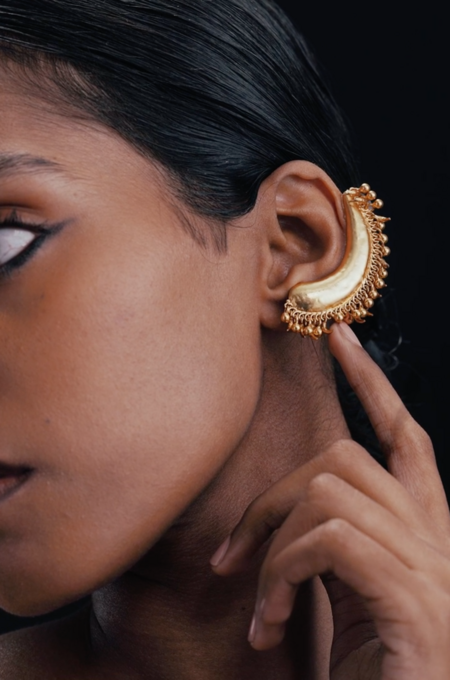

Bhavya Ramesh Jewelry × NorBlack NorWhite. «Tusk Earclips.» Earrings from the Stare collection. 2026.
The eye motif appears in several Stare jewelry pieces. The Gaze brooches are shaped like eyes with highlighted irises and dark pupils. Beneath them are pendants shaped like lemons and chili peppers. In this instance, two protective motifs are combined—motifs that can usually exist independently. The eye becomes the main decorative element, while the small pendants serve to complement it.
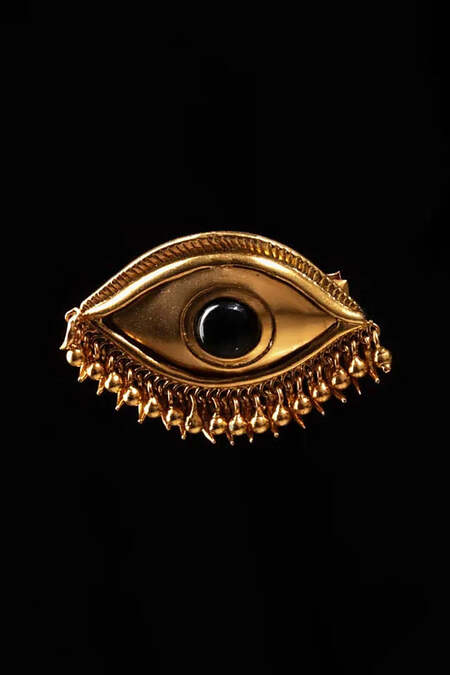

Bhavya Ramesh Jewelry × NorBlack NorWhite. «Gaze Hair Clips.» Hair clips from the Stare collection. 2026.
A similar reference to protective symbolism appears in the decoration of the Vigil Choker. At the center of the rigid silver necklace is an eye, flanked by groups of three dots. In the product description, the brand links these details to traditional body markings used for protection. While retaining the recognizable form of a modern choker, the jewelry conveys its symbolic meaning through a limited number of details.

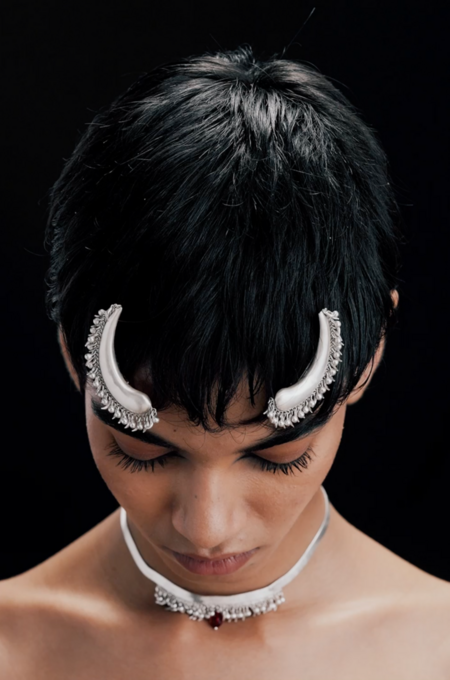
Bhavya Ramesh Jewelry × NorBlack NorWhite. «Vigil Choker.» Necklace from the Stare collection. 2026.