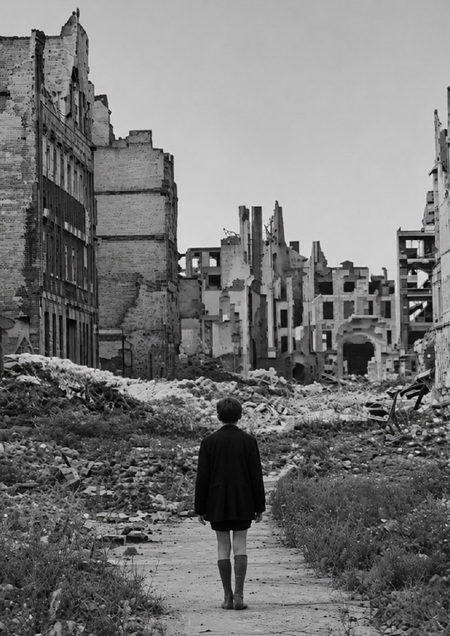
Concept
Loneliness is one of the enduring phenomena of human existence, which has found diverse reflections in art throughout history. In 20th-century European cinema, the interest in the human inner world gradually moves beyond external action and becomes an essential element of artistic narrative. Social changes, the aftermath of wars, the collapse of established ways of life, and shifts in human relationships create conditions where images of alienation, isolation, and loss of connection with the surrounding world arise more frequently. Characters find themselves in the necessity of existing within a society that is not always capable of accepting them, hearing them, or providing them with a sense of security.
Loneliness doesn’t always mean a person is physically alone. Sometimes it arises even when there are other people around.
In European cinema, solitude is manifested not only through plot circumstances and characters' experiences but also through the features of the visual language. A person can be separated from their surroundings by space, be amidst a crowd, remain in a closed interior, or avoid direct contact with others. However, the hero’s internal state is not always expressed through emotional performance or direct explanation of what is happening. It can be revealed through frame composition, figure scale, architecture, light, editing, the direction of gazes, and body posture.
The visual investigation seeks to answer the question: How does cinema make solitude visible? How can one portray a person’s alienation in a space filled with people and objects? Why can a crowd intensify the feeling of isolation? How can the lack of emotional intimacy between characters who are physically near each other be conveyed? And how does a person’s placement within the frame reflect their relationship with the surrounding world?
The director conveys loneliness not only through the individual but also through the space that surrounds them and the distance that separates them from others.
The study identifies three visual directions through which the motif of solitude is explored:
1) Space as a metaphor for loneliness 2) Solitude among people 3) Alienation and the impossibility of human contact.
The research examines five feature films by European directors from various periods: Friedrich Wilhelm Murnau’s The Last Laugh (1924), Carl Theodor Dreyer’s The Passion of Joan of Arc (1928), Roberto Rossellini’s Germany Year Zero (1948), Vittorio De Sica’s Umberto D. (1952), and Robert Bresson’s The Pickpocket (1959). The selection of these works is based on the fact that the motif of solitude manifests in different circumstances within them—through the loss of social standing, confrontation with the collective, existence in a ruined world, daily isolation, and alienation from others.
Space as a Metaphor for Loneliness
Space in cinema signifies not only the setting but also a character’s position within the surrounding world. Architecture, room scale, empty streets, and a character’s placement in the frame help illustrate their vulnerability, alienation, and loss of familiar support. In the films The Last Man and Germany, Year Zero, the environment becomes one of the primary visual expressions of loneliness.
Friedrich Wilhelm Murnau, «The Last Laugh» 1924
At the beginning of the film, Murnau emphasizes the protagonist’s position through his spatial placement and interaction with his surroundings. His upright posture, formal attire, and confident gestures distinguish the bellboy from the other hotel staff. Space becomes an expression of his social status and belonging to a specific environment. Later, this connection is disrupted, which allows the film to illustrate the loss of his former standing through changes in the surrounding interior.
Friedrich Wilhelm Murnau, «The Last Laugh» 1924
After the protagonist is transferred to a new position, the formal interiors are replaced by functional office space. The repeating sinks and closed composition create a sense of impersonality. The contrast between the spaces visually conveys the loss of his former status. Murnau illustrates loneliness through the change in the person’s position within a familiar environment. The hotel remains the same, yet the protagonist gradually becomes an outsider in the space that once defined his life.
Friedrich Wilhelm Murnau, «The Last Laugh,» 1924
The hero’s bent posture contrasts with the rigid lines of the interior. The change in his bearing and position in the frame makes his loss of status visible. The architecture remains unchanged, yet the human relationship to it is completely altered.
Roberto Rossellini, «Germany, Year Zero» 1948
Unlike Murnau, Rossellini conveys solitude through the sheer scale of the surrounding world. The protagonist, a boy named Edmund, moves through a ruined Berlin. In wide shots, his figure appears small against the backdrop of damaged buildings and empty streets. Architecture dominates the frame, underscoring human vulnerability in relation to the surrounding space.
Roberto Rossellini, «Germany, Year Zero» 1948
The length of the ruined streets and the character’s movement into the depth of the frame amplify the sense of being lost. The space offers him neither shelter nor direction, and prolonged observation of the movement underscores the disconnection from the surrounding world.
Roberto Rossellini, «Germany, Year Zero» 1948
The crumbling walls and exposed architectural structures strip the space of its usual enclosure. The protagonist finds themselves within an environment that can no longer function as a home or a sanctuary. Through the ruined architecture, the director conveys a lack of stability and security.
Space can express loneliness through various visual techniques. In Murnau’s work, the character’s isolation is revealed through the contrast between grand and functional interiors, while in Rossellini’s, it is conveyed through the disproportion between the human figure and the ruined city. In both films, the surrounding environment becomes more than just a backdrop—it becomes a way to illustrate humanity’s loss of its place in the world.
Solitude among people
Sometimes, the presence of other people, paradoxically, intensifies feelings of isolation. Directors convey this through juxtaposing a single character against a group, using shot-reverse-shot editing, close-ups, and the deliberate placement of characters within the frame.
Karl Theodor Dreyer, «The Passion of Joan of Arc» 1928
Dreier contrasts Jeanne with the panel of judges through the placement of figures and the camera angle. The accusers occupy a dominant position in the frame, while the heroine is visually isolated among them. The composition emphasizes the inequality between the individual and the collective.
Karl Theodor Dreyer, «The Passion of Joan of Arc» 1928
Dreier almost entirely excludes the surrounding space, focusing attention solely on Jeanne’s face. Tears, the direction of her gaze, and subtle shifts in her facial expression become the primary expressive elements. The absence of other characters within the frame intensifies the feeling of her isolation, even though she remains emotionally responsive to those around her.
Karl Theodor Dreyer, «The Passion of Joan of Arc» 1928
A low angle and close-up emphasize Zhanna’s detachment from her surroundings. Her face dominates nearly the entire frame, and her gaze is directed upward, beyond the edges of the view. The absence of other characters in the image heightens the sense of the heroine’s inner isolation.
Close-ups of the accusers' faces amplify the feeling of psychological pressure. Individual facial expressions coalesce into the image of a hostile group. The presence of many people does not alleviate Zhanna’s solitude; it makes it more pronounced.