Concept
The home in cinema can reveal much about a person’s social standing. The size of the dwelling, the number of rooms, the decor, and the possibility of privacy reflect the family’s material wealth. The domestic space in cinema depicts not only affluence but also the organization of daily life: who performs household chores, who owns the common areas, and how responsibilities are distributed. Therefore, analyzing interiors allows one to trace how class differences, gender roles, and power dynamics are portrayed through the organization of living spaces. [4; 5]
Six American films from the 1920s were selected for the study.
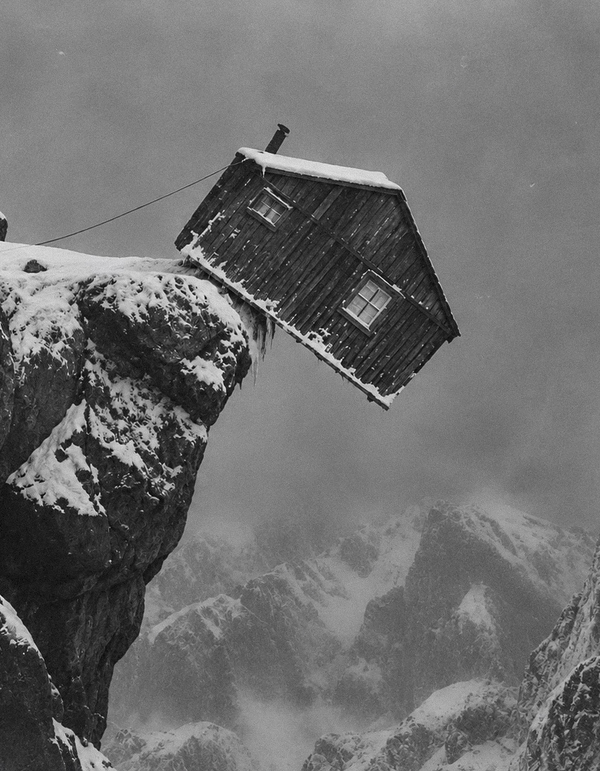
«Stella Dallas» (1925) presents the home as a symbol of affluence and social boundaries. «The Crowd» (1928) addresses the issue of confinement and the lack of personal space. «The Home Maker» (1925) explores shifting family roles through domestic life. In «Greed» (1924), the state of the interior reflects the characters' status, while in «The Gold Rush» (1925), the dwelling becomes a source of physical danger. «Sunrise» (1927) contrasts rural and urban environments. The selection of this period is related to the development of visual techniques in American cinema. These films are examined as works of art in which space is organized to convey specific meanings. [6]
The work is divided into five chapters.
The first addresses the visual markers of wealth and social distance; the second—claustrophobia and lack of privacy. The third examines the connection between the material world and the distribution of family roles, while the fourth treats housing as a space of instability and danger. The final chapter addresses the environment and the contrast between rural and urban lifestyles.
The theoretical foundation is built upon works in film history, housing sociology, and gender studies.
To analyze the organization of screen space, we utilize research from D. Bourdieu, J. Stiegler, and K. Thompson, E. K. Cromley’s approach to room functions, and K. E. McHugh’s work on domestic labor. Additionally, lectures by S. S. Artsibasheva on the film «The Crowd» are incorporated. The primary method is visual analysis of the footage, which includes examining layout, the scale of the spaces, the placement of objects, and the positioning of characters. Observations are correlated with the plot and the film’s context. [3; 4; 5; 1; 2]
Core research question: how does the organization of living space communicate social inequality?
The hypothesis is that in American cinema of the 1920s, interior design functions as a means of representing class distinctions. Spacious housing correlates with material affluence and the ability to achieve privacy, whereas in modest quarters, domestic zones intersect, and responsibilities are distributed unevenly. Furthermore, the dwelling can also become a source of physical danger. Thus, the layout and material environment in film are not a neutral backdrop; rather, they participate in revealing social relationships.
Navigator
- The Home as a Showcase: Scale and Social Distance
- Confinement and the Illusion of Privacy
- The Object World and the Redistribution of Roles
- The Home as Threat: Physical and Social Instability
- The Private and the Public: Boundaries of Personal Space
The Home as a Showcase: Scale and Social Distance
Housing allows one to gauge a person’s material status even before it is revealed in the narrative. Not only do furniture and expensive items matter, but the very layout of the home is significant. For example, the presence of separate rooms suggests the capacity to organize personal space, whereas in a small dwelling, one room might simultaneously function as a bedroom, dining area, and workspace. [4]
Stills from the film «Stella Dallas» (Stella Dallas, dir. Henry King, 1925).
In the film Stella Dallas (1925), the Morrison family home serves as a unique reflection of their social standing. High ceilings, wide doorways, and an open layout create a sense of spaciousness. Yet, the space also segregates the characters: representatives from different social classes rarely intersect within the confines of a single room. For Stella, this house feels alien. Despite being physically present in it, she lacks the authority to command the surrounding space or feel like its rightful owner.
Stills from the film «Stella Dallas» (directed by Henry King, 1925).
Lorelle’s room in this frame demonstrates that a private space is not only a sign of affluence but also a testament to the opportunities available to an individual. The girl has her own room with a bed, a bookshelf, and a dedicated study area, allowing her to separate rest, education, and personal pursuits. This analysis is based on the approach of E. K. Cromley, who suggests viewing the home through the lens of room functions and their daily uses [4]. Against the backdrop of her previous life with her mother, Lorelle’s room underscores a change in her social standing.
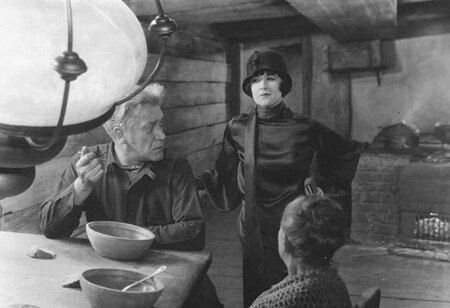

Stills from the film «Sunrise: A Song of Two Humans» (directed by F. W. Murnau, 1927).
Another approach to spatial depiction is presented in the film «Sunrise» (1927). Here, the contrast is built not so much on the size of the house as on the surrounding landscape. The left frame shows the modest rural dwelling of the protagonists, while the right frame displays the open space of fields and sky. Nature here becomes an extension of the domestic environment, creating a sense of tranquility and intimacy.
Still from the film «Sunrise: A Song of Two Humans» (directed by F. W. Murnau, 1927).
The city, by contrast, is depicted as a dense space filled with storefronts and crowds. While space in «Stella Dallas» underscores social inequality, the open landscape in «Sunrise» is associated with a sense of harmony that contrasts with city life.
Comparing two films reveals that the significance of residential space is not solely determined by its size or cost. Equally important are the opportunities it offers a person and how it influences their relationships with others. A home can emphasize social superiority and segregate people, but it can also become part of an environment where an individual feels freer.
Confinement and the Illusion of Privacy
Personal space implies the ability to be alone without disturbing other family members or constantly encountering their daily activities. In a home interior, this is usually provided by separate rooms or at least a clear division of living zones. However, in small apartments, this possibility is often limited by the layout itself. [4]
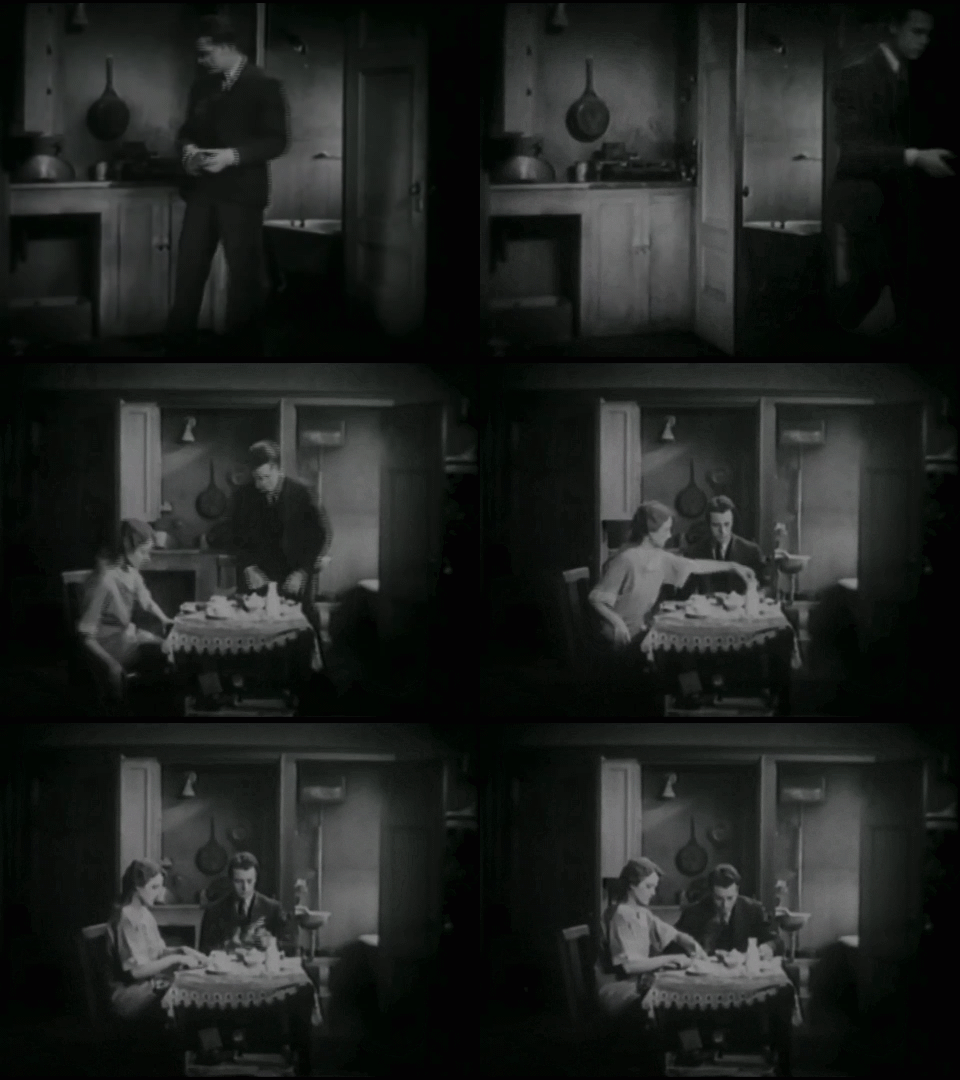
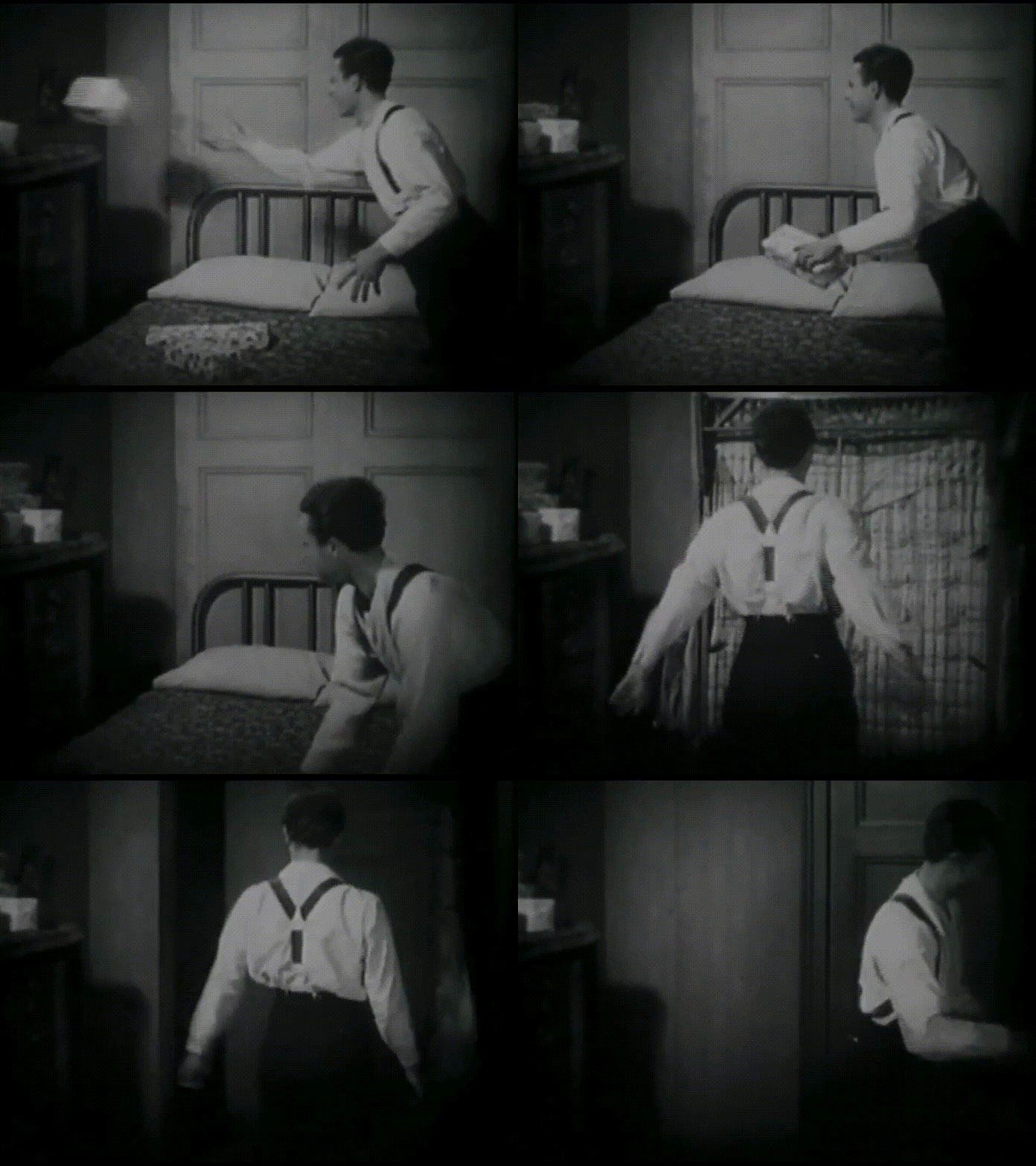
Stills from the film «The Crowd» (directed by King Vidor, 1928).
In the film The Crowd (1928), the lack of space becomes a noticeable part of the characters' daily lives. The apartment is arranged so that various domestic activities take place practically next to one another. The folding bed allows the living room to function as a bedroom, and the dining table is located very close to the bathroom. Since the rooms lack clear functional divisions, the family members are constantly forced to adapt to each other’s presence.
Still from the film The Crowd, directed by King Vidor (1928).
As a result, the apartment remains a shared space in which it is virtually impossible to have solitude. Even if the protagonist is temporarily alone in a room, this does not mean the space belongs exclusively to them. Another family member can interrupt this solitude at any moment. Thus, the possibility of a private life here exists more in theory than in practice.
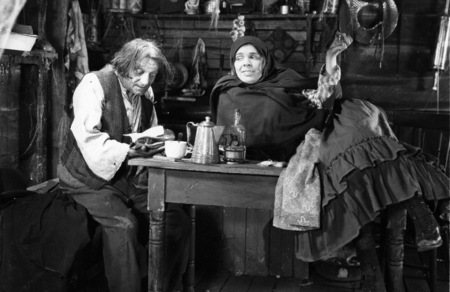

Stills from the film «Greed» (directed by Erich von Stroheim, 1924).