In the previous chapters, the body appeared primarily as an active participant in interaction—touching, moving, responding—whereas here it becomes both image and material. In the selected works, artists recreate bodies anew: reconstructed, artificial, assembled from silicone, wax, fabric, metal. They appear alive, though no life is present within them. It is in this paradox—presence without the one who is present—that phantom tactility emerges.
The viewer responds to the artificial as if it were alive, sensing the familiar qualities of skin, its fragments, softness, warmth, or vulnerability, even when the material itself is inert. These works engage the memory of the body: bodily sensitivity continues to exist without physical contact. Tactility shifts into the imagined, turning into a field of sensory illusions and empathic projections.
Contemporary artists do not imitate the body literally—they explore its capacity to become metaphor, shell, and a form of experience. Their work shows how the body continues to live within material: compressing, decaying, viscous. In this, a new corporeality takes shape—hybrid, artificial, yet emotionally truthful. This body does not require touch, because it becomes touch itself—an image that evokes a response.
The Body in Transformation
In contemporary art, the body often appears at the moment of deformation, disintegration, or change. Artists abandon the fixed image of the human, approaching corporeality as a state. Here, transformation is understood not as a metamorphosis of form but as an experience: the body is felt as a fluid material capable of changing while still retaining its sensuality.
From the soft organic forms of Dorothea Tanning and Louise Bourgeois to the bodily shells of Francesco Albano and Berlinde De Bruyckere, these works explore how the body can be fragile, vulnerable, and still deeply resonant. They capture the moment of becoming, when the material turns emotional, and the skin becomes the boundary between the inner and the outer.
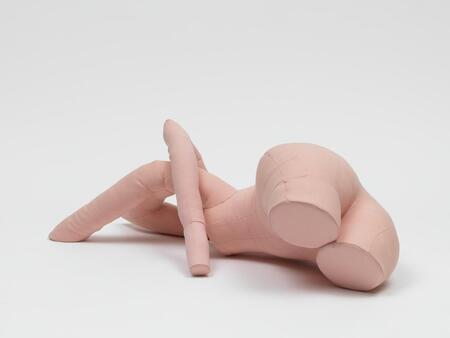
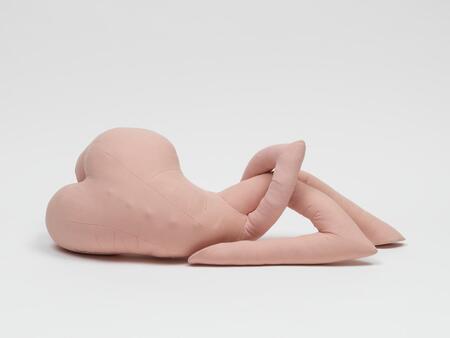
Nue couchée, 1969–1970 — Dorothea Tanning
Tanning’s soft sculpture balances between body and object, between movement and stillness. The smooth, sewn fabric form resembles a shape or a tree trunk with severed branches.
Tanning moves away from literal representation and creates an organic shell in which the living is sensed through details and contours. There is sensuality without eroticism; presence without a concrete human figure. Tanning shows how form can be bodily without depicting the body directly — how matter itself begins to feel alive.
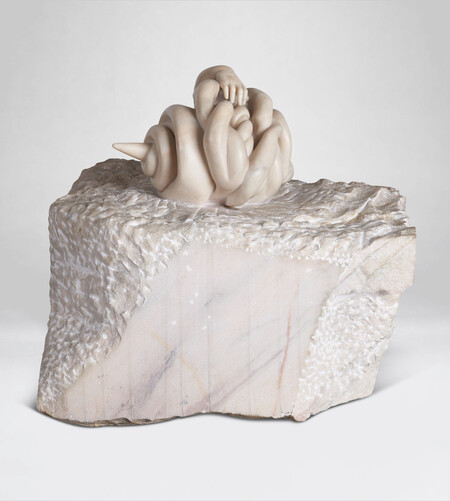
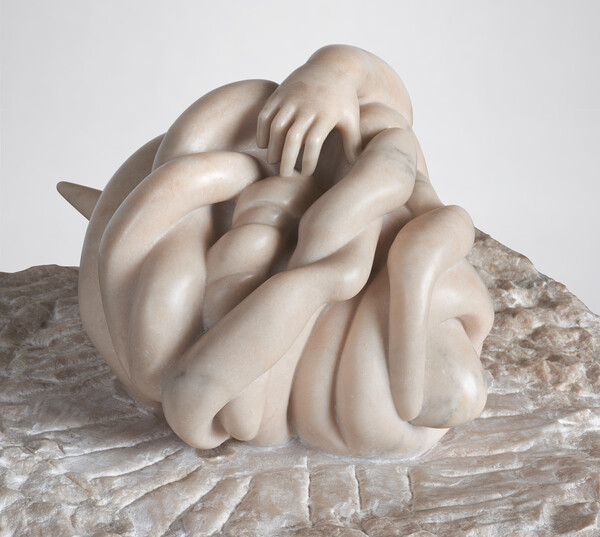
Nature Study, 1986 — Louise Bourgeois
In Nature Study, cold pink marble turns into flesh. Bourgeois makes the stone appear soft and tender by placing a twisted mass atop a rougher surface. The sculpture resembles a snail shaped from a hand twisting onto itself.
The work holds a tension between the inner and the outer: the natural structure of the marble remains visible, yet it is shaped by the artist into something with human traits. This creates the impression of a living being without a clearly defined body; a single hand and its spiraling movement are enough for the viewer to perceive it as corporeal and to understand the sensation of being curled in on oneself.
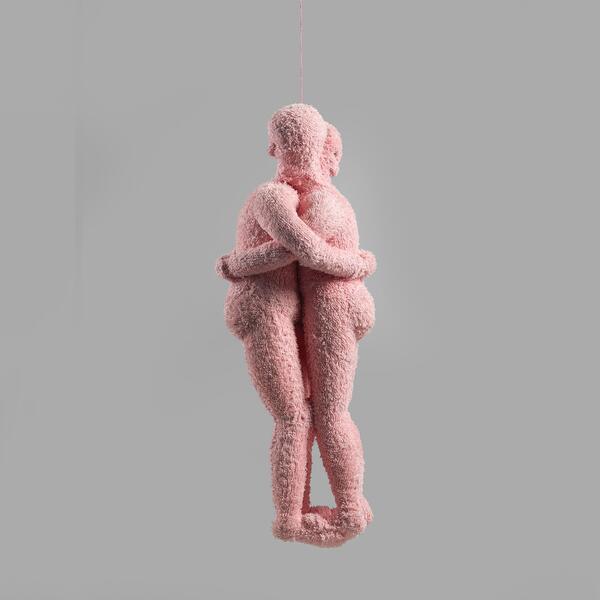
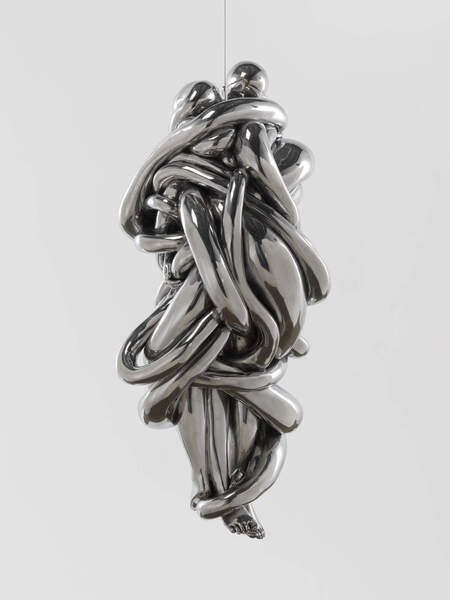
Couple, 2002 // The Couple 2007-2009 — Louise Bourgeois
In the two works titled Couple, the body is depicted differently but becomes an image of dependency and attachment. Two bodies, locked in endless embrace, hang suspended in the air, balancing between heaviness and lightness, merging and simply coexisting. In the soft pink fabric version, the warmth of textile evokes the familiarity of skin.
In the aluminum Couple, the body loses its softness and becomes a polished cast cocoon. The material is cold, yet the form preserves the same tension — the intertwining, the impossibility of separation. Bourgeois translates emotional states into physical form: closeness becomes structure, dependency becomes shape. The body loses individuality but gains a new unity, becoming a symbol of an inseparable human experience.
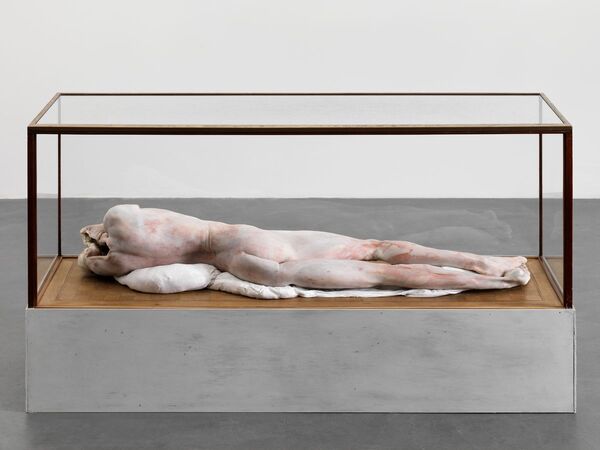

«Lange eenzame man», 2010 // «Arcangelo glassdome III», 2023 — Berlinde De Bruyckere
De Bruyckere creates bodies that appear almost too alive to be wax sculptures. Her works sit on the boundary between the sacred and the corporeal, as though religious iconography merged with an anatomical study. High Lonely Man — an elongated figure — seems at once sleeping, dying, decomposing, and frozen in a moment of bodily transformation.
The artist deliberately conceals faces, replacing individuality with universality, allowing the body to speak for itself. Blankets, coverings, and skin become thresholds between interiority and exposure, between vulnerability and comfort. In Archangel in a Glass Dome III, this effect intensifies: the legs sealed under glass are perceived as a relic. Berlinde De Bruyckere’s sculptures remind us that fragility can be monumental.
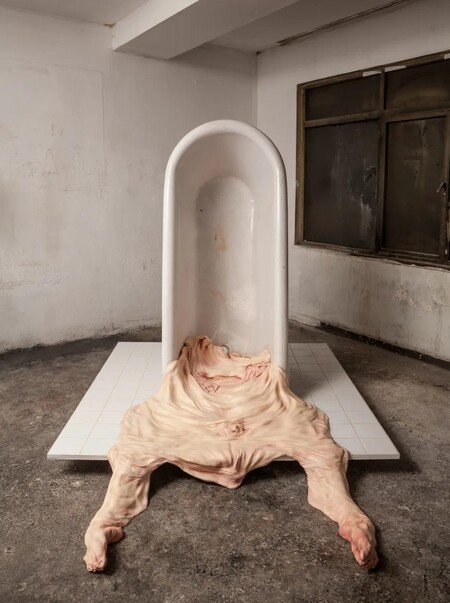
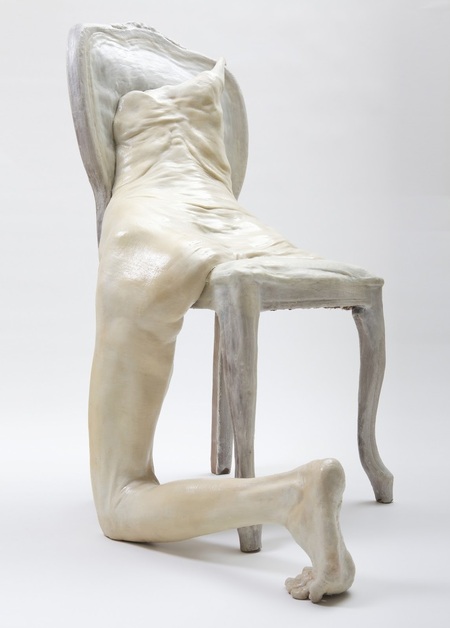
On the Eve, 2013 // When Everyday Was Thursday, 2010 — Francesco Albano
In Albano’s sculptures, the body seems to dissolve into its own shell. Forms sag, stretch, and flatten, as if the skin has separated from what once filled it. These images suggest bodies without support, without a center, existing in a state of collapse.
Albano does not depict suffering but a physical manifestation of inner fracture. His figures lack faces, gender, or age, yet their folds and drooping contours express human vulnerability. Here, skin becomes a material of memory — it holds imprints and traces of life, though life itself has left. The sculptures resemble skins shed from the body, or shells that contain only the echo of presence.
In his work, the body stops being an image of a person and becomes the matter of experience — compressed, thinned, yet still responsive.
Across all these works, the body ceases to be a stable form and becomes a process of change. It is fluid, soft, compressible, decaying, yet still sensorial. The artists show the body not as a representation of a human but as the material of experience — a substance capable of storing memory of life and of touch, which explains its facelessness. Here, the living and the non-living merge: fabric and marble, wax and aluminum, skin and air become equal mediums of corporeality. The body exists not as an object but as a state — mutable.
The Body as Object
Another mode of the body’s presence is its consideration as a thing, an object, a material, a surface. Artists work with imitations of skin, organs, and traces of life, turning the corporeal into an object of observation and reflection.
From Alina Szapocznikow’s lamps to the silicone works of Maayan Sophia Weinstub and the sculptures of Holly Hendry, the body becomes an artifact that preserves the memory of the living. In these works, the viewer encounters a paradox: the non-living evokes a sense of closeness, and the artificial conveys vulnerability. This is where the effect of phantom corporeality arises—contact that happens not through skin, but through visual and emotional sensation.
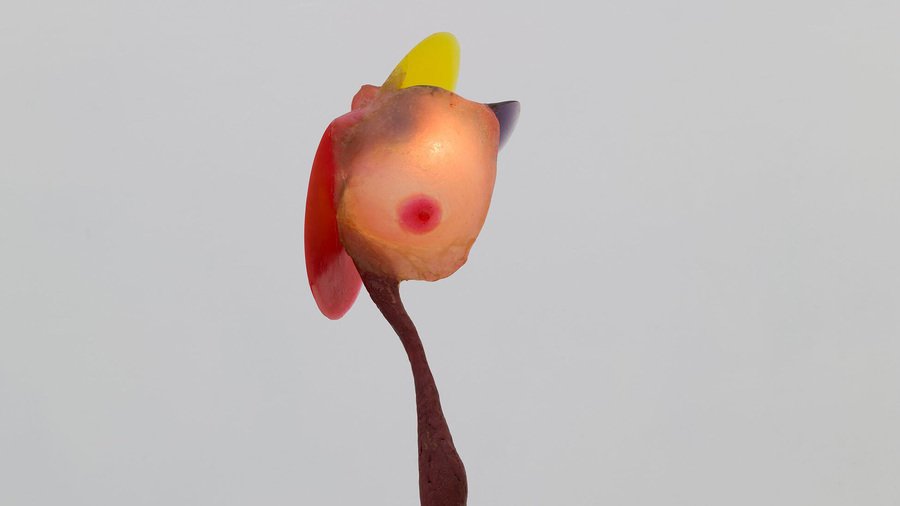

Lamp, 1967 // Lamp, 1970 — Alina Szapocznikow
In her lamps, Szapocznikow fuses the body with the mechanics of an object. Cast body parts initially resemble abstract color patches or plant-like forms transformed into sources of light. She literally turns the body into a functional object, yet this gesture does not dehumanize; instead, it reveals the body as part of the environment, part of nature.
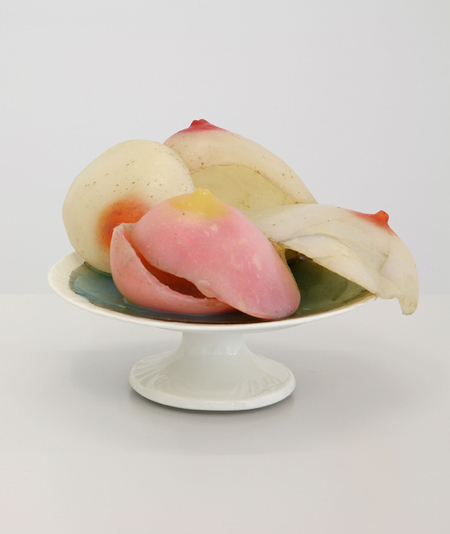
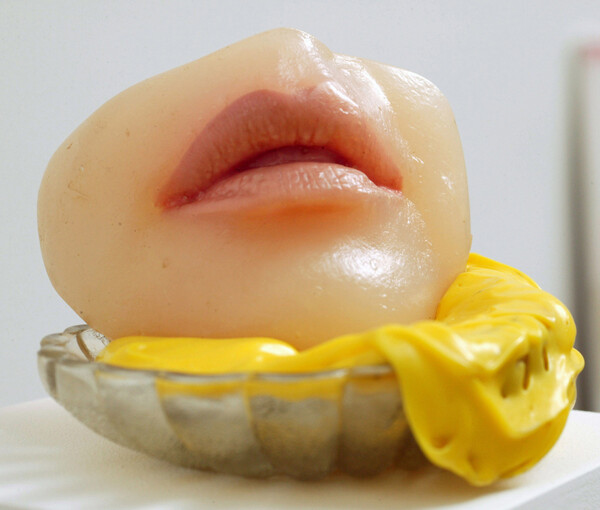
Dessert III, 1971 // Petite Dessert I, 1970–1971 — Alina Szapocznikow
In the Desserts series, the body becomes an edible image—a metaphor of desire and consumption. Body fragments, reminiscent of marshmallow or meringue, appear appetizing at first, and then, once recognized as human parts served on plates, evoke unease. These «treats» provoke an almost physical reaction through their vivid realism. Szapocznikow exposes the duality of our relationship to the body—between pleasure and fragmentation. Having experienced illness and the awareness of her own mortality, she materializes the anxiety of corporeal existence, preserving it in the form of seduction and irony.
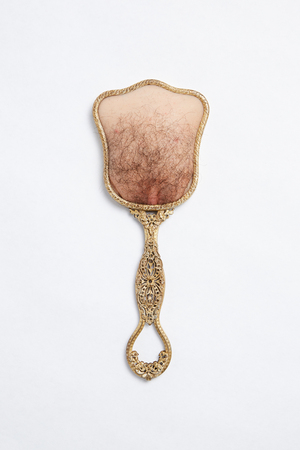

Objects, 2021 — Manuela Benaim
Benaim created a mirror whose surface is cast from an armpit—a part of the body usually concealed. The embedded hair and texture of skin transform the mirror into a living surface in which the reflection is not an idealized image, but the reality of the body itself.
She shows how an item meant as a tool of self-perception becomes a boundary between the real and the imagined body. The mirror does not reflect beauty—it reflects doubt, vulnerability, and imposed norms. Through merging the intimate with the utilitarian, Benaim collapses the distance between body and object, turning the body into a material that looks back.
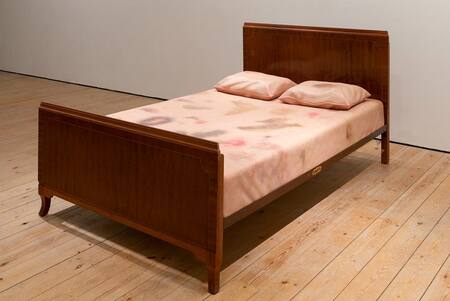
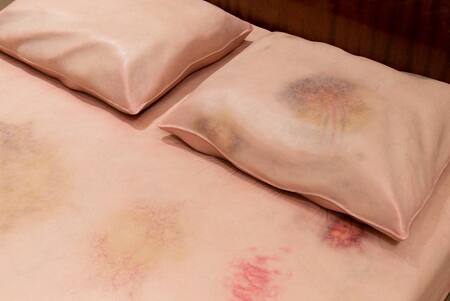
Bed, 2022 — Maayan Sophia Weinstub
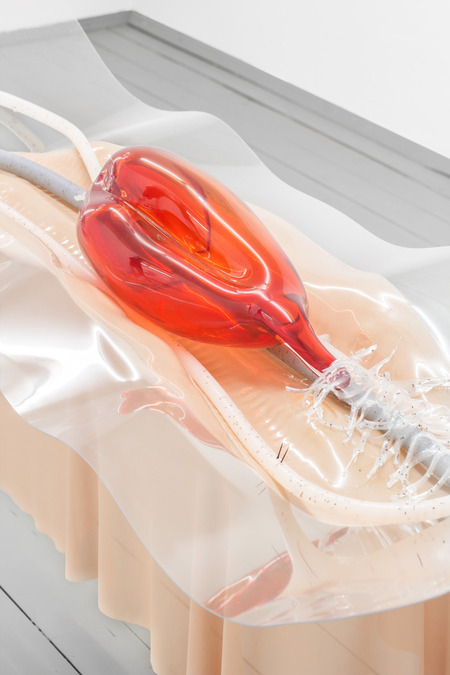
Weinstub’s work is a bed whose sheets are replaced with skin. The surface appears alive yet is marked by bruises and traces of pain. The artist transforms a familiar symbol of rest and comfort into a site of vulnerability and suffering.
The work speaks of trauma hidden within the everyday—of how violence can occur precisely where safety is expected. The body is absent, but its imprint is palpable in the material, in the marks, in the damage. This skin-bed becomes an image of the body’s memory, which retains pain longer than the mind.
The piece resists neutral contemplation: the viewer feels as if intruding into someone else’s intimate space, becoming a witness to what has been endured.
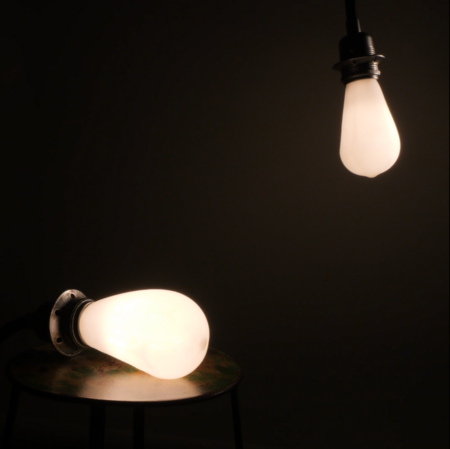

Let There Be Light — Breathing Bulbs Installation, 2024 — Maayan Sophia Weinstub
In this installation, Weinstub brings together light and breath—two symbols of life. Elastic bulbs inflate and deflate, mimicking human breathing.
She merges technique with the organic, drawing a parallel between the human body and a mechanism. The bulbs breathe, but artificially; they live, yet without a body. This synthetic rhythm is both soothing and unsettling, as we recognize our own fragility within it.
Weinstub creates a poetic image of artificial life. Watching the movement of light elicits a physiological response, as if the viewer begins to breathe in sync.
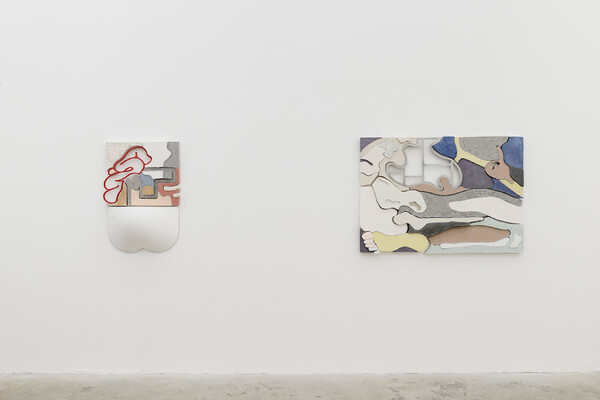

Gum Souls, 2018 — Holly Hendry
Gum Souls, 2018 — Holly Hendry
In Gum Souls, bodies appear as slices, diagrams, and fragments of anatomy merged with mechanical elements. Flat reliefs made of pigmented plaster and cement recall medical illustrations and the insides of toys.
Hendry presents another type of corporeality—mechanized yet not lifeless. Her Gum Souls are hybrids of human and machine, both ironic and unsettling. Plaster, metal, and plastic emphasize the synthetic nature of the contemporary body, dependent on technology and infrastructure.
She literally opens up the architecture of the body, revealing that beneath the skin lie no longer muscles but wires, pipes, seams. This is the body of the 21st century—integrated into systems yet still capable of feeling.

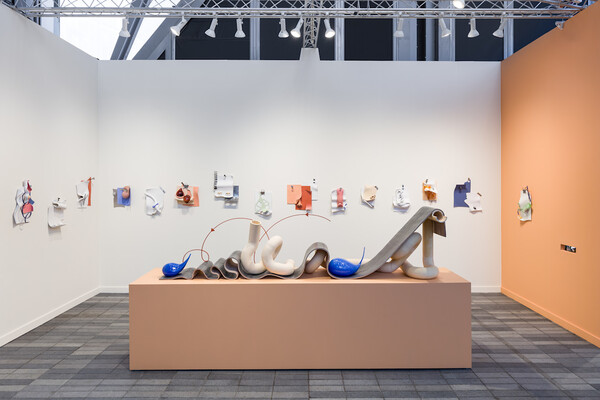
Notes to Self, 2024 — Holly Hendry