3000 лет назад произошла цепочка подземных катаклизмов, спровоцировавшая глобальные извержения вулканов, после которой жизнь на планете стала невозможна.
Однако крохотная часть человечества смогла адаптироваться к экстремальным условиям, пережить вулканическую зиму и научиться жить в условиях парниковой жары и кислотных дождей.
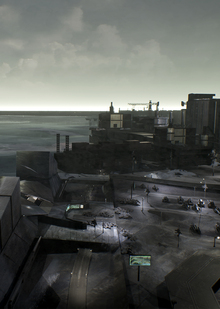
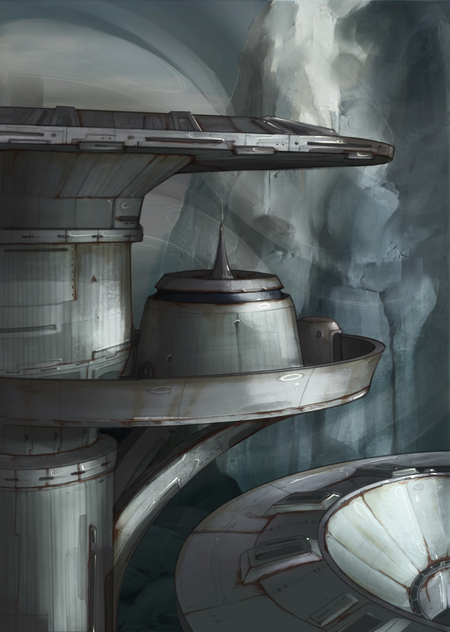
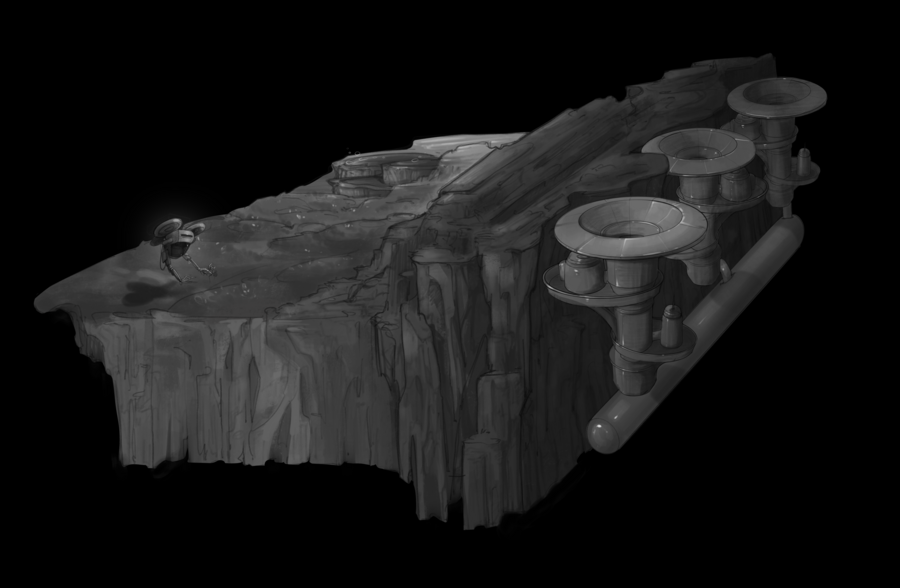
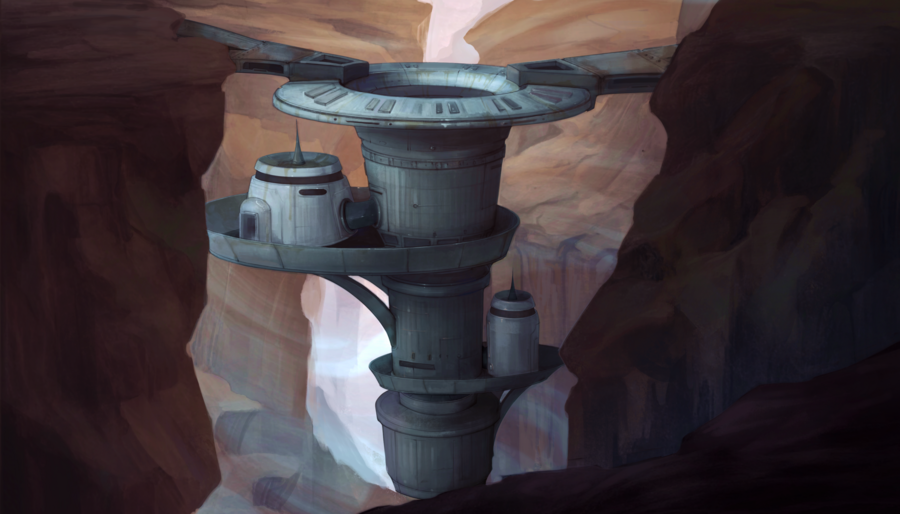
Поселения находятся в изолированных подземных пространствах, построенных в первые годы катастрофы в глубоких естественных пещерах. Из-за токсичной среды выход на поверхность ограничен и строго охраняется. Однако, некоторые конструкции, построенные на поверхности, поддерживают жизнь под землей и требуют наблюдения со стороны людей.
Насекомые, рептилии и некоторые подводные существа мутировали, а люди вынуждены очищать ядовитую воду в промышленных масштабах, синтезировать животный белок и постоянно «сражаться» с враждебной средой.
Трехступенчатая система очистки кислотных атмосферных осадков для обеспечения пригодной для человека пресной воды.
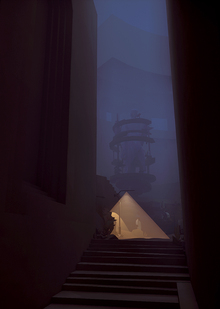
На поверхность выходят вентиляционные шахты и люки, пропускающие естественный свет.
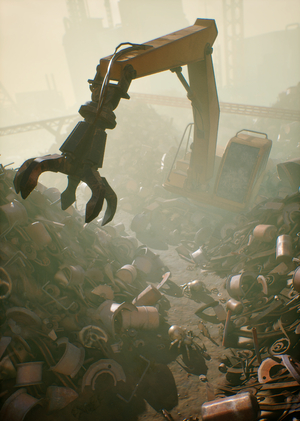
Поскольку для человека прямой контакт с внешней средой смертельно опасен, но изучение ее необходимо, для взаимодействия с мутировавшими растениями используются многофункциональные роботы-сборщики.
Дрон в сборке летучего комбайна помогает собирать и обрабатывать мутировавшие образцы адаптировавшихся растений для изучения и употребления нетоксичных плодов, скрытых под ядовитой оболочкой.
«Сражаться» с дикой природой и внешней угрозой приходится не только путем адаптации и изучения, но и прибегая к физической силе.
Для выполнения работы на поверхности необходимо функциональное, легкое и малогабаритное вооружение из нержавеющих вулканических сплавов.
Вам надо быть полностью готовым перед выходом из безопасного убежища на поверхность.