«In the twenty years since Viktor Tsoi’s death, his name has become a magical symbol for fans and a brand for businessmen from the spheres of culture and politics. Various parties have tried to build their careers on the people’s love for the singer, making his songs an anthem and marching in demonstrations with portraits of the 'star'…» [1]
— Marina Strukova.
Introduction
Viktor Tsoi is one of those rare figures whose visual plasticity not only accompanies his creative work but becomes an intrinsic part of the artistic statement itself. His image was never merely a decorative supplement to his music; rather, it existed as an independent layer of meaning—austere, concentrated, almost ascetic.
«We don’t like the old-fashioned sound in Soviet rock. And the lyrics of professional groups—they’re just for show, for sale…» [2]
— Viktor Robertovich Tsoi.
Unlike many performers of the late Soviet scene who built their aesthetic on surface-level effects, Tsoi shaped his presence through contrast—in both the literal and metaphorical sense. Light and shadow served as two poles supporting his entire visual poetics: from early photo portraits and concert stills to his cinematic image in «Igla» and the minimalist, graphic album covers of the band Kino.
It is the chiaroscuro that becomes the universal language through which the key qualities of his image are expressed—inner focus, unfeigned honesty, intense silence. Tsoi didn’t just «wear black, ” nor did he simply stand in harsh backlighting. His visual nature unfolded within the very structure of the frames: a face half-hidden in shadow, a body dissolved in the stage darkness, eyes that become the sole illuminated point in the dim space, a silhouette rising from the spotlight, abruptly cutting into the hall’s blackness. Light and shadow in his visual biography are not merely an aesthetic effect; they are a form of thought.
«I feel that the songs, the lyrics I write—they are very polysemous, very associative; they can be viewed from many different angles, and they can offer each person what they wish to take from that song.» [3]
— Viktor Robertovich Tsoi.
This notion resonates surprisingly closely with his visual restraint. Light and shadow in his imagery function similarly to the structure of his songs: they do not offer direct explanations, but instead create a field for the viewer’s internal contemplation. The contrast within the frame reflects not an external pose, but a constant search, doubt, and layering that Tsoi embedded in his work and his presence before the camera.
Late Soviet culture of the late 1980s existed in a state of sharp contrast—between the old and new systems, between public and private truth, between weariness and the desire for change. Tension was building in society—political, cultural, and emotional. People lived on the boundary of two eras, and the very atmosphere of the time was charged with the feeling of an impending rupture. This was a time when familiar meanings were rapidly devaluing, yet new ones had not yet emerged. Against this backdrop, the chiaroscuro of Tsoi’s image acquires an almost symbolic resonance: he becomes the visual embodiment of the «in-between» era. His metaphorical darkness speaks not of tragedy, but of honesty; his light speaks not of bombast, but of truth. «Tsoi’s question of freedom was essentially answered: 'I am a free person because I always did what I liked and never did what I didn’t want to do.'» [4].
Perhaps this is why its visual restraint resonated so deeply with a generation navigating uncertainty—a generation forced to redefine where the past ends and the new begins. Its image is a sign carved from the era’s contrast, allowing everyone to see their own shadow and light reflected in the figure of a person who spoke little, yet with absolute precision.
Headshots
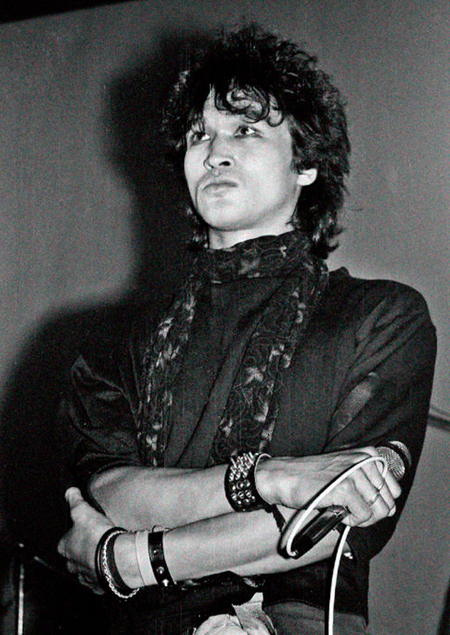
In photographic portraits from the archival period, light and shadow transcend mere technical technique; they become a means of revealing the deep structure of Viktor Tsoi’s personality. The high-contrast lighting emphasizes his inner composure, emotional restraint, and the intense focus of his gaze. The interplay of light and shadow does not simply beautify the image—it unveils character: the capacity for self-reflection, honesty, and a constant inward movement.
Viktor Tsoi, Leningrad. May 1, 1987. Photo: Oleg Flyangoltz. From Maryana Tsoi’s archive.
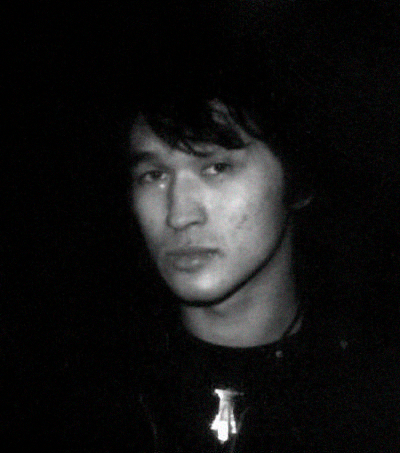
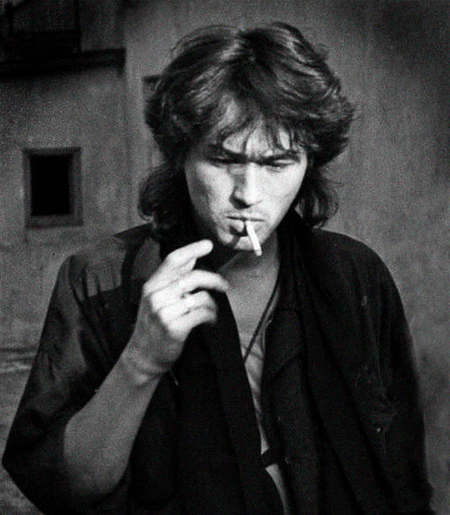
Viktor Tsoi on the set of «Assy.» Year unknown. Photo from N. Razlegova’s archive. / Viktor Tsoi in Odesa. 1988. Photo by Yu. Boyko.
In most of Tsoy’s portrait photographs, the lighting falls from the side, creating a sharp contrast between one illuminated half of the face and the other submerged in shadow. The lit portion of the face seems to symbolize clarity, openness, and a sense of will, while the darkened side suggests doubt, inner reserve, and the intimacy of experience.
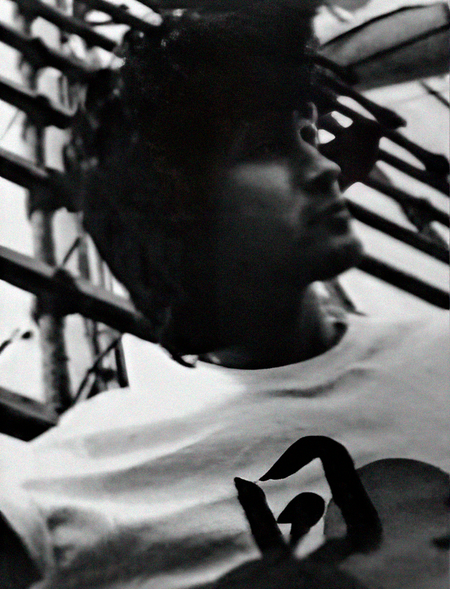
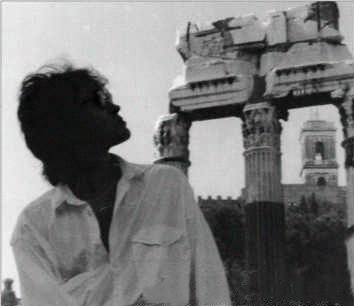
Viktor Tsoi on the sailboat «Tovarishch.» 1990. Photo from G. Guryamov’s archive. / Viktor Tsoi in Rome. 1989. Photo from N. Razlogova’s archive.
Tsoi is almost never fully illuminated—neither by harsh frontal light nor sunlight. This creates an effect of subdued intimacy and inner dialogue, where the protagonist seems to exist in a liminal space between openness and mystery.
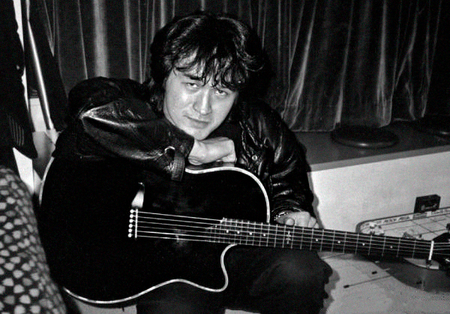
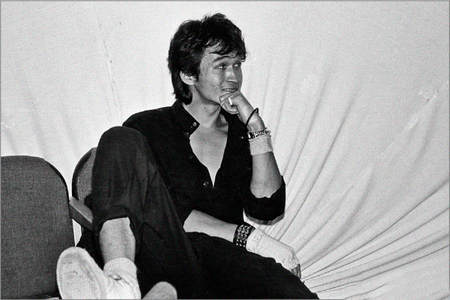
Viktor Tsoi in Tokyo. Year unknown. Photo from the archive of N. Razlegova / Viktor Tsoi in Tallinn. Year unknown. Photo by N. Krasnopyevtsev.
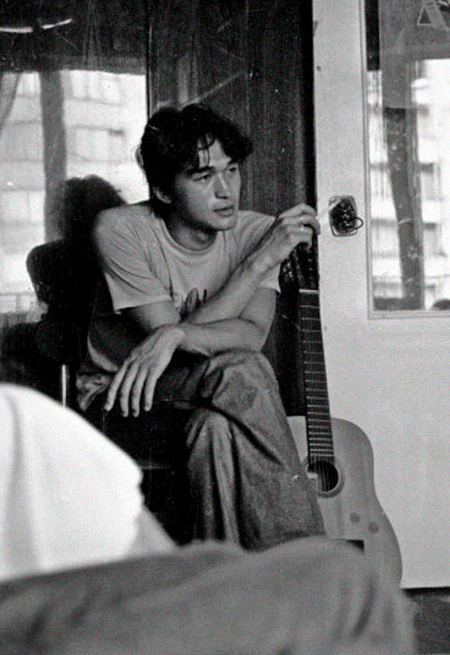
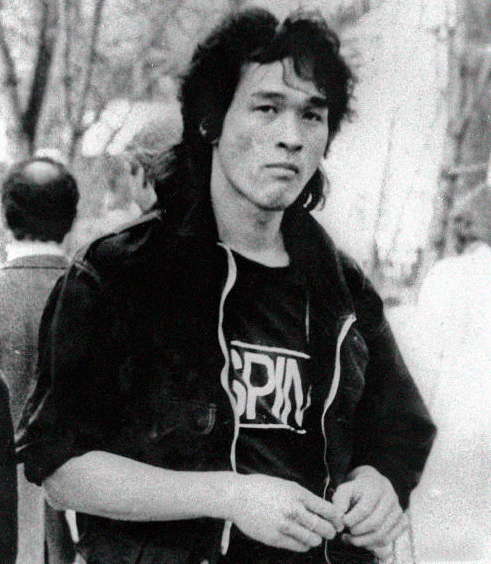
Viktor Tsoi. Year unknown. Photo by V. Bystrov. / Viktor Tsoi. Year unknown. Photo from the archive of R. Nugmanov.
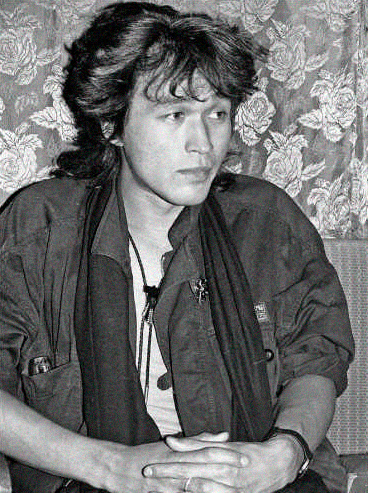
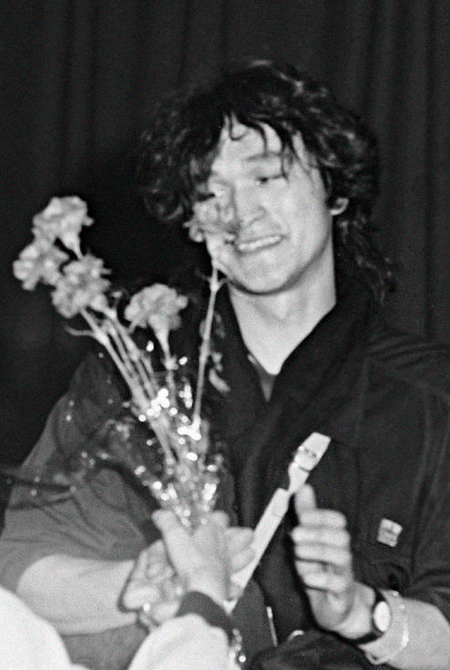
Viktor Tsoi. Odessa. 1989. Photo by O. Boiko. / Viktor Tsoi. Year unknown. Photo by D. Zashcherinsky.
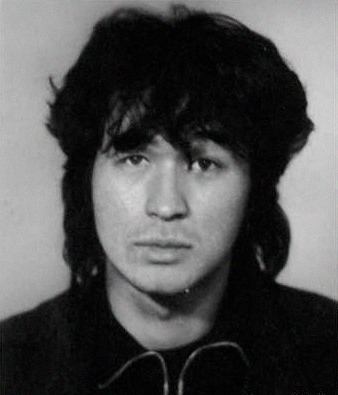
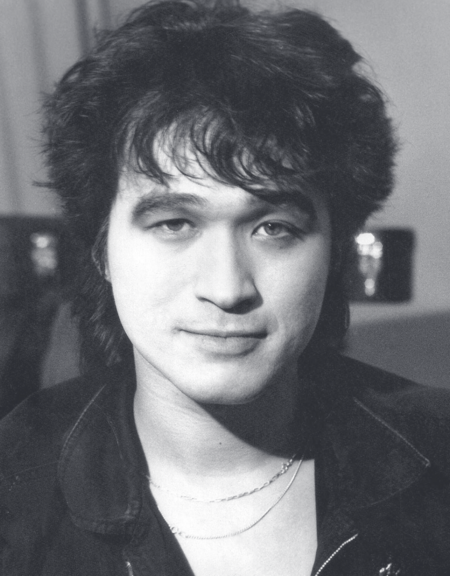
Viktor Tsoi on the set of «Assy.» Year unknown. Photo from the N. Razlogova archive. / Viktor Tsoi. Leningrad. May 1, 1987. Photo by Oleg Flyangoltz. From the Maryana Tsoi archive.
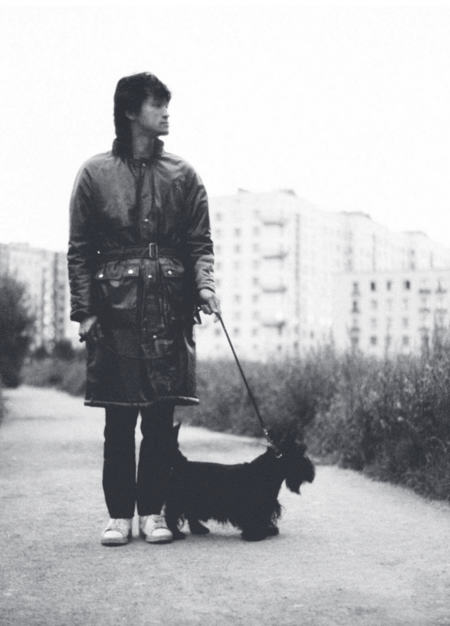
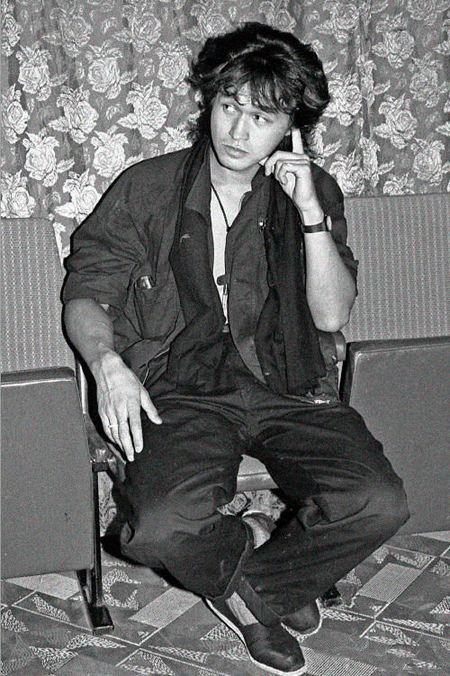
Viktor Tsoi in Odesa. 1988. Photo by O. Boyko. / Viktor Tsoi in Odesa. 1988. Photo by O. Boyko.
In all of Tsoi’s photographic work, he consistently avoids posing and outward expressiveness; the shots feel natural, without artificial performance for the camera. His emotions are restrained, and his poses are calm and stable. This minimalism in gestures and expressions shifts the focus from external dynamism to the interplay of light and shadow. It is this interplay that creates the emotional tension of the frame and reveals the character’s inner state—a quality perfectly resonant with the aesthetic of «Cinema, ” where depth arises not from external effects, but from internal concentration and semantic precision.
Performance stills
The photographs reveal that the chiaroscuro doesn’t merely complement the performance; it constructs a distinct atmosphere, shaping the philosophical and emotional framework through which the artist is perceived.
Viktor Tsoi. Denmark. Year unknown. Author unknown.
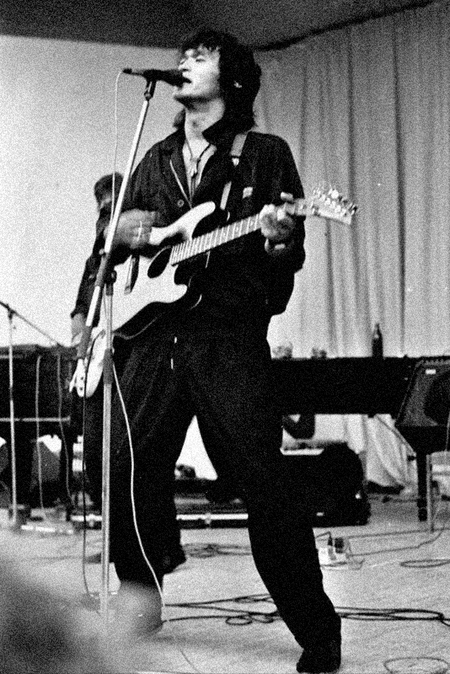
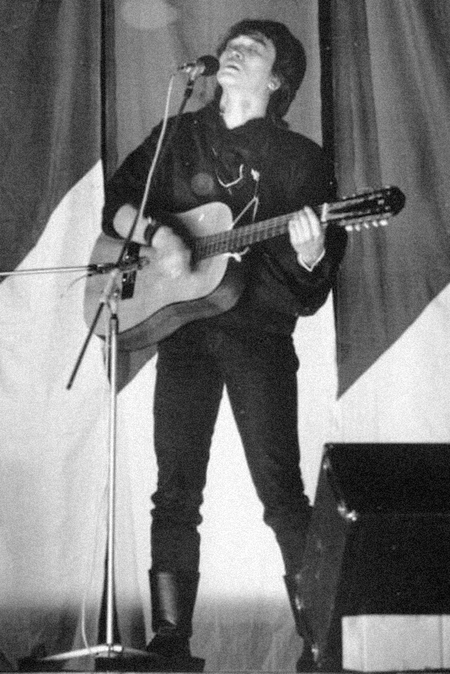
Viktor Tsoi. Alushta. Year unknown. Author unknown. / Viktor Tsoi. Novosibirsk. Year unknown. Author unknown.
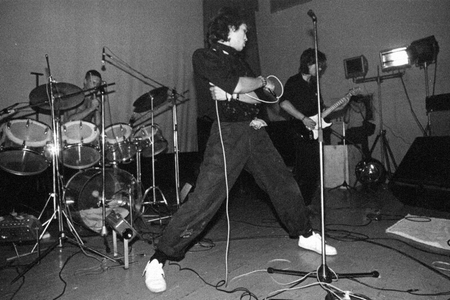
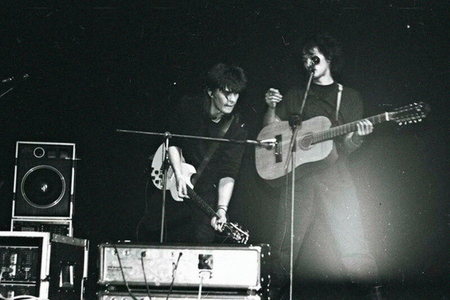
Viktor Tsoi. Riga. Year unknown. Author unknown. / Viktor Tsoi. Dubna. Year unknown. Author unknown.
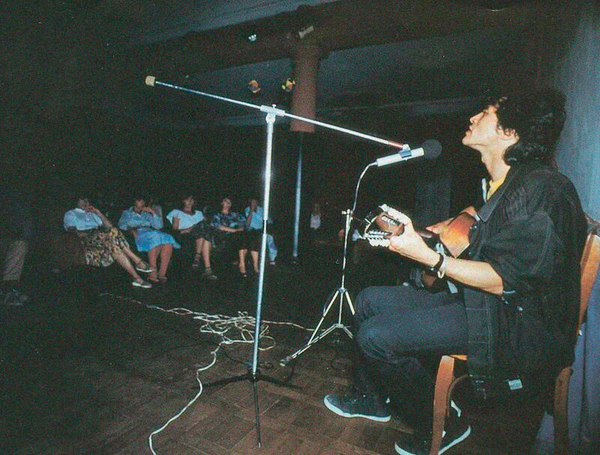
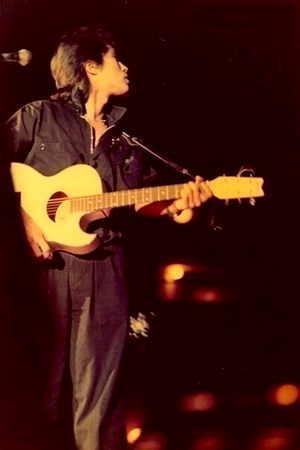
Viktor Tsoi. Perm. Year unknown. Author unknown. / Viktor Tsoi. Dubna. Year unknown. Author unknown.
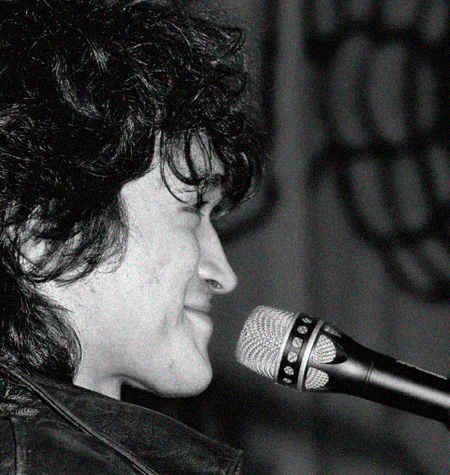
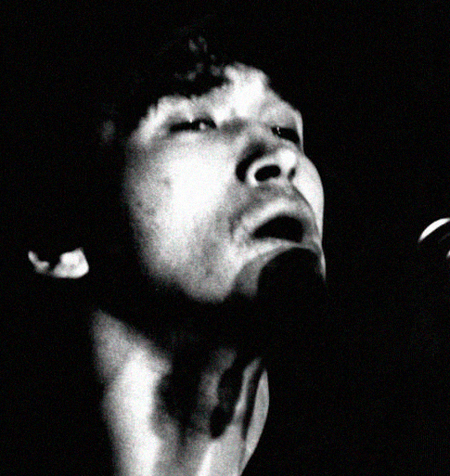
Viktor Tsoi. Year unknown. D Zashcherinsky / Viktor Tsoi. Year unknown. Photo from the M. Shlyamovich archive