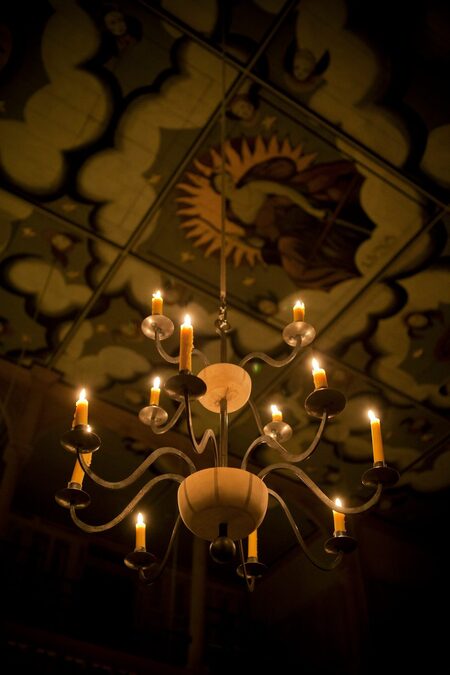
CONCEPT
The lighting in the theater—the darkened house, the illuminated stage, the sense of intimacy with the performance—which the modern audience takes for granted, is in fact a relatively recent achievement. This convention only formed in the late 19th century with the spread of electricity. Prior to this, theaters operated in natural daylight and candlelight, and the illumination did not function as a mere «dressing» for the show; instead, it dictated where, when, and for whom the performance took place, thereby structuring the very communication between the stage and the audience. This paper addresses this topic because it allows us to look at a familiar art form from an unexpected angle: instead of examining the history of plays and actors, we explore the history of the conditions under which they worked.
How does the choice of lighting—daylight or candlelight—alter the relationship between the actor, the text, and the audience?
The hypothesis is that the sun creates a shared space where the auditorium and the stage can see each other, and the light function is taken over by text. Shakespeare himself calls the theater «this wooden O» and asks the audience to complete the picture with the power of imagination. The candle, in contrast, creates a controlled space where intimacy, pause, and darkness are possible. Therefore, these two theaters without electricity should not be seen as «primitive» and «developed» stages of a single evolution, but as two distinct types of theatricality.
The material selection principle was defined by the nature of the task. The research included images of four types: historical sources (Della Vita’s drawing, Fischer and Hollard’s panoramas, Pichen’s drawing, and drawings from Worcester College); photographs of contemporary reconstructions where light is captured in action; footage from performances demonstrating the technique of «word instead of light»; and finally, original diagrams showing elements inaccessible to photography—the path of the sun, the duration of daylight, and comparative characteristics. Each image supports a specific thesis of the work. Historical sources were used critically: Della Vita’s drawing is only available as a copy, and the labels on the panoramas are confused, which limits their evidentiary value and requires caveats.
Navigation:
1. Light Before Shakespeare
2. Theater Under the Sky
3. Spectator Outdoors
4. Candle Theater
5. Sun Versus Candle
6. From Candle to Electricity (?)
7. Conclusion
The theoretical foundation of the work comprises Andrew Gore’s studies on the structure and audience of Elizabethan-era theaters, alongside A. Anikst’s book on theater of that time. Contemporary accounts (Platter, Watton, Henslowe) are treated as primary sources, while reconstructions and research literature are considered secondary. Play scripts are utilized to illustrate how light was created through language; quotes are provided in the original language with their own translation and citation. Controversial assertions, such as the connection between the five-act play structure and candles, are presented in the paper as hypotheses.
LIGHT BEFORE SHAKESPEARE
The idea of natural light predates Shakespeare. In ancient Greece, dramatic competitions took place during the daytime on a hillside. The Theater of Epidaurus, built in the 4th century BCE, could hold about fourteen thousand spectators. People sat down the slope, able to see the stage and each other, and the actor’s voice, amplified by the mask, carried across the space. The sky illuminated this entire area.
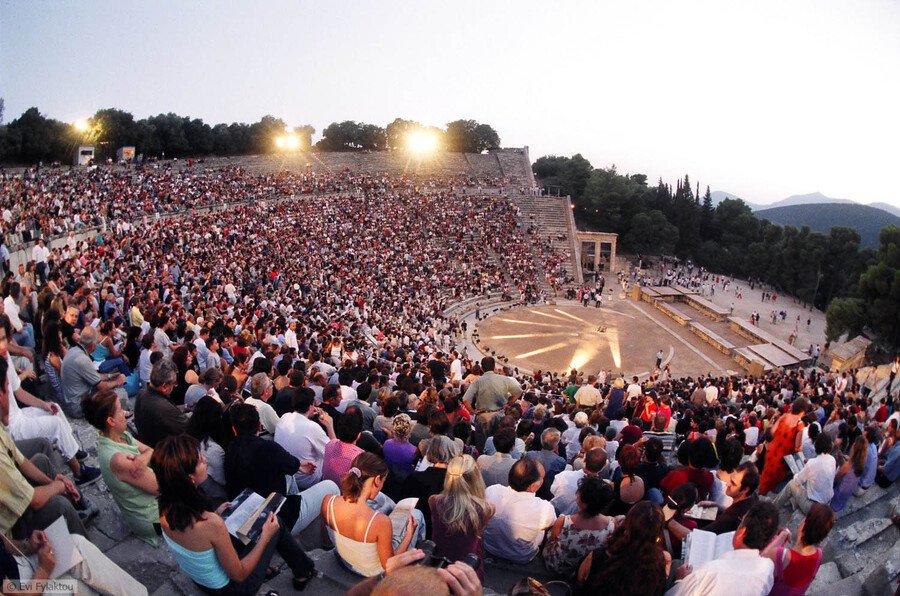
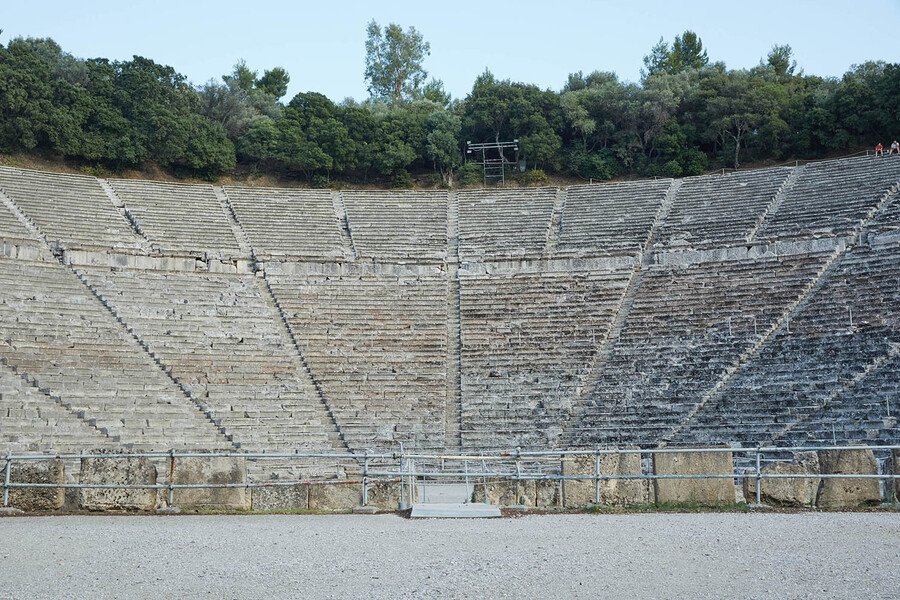
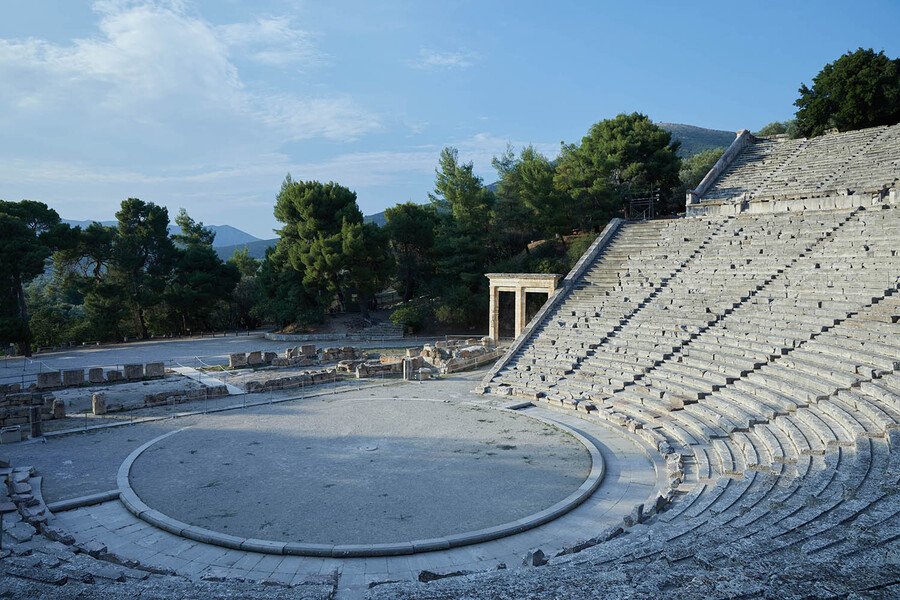
Ancient Epidaurus Theatre