1. Media Concept
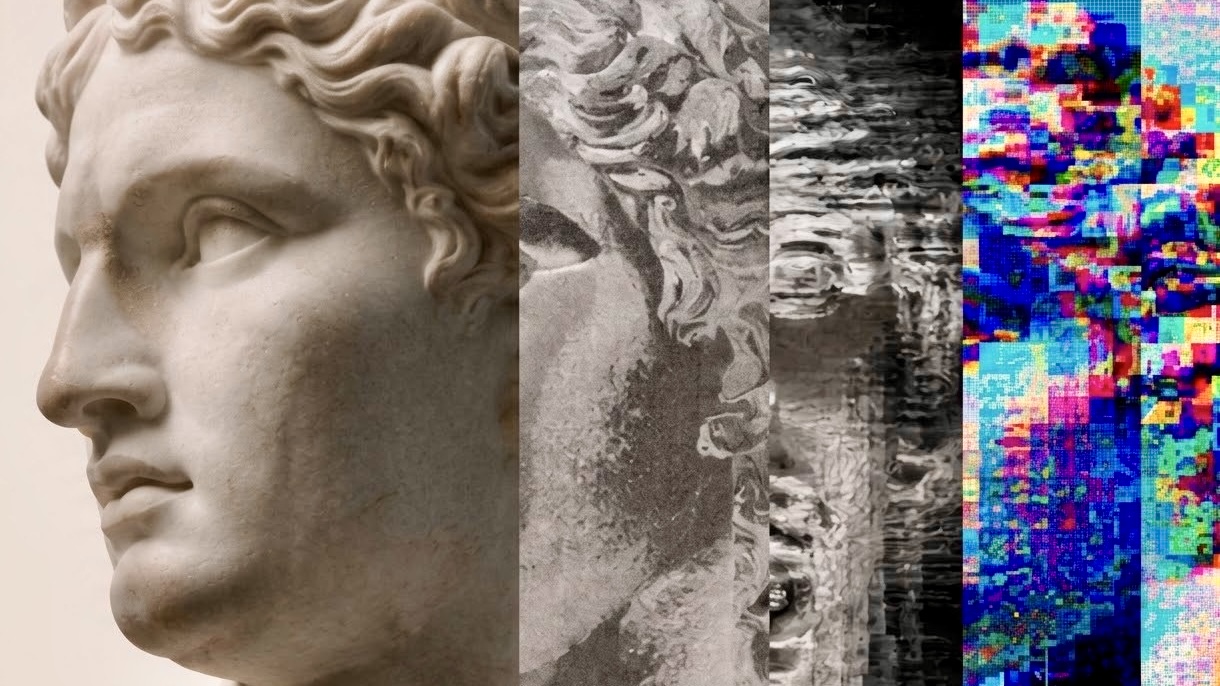
SECOND ORIGINAL — media on art in the age of reproduction. It investigates how the concept of the original changes in a situation where an image can be infinitely reproduced, altered, and recreated using technology. A photograph of a painting, a digital archive, a 3D scan of a sculpture, a meme, or an image generated by artificial intelligence—all these forms relate to the original work in different ways. The media examines not only the distinctions between original and copy, but also the instances where reproduction becomes an autonomous creative act.The central question of SECOND ORIGINAL is: at what point does a copy become a new original? The media references the history of art, contemporary artistic practices, and digital culture. Each piece analyzes a specific work, technology, or case study, allowing viewers to see how reproduction influences authorship, value, and the status of art.The goal of the media is to explore how reproduction technologies are changing our perception of artistic works and their originality.Target audience: viewers interested in contemporary art, visual culture, and digital technologies; students in creative fields, and young artists and designers grappling with issues of authorship and image usage in their practice.Format: visual research media. Short posts featuring image analyses, card series, and social media video content are supplemented by in-depth research on the website. The foundation of every piece consists of specific artworks, archival imagery, documentary evidence, and verifiable sources.Editorial principle: not to report on technology news, but to illustrate, through concrete examples, how the very concept of art is evolving.
2. Data Sources for Media
Source Types
The following four categories of sources are used for material preparation:1. News Publications — The Art Newspaper — news on art, museums, and the art market. — ARTnews — contemporary art and art institutions. — Hyperallergic — art, culture, and technology. — Frieze — contemporary art and exhibitions. — e-flux — artistic projects and critical texts.2. Museum and Digital Archives — The Metropolitan Museum of Art. — Rijksmuseum. — Art Institute of Chicago. — Wikimedia Commons. — Europeana.3. Academic and Research Platforms — Google Scholar. — JSTOR. — ResearchGate.4. Official Sources — museum and gallery websites; — press releases from art institutions; — official pages for exhibitions and projects.
Thematic areas for source monitoring
Five thematic categories are used to organize the information:
Examples of Sources
US Supreme Court declines to hear dispute over copyrights for AI-generated materialReuters, March 2, 2026.The publication covers the U.S. Supreme Court’s refusal to hear the case brought by Stephen Thaler regarding the copyright registration of an image created by the DABUS artificial intelligence system.Key details: — Participant: Stephen Thaler. — System: DABUS. — Work: A Recent Entrance to Paradise. — Topic: Copyright for AI-generated images. — Categories: AI & Art, Original & Copy.Source: Reuters — original publication.
Examples of Digital Archives
The Metropolitan Museum of ArtDigital Art Collection. Provides open-access images of public domain works and data APIs.Website: https://www.metmuseum.org/——RijksmuseumA museum’s digital collection with images and information on artists, dates, and materials.Website: https://www.rijksmuseum.nl/——Art Institute of ChicagoA digital collection and open API with art data.Website: https://www.artic.edu/——EuropeanaA European digital platform that unifies collections from museums, libraries, and archives.Website: https://www.europeana.eu/
Data Collection Structure
For each news item or publication, the following are saved: — material title; — author; — publication; — publication date; — link to the original source; — thematic category; — brief summary; — key facts; — event participants.
For artworks, the following are additionally saved: — title; — artist; — year of creation; — technique and materials; — image; — storage location; — usage terms.
Source Selection Guidelines
— Priority is given to primary sources and specialized publications. — All materials must have a verifiable origin. — The publication date must be separated from the date of the event being described. — Images must be used with consideration for copyright and licensing. — Duplicate publications are merged. — Unconfirmed information is not used in final materials.
3. Data Schema: Human and Machine Processing
General Information Processing System
The production process is divided into machine processing and human processing.
MACHINE: — Gathering publications from selected sources. — Filtering and categorization by topic. — Removing duplicate materials. — Identifying key facts. — Preparing concise information summaries.
HUMAN: — Selecting sources and thematic directions. — Verifying information accuracy. — Assessing the significance of events. — Selecting topics for publication. — Preparing and editing materials. — Final review and publication.
Information Collection
AUTOMATED PROCESSING
Collecting new publications from predefined sources using Feedly.
Inputs: — News articles; — Artistic media publications; — Press releases; — Research materials; — Museum and gallery publications.
Result: A unified feed of new materials from various sources
Information Filtering
MACHINE PROCESSING
Automated sorting of incoming materials.
Operations: — Categorization by topic; — Detection of duplicate publications; — Keyword identification; — Date-based sorting; — Exclusion of materials irrelevant to the media topic.
Result: A structured selection of news, free of repetition and irrelevant entries.
Information Briefing Preparation
MACHINE PROCESSINGChatGPT is used to condense and systematize collected publications.A card is generated for each news item, including: — headline; — summary; — key facts; — event participants; — publication date; — thematic categories; — link to the original source.Result: a brief information digest that allows for quick review of current events.
Example of a finished information brief
AI & ART / CopyrightUS Supreme Court declines to hear dispute over copyrights for AI-generated material.Reuters, March 2, 2026.The US Supreme Court declined to hear Stephen Thaler’s case regarding the copyright registration for an image created by his artificial intelligence system, DABUS.Key Details: — Participant: Stephen Thaler. — System: DABUS. — Work: A Recent Entrance to Paradise. — Main Topic: Authorship of works created by artificial intelligence.Source: Reuters.——Example of an automated summary based on a real publication.
Review and Editorial Compilation
HUMAN EDITING
The Editor receives the prepared summary and verifies the information against primary sources.
Operations: — fact-checking; — clarifying disputed details; — assessing the relevance of the event; — determining alignment with the media’s theme; — selecting materials for further work.
Result: An approved list of topics for publication.