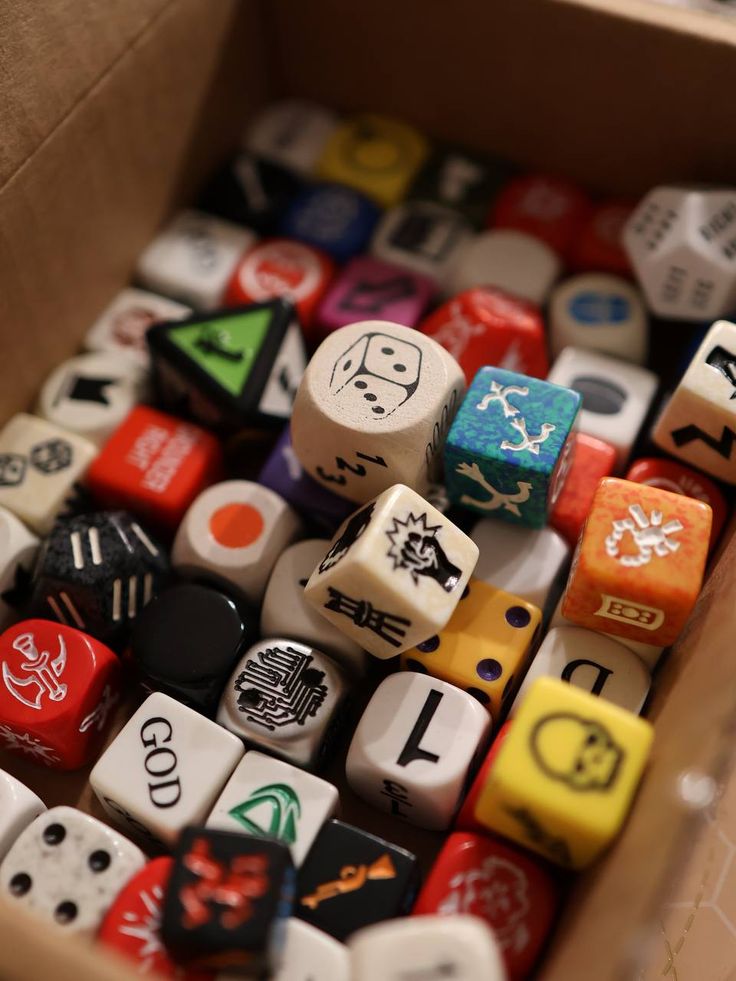
A die is an object with multiple faces, each featuring a numerical value or symbol, used in games as an element to introduce randomness.
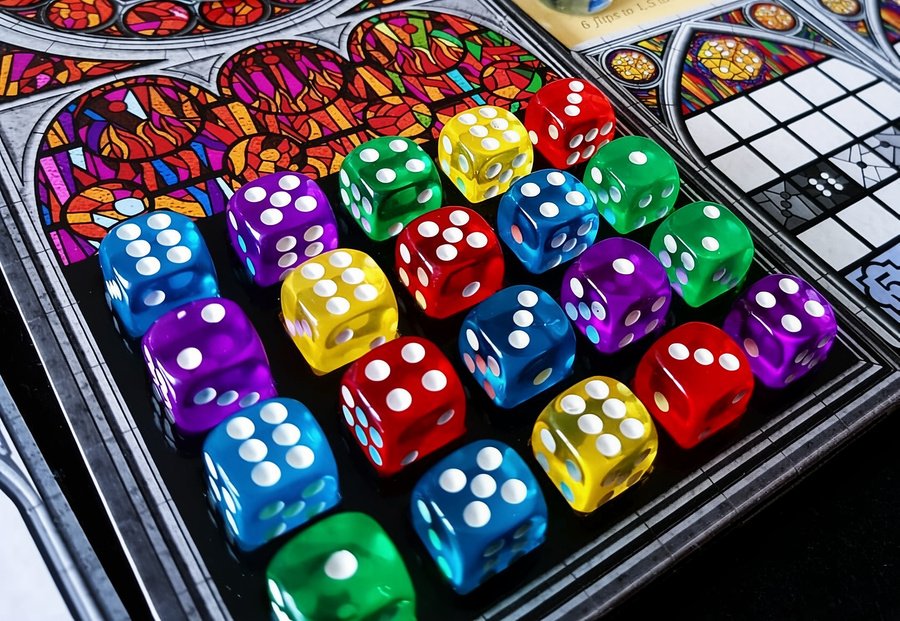
Dice from the «Sagrada» board game
Chance has held a significant place in human culture throughout history. Unpredictable events were linked to fate, luck, and the intervention of higher powers, and attempts to understand or foresee their outcomes became part of daily life. One way people interacted with the unknown was through tossing objects, which were utilized in divinatory practices, gambling competitions, and games.
Gradually, random outcomes came not only to be perceived as something outside human control but also began to be incorporated into artificially constructed systems of rules.
In contemporary game design, randomness is viewed as a mechanism for organizing the gameplay process, enabling influence over game conditions and the nature of decisions made.
Dice remain one of the most common elements in tabletop games, and their role in determining random outcomes plays a major part in game design, serving various functions and solving numerous game design challenges.
The methods of utilizing randomness are constantly expanding alongside the development of game mechanics. It can serve as a source of uncertainty, a condition for decision-making, or the foundation for interaction between participants. However, the outcome of a roll does not necessarily completely determine the player’s subsequent actions: modern game systems allow this outcome to be factored in, modified, and leveraged for personal advantage.
Examining these possibilities is crucial for understanding how a single game element can influence the overall user experience of the game.
The goal of this research is to trace how the meaning of randomness has evolved in dice games and to identify contemporary functions of dice in board games.
Despite the abundance of research dedicated to the history of board games, the origins of dice, and probability theory, the historical evolution of randomness’s meaning is seldom examined directly within the context of its application in contemporary game design. Historical and gameplay aspects are often studied in isolation, which complicates the understanding of the connection between the original functions of throwing implements and their modern capabilities.
Within the scope of this study, the historical evolution of randomness’s role is important to examine in connection with its contemporary gaming functions. This will allow us to trace the transition from perceiving a random outcome as an external circumstance to its conscious utilization in crafting game scenarios.
My hypothesis is that as board games have evolved, randomness has ceased to be solely an external factor determining the outcome of a game. Instead, it has transformed into a manageable element of the gameplay that allows the game designer to shape player decisions, limitations, and interactions.
The evolution of board games has not led to the elimination of chance, but rather has expanded the ways we interact with it: the player now has the ability to account for, limit, modify, and leverage the resulting outcome to their own advantage.
The research materials will include historical examples of games using dice, as well as contemporary board games where randomness serves various gameplay functions.
I divided my research into two parts. In the first, I examine the progenitors of modern dice, their sacred significance, and their use in ancient divination and gambling practices. In the second, I focus on how dice transitioned from sacred objects to integral elements of gameplay and the functions they perform in contemporary game design.
The Significance of Randomness in Ancient Games
Long before the advent of familiar six-sided dice, people used various objects capable of landing in multiple positions when thrown. Among these objects were animal bones—specifically, astragali (tarsal bones from sheep and goats). Due to their natural form, they could fall onto four different sides, each corresponding to a specific outcome.
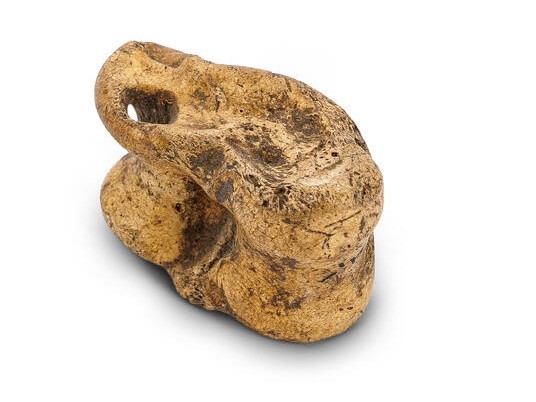
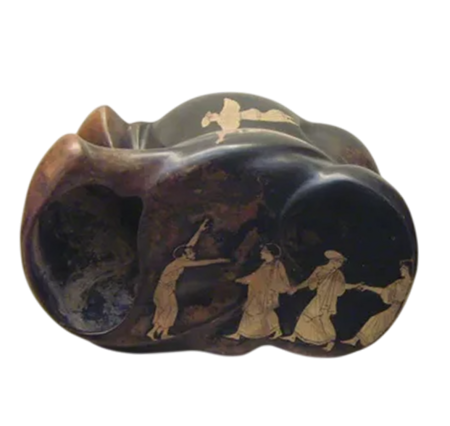
Astragali from the cannon bones of large livestock feet
In ancient Egypt, special casting sticks were used to generate random results. According to the Metropolitan Museum of Art, these were used as early as the Predynastic Period (around 4400–3100 BCE) and served as the primary means of random outcome determination.
Chance was initially associated not with a specific type of game piece, but with the act of casting itself.
Chance as a Mode of Address to Higher Powers
In ancient cultures, a random outcome could be perceived as a sign, offering an answer to questions about the future or revealing the will of supernatural powers.
Ancient Roman ivory dice (tesserae)
Astragali were perceived as a means of interacting with the divine world. Their use in divinatory practices was based on the belief that a random event could be a manifestation of the gods' will or a sign sent from above to a person. Therefore, the result of the throw was viewed as a message requiring interpretation.
Astragali were used in shrines where an individual could petition a deity for a prophecy, advice, or resolution to doubts. The resulting outcome was interpreted according to an established system of values. In this process, the throw acted as an intermediary between the human and supernatural forces: the person created a situation of uncertainty, and its resolution was perceived as a manifestation of divine will.
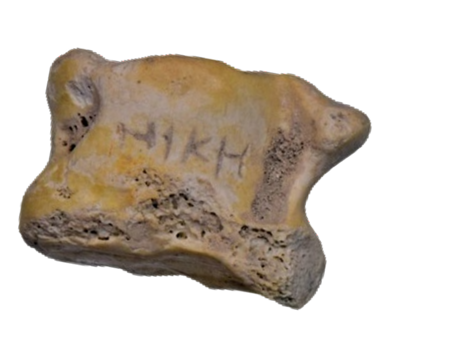
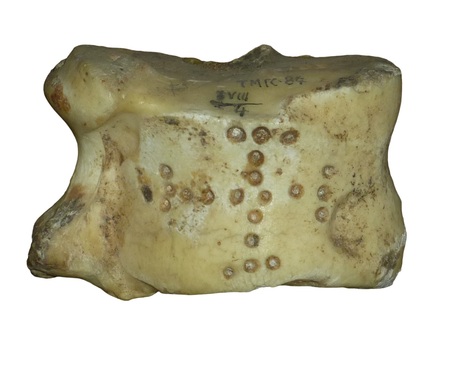
Astragali from the tarsal bones of large livestock feet
Thus, the sacred meaning of the astragali lay in their ability to convey a symbolic message through the random outcome of the throw.
Chance as a Game Mechanic
Alongside divinatory and gambling practices, randomness began to feature in board games. It played a particularly important role in racing games, where participants needed to move pieces along a specific route.
The Tsar’s Game Ura