Contents
- Concept
- Swing
- Bebop
- Cool Jazz
- Jazz Experiments of the 1960s–1970s
- The Jazz Aesthetic Today
- Conclusion
Concept
Jazz is easily recognizable by its sound, but it is equally defined by the musician’s appearance. Across different decades, the stage persona functioned as a «calling card”—it created a first impression even before the music began. The history of jazz provides extensive material for such an analysis, as within a single genre, a polished, „official“ aesthetic coexists with a demonstrably urban, subcultural one. Sources concerning the suit suggest that this silhouette emerged within the context of dance halls, city blocks, and tense social events, where clothing served as a means of self-assertion and of „claiming a space“ in the public sphere.
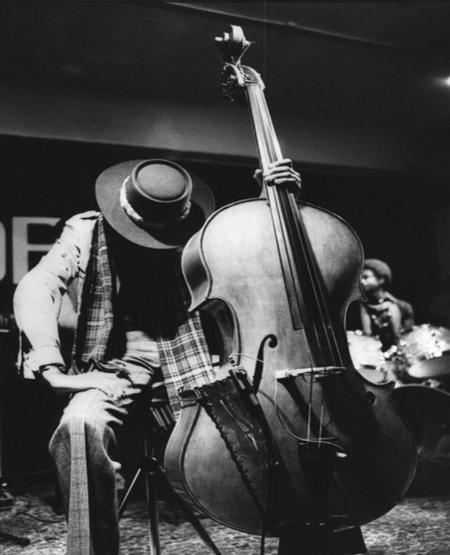
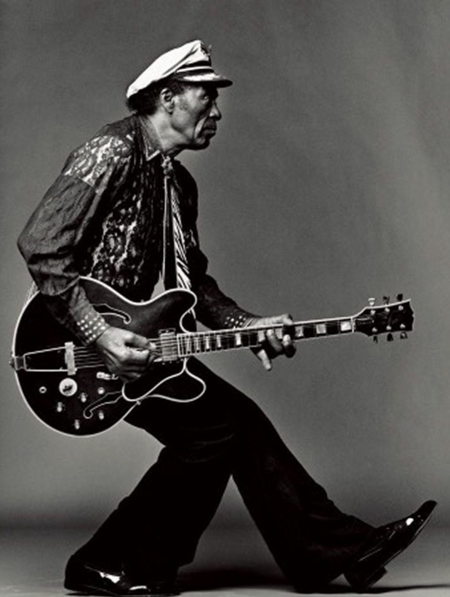
I chose to study the suit because it exists at the intersection of several visible elements: status, taste, belonging to a scene, relationship to tradition, and demeanor. This makes it suitable for visual research—changes are easily noticeable in the jacket’s proportions, the trouser width, shoe choices, and the degree of formality. Moreover, the jazz suit is almost always tied to the performance environment: a club, a concert hall, television, or a festival. In each space, there are different expectations from the audience, and musicians respond to them through their clothing.
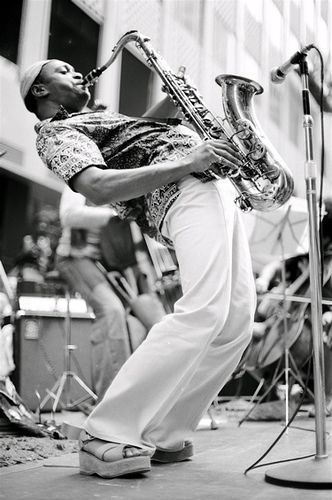
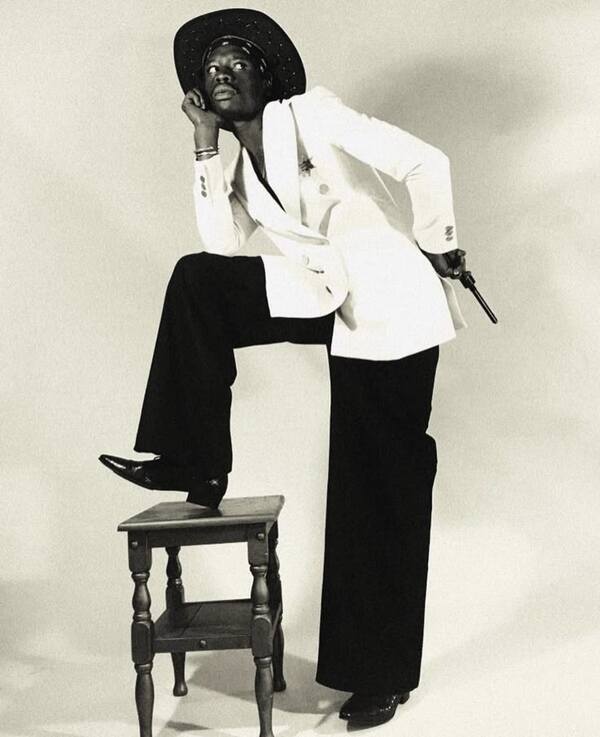
The principle for selecting materials is based on images where clothing is as clearly and comparably discernible as possible. I utilized: stage photographs, studio portraits, footage from concert films, festival reports, record covers, posters, and flyers. For each period, I aimed to curate a set of 20–30 photographs to identify recurring motifs and distinguish overall trends from an individual musician’s personal style.
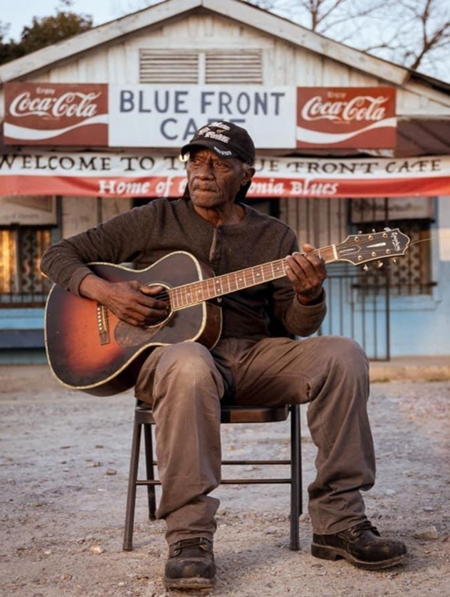
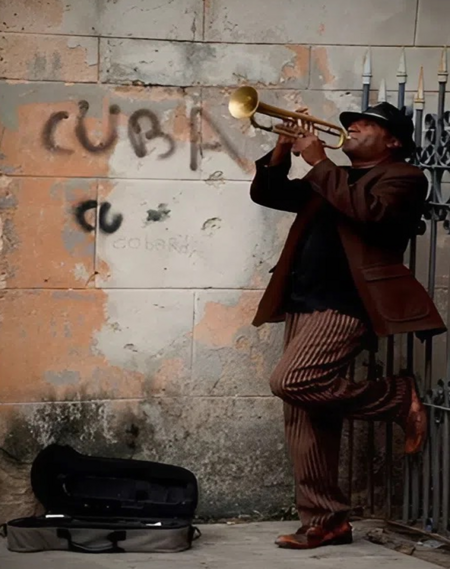
The principle of rubrication functions as a chronological timeline of styles integrated into the framework: swing → bebop → cool jazz → 1960s–1970s → contemporary image. Within each chapter, the analysis is structured using uniform visual parameters to ensure the comparison is fair and clear.
When selecting textual sources, I relied on authoritative publications and research papers where clothing is interpreted as a cultural signifier. For the 1940s, I used historical and museum materials concerning the jute suit. For the 1960s–1970s, the key source is the academic article «From suits to robes, ” which directly analyzes the Afrocentric attire of avant-garde jazz communities as visual communication and a part of the genre’s heritage. For discussions on mid-century „cool“ and style, texts from major media outlets are useful as they illustrate how stage costumes were perceived by audiences and transitioned into mainstream fashion, notably through album covers.
The hypothesis of my research is that changes in jazz attire reflect three major periods. The first is the shift from collective «stage discipline» to personal style. The second is the rise of subcultural codes, where clothing details become a marker of belonging to the «in-group.» The third is the expansion of visual language in the 1960s and 1970s onward, when clothing begins to express political stance, ideology, or artistic mythology.
Swing
Swing is a period where the concept of «the orchestra as a single body» manifests particularly clearly. In photographs of large ensembles, the ensemble principle is easily discernible: similar costumes, strict formality, and an аккуратно arranged silhouette. The musicians appear as components of a unified visual mechanism, where individuality yields to the sake of overall stage harmony. This aesthetic sets the framework for professionalism and «stage dignity, ” presenting the jazz performer as a representative of a high craft rather than as a random nightclub act.
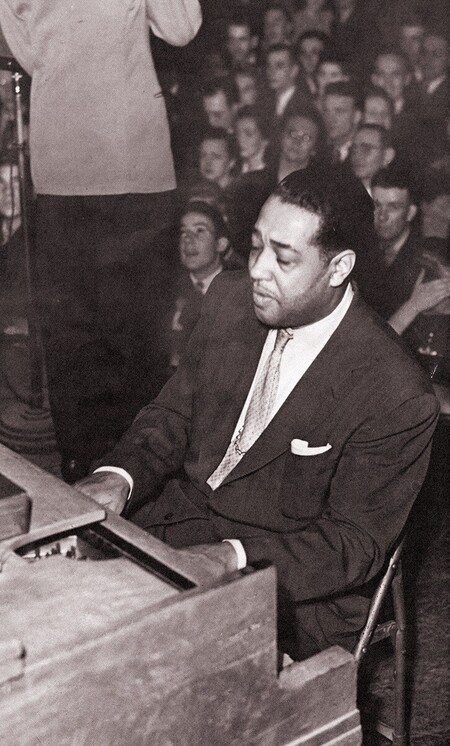
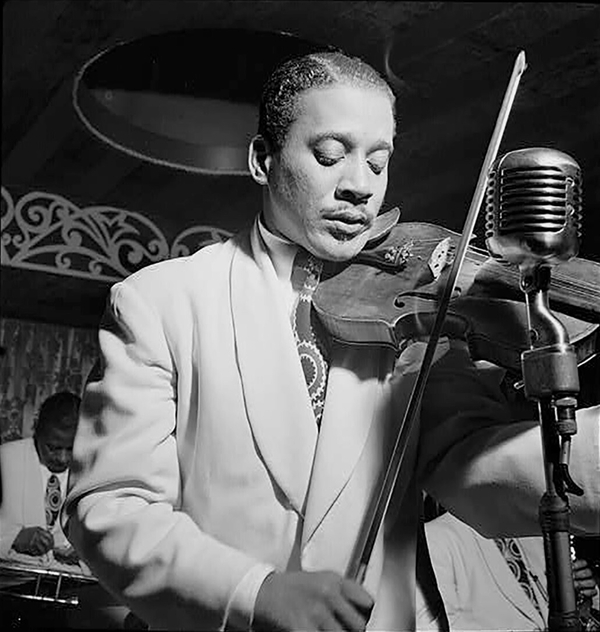
1. Duke Ellington, Fargo, New York, November 1940. 2. Ray Nance—trumpeter, singer, dancer, jazz violinist, and host.
It is important to note that this formal appearance was part of a strategy to legitimize jazz within a broader cultural environment. When jazz was still fighting for acceptance, the strict suit helped associate the music with respectability and discipline. This is especially noticeable in big band performances, where a similar look reinforced the feeling of order and control—qualities that contrasted with the stereotype of «chaotic» improvisational music.
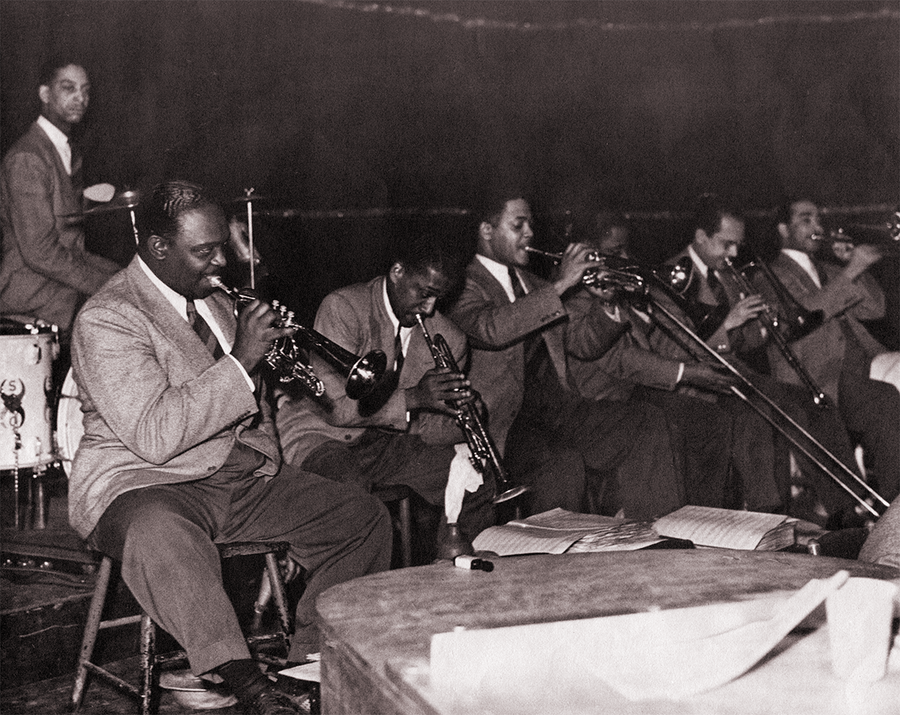
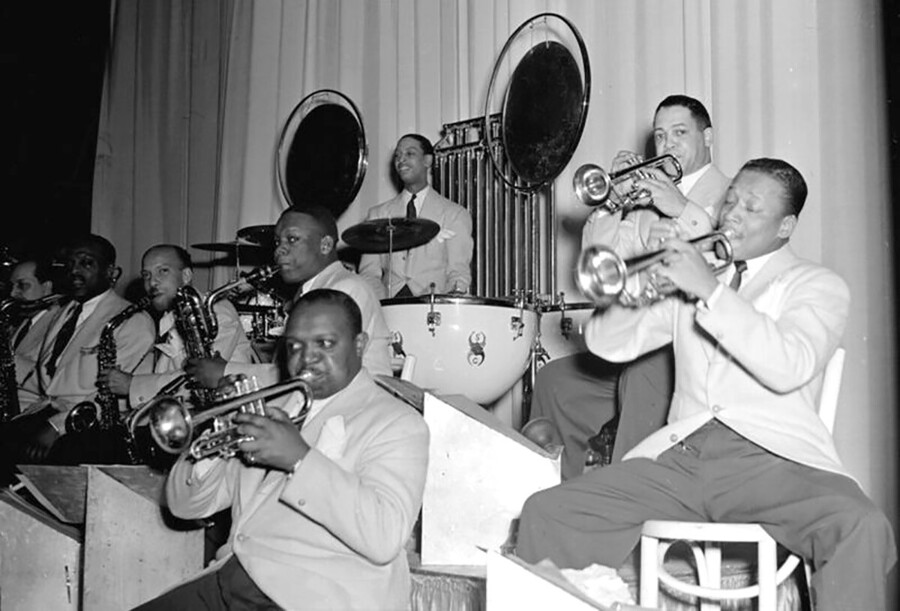
1. Barney Bigard, Ben Webster, Otto Hutch, Harry Carney, Rex Stewart, Sonny Greer, Wallace Jones, Ray Nance. Photo by William Gottlieb 2. Duke Ellington’s famous orchestra in Fargo, November 1940
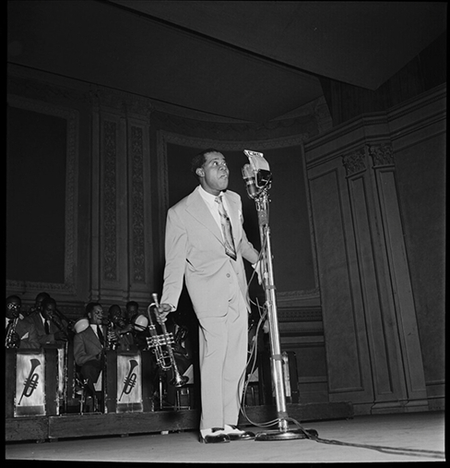
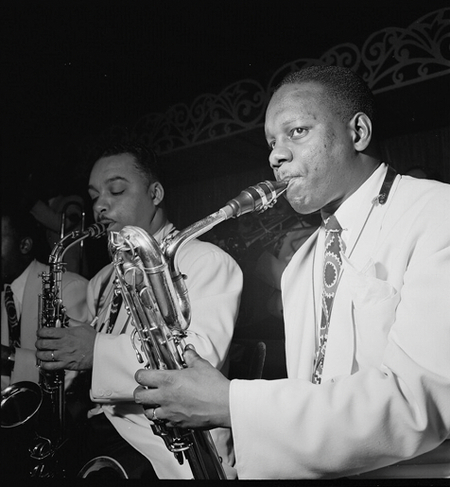
1. Portrait of Louis Armstrong. Carnegie Hall, New York, February 1947. 2. Portrait of Harry Carney and Russell Prokop. New York, November 1946.
In the visual culture of this period, it is useful to draw parallels between two distinct lines: the polished, formal big band uniform and the rawer, more radical style of the swing youth on the streets. These two currents are not entirely opposed; rather, they exist in a tense dialogue. The stage strives for control and unified style, while the streets push for exaggeration, expression, and freedom. It is precisely this tension that makes the visual culture of swing so compelling for analysis.
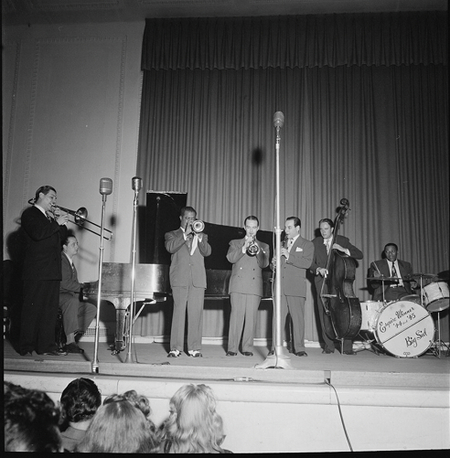
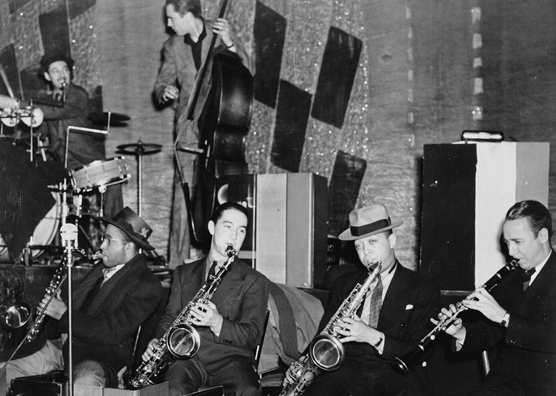
1. Portrait of Dick Cary, Louis Armstrong, Bobby Hackett, and others. New York, 1947. 2. Portrait of Ray Boduck, Herschel Evans, Lester Yang, and others. Columbia County, 1941.
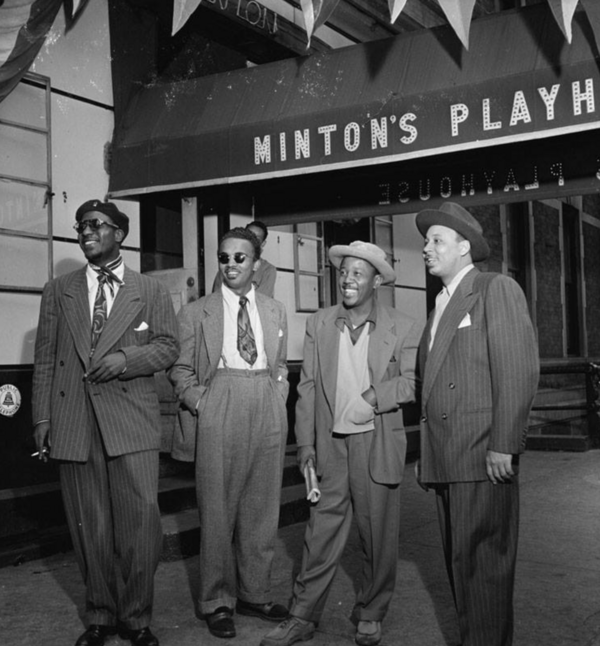
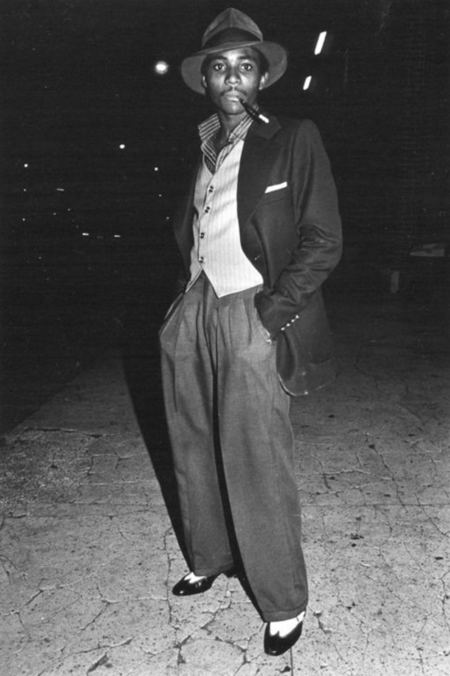
1. Musicians at Minton’s Playhouse, New York, 1940s. Photographer William P. Gottlieb 2. Man in a suit, USA, 1940s
The second swing style—the Zoot Suit—radically transforms the conventional silhouette of the men’s suit. Smithsonian Magazine describes it as an evolution of «drape suits» that emerged in Harlem dance halls in the mid-1930s: broad shoulders, elongated jackets, exaggerated lapels, and distinctive «peg-leg pants"—voluminous trousers that sharply taper toward the ankle. This silhouette creates a sense of intentional hyperbole, an almost caricatured exaggeration of form, which stands in stark contrast to the restrained elegance of stage attire.
The Zoot Suit also has a practical explanation: the trousers were tapered at the bottom so partners wouldn’t snag on each other during an energetic jitterbug. However, symbolism supersedes functionality here. Sources emphasize that this suit came «from the streets» and was perceived as a demonstrative gesture, especially amid wartime fabric rationing during World War II. The excess fabric in Zoot Suits appeared to be a conscious defiance of the rules and a form of cultural resistance.
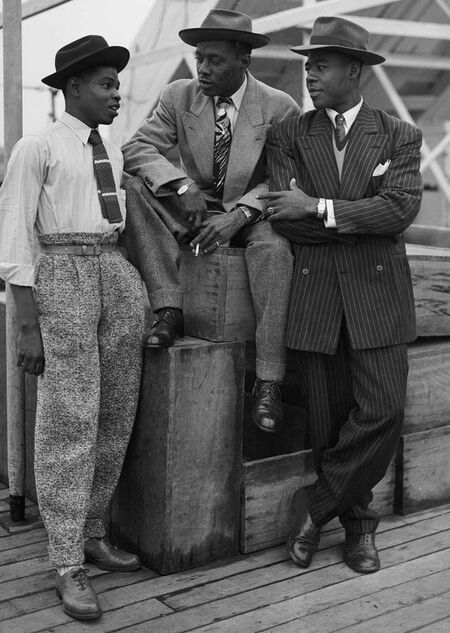
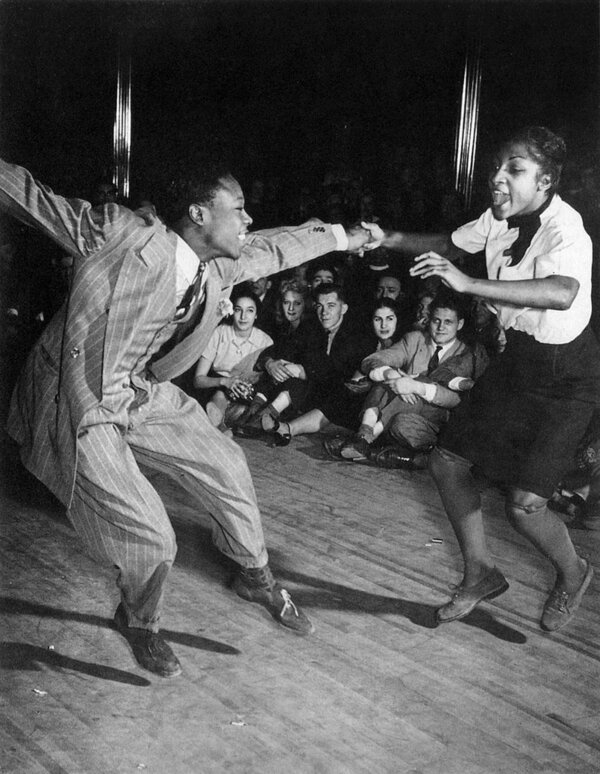
1. Men in suits, USA, 1940s. Photographer Russell Lee 2. Jitterbug dance at the Savoy Ballroom in New York, 1939. Photographer William P. Gottlieb
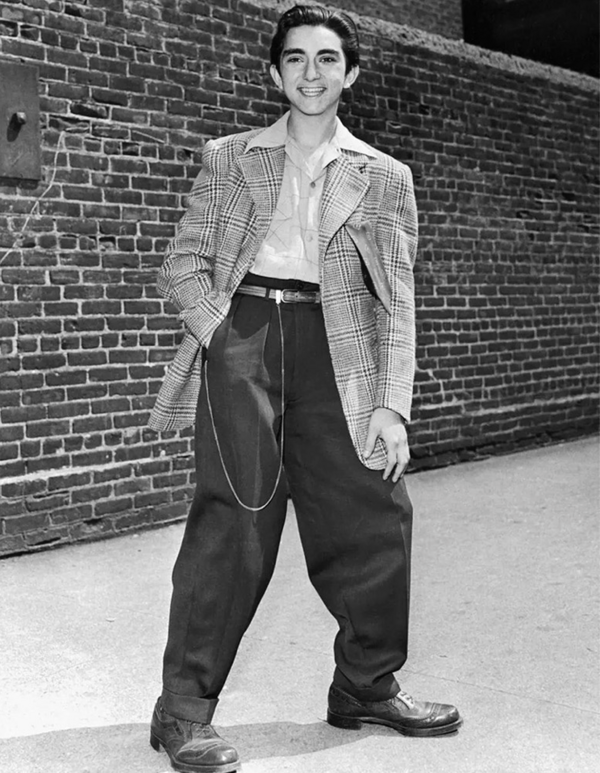
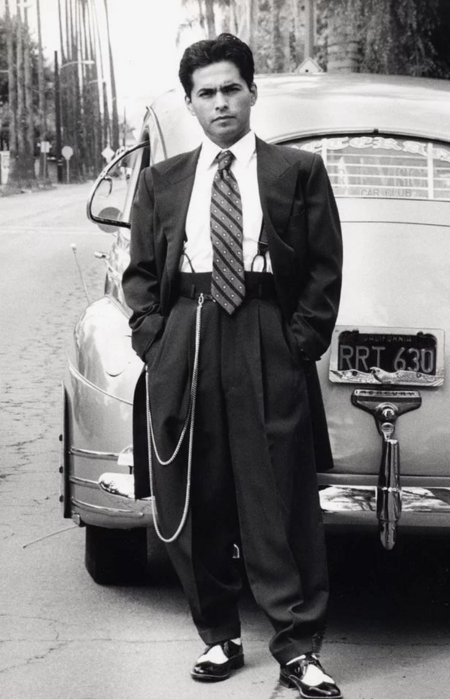
1. Young man in a suit, USA, 1940s 2. Man in a suit by a car, Los Angeles, 1940s
The suit is significant for research because it demonstrates how clothing within the jazz scene becomes a form of social commentary. The LA Times notes that in Los Angeles, appearance became a «focal point» of the 1943 unrest, and jazz musicians adopted this silhouette, amplifying it with vibrant details. PBS materials highlight that the suit also became a marker for social and racial profiling: the police specifically targeted people in these suits, used violence against them, and often the victims were subsequently arrested. Thus, clothing during the swing era transcends the stage and becomes part of a broader social conflict related to issues of identity and power.
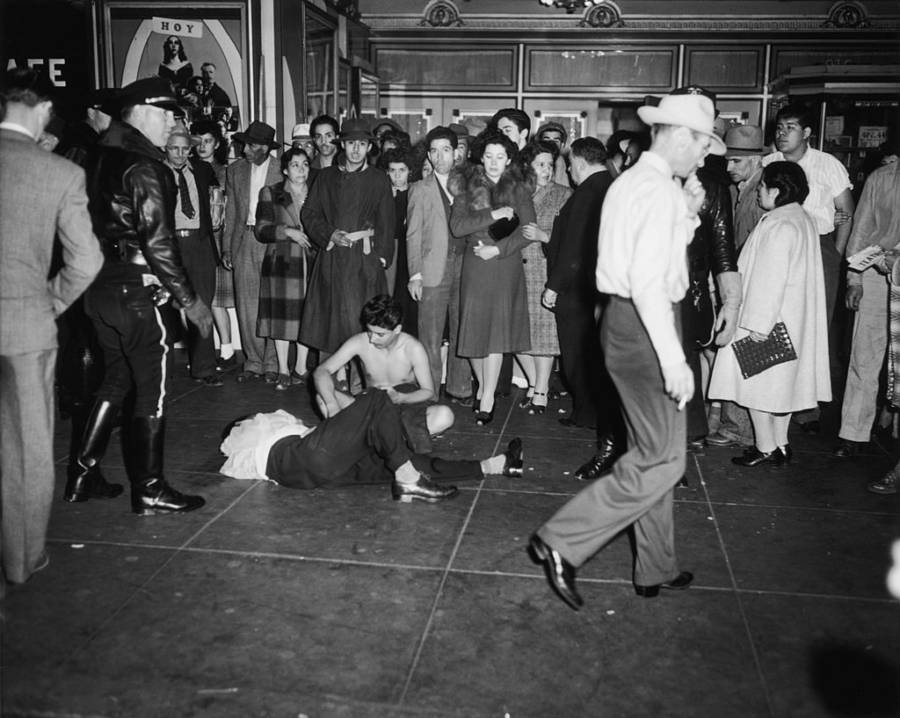
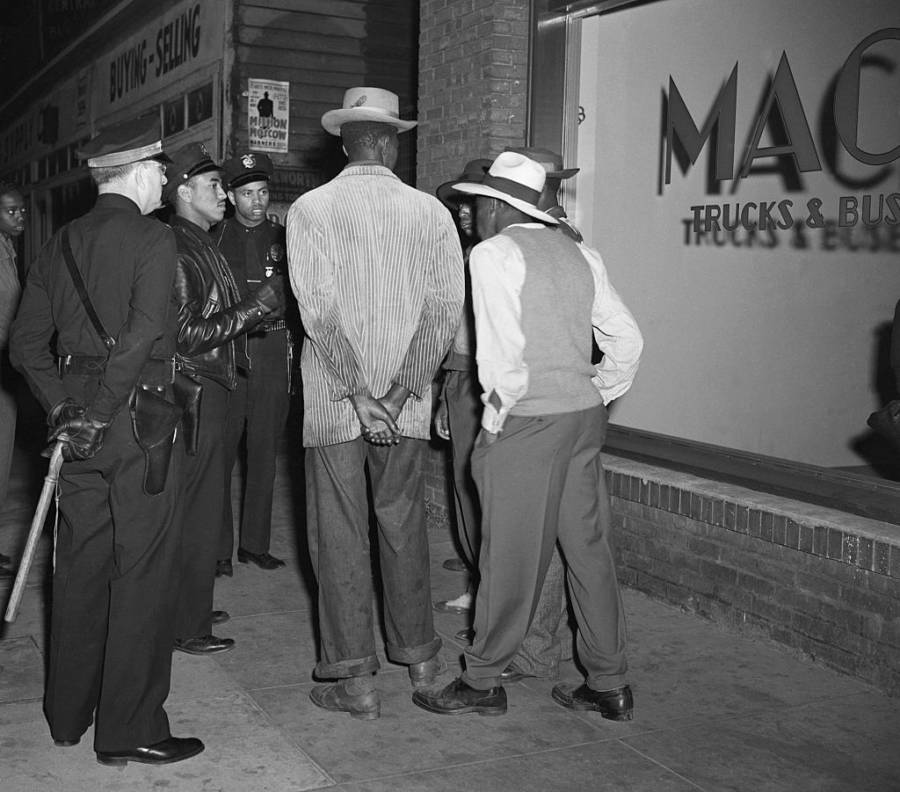
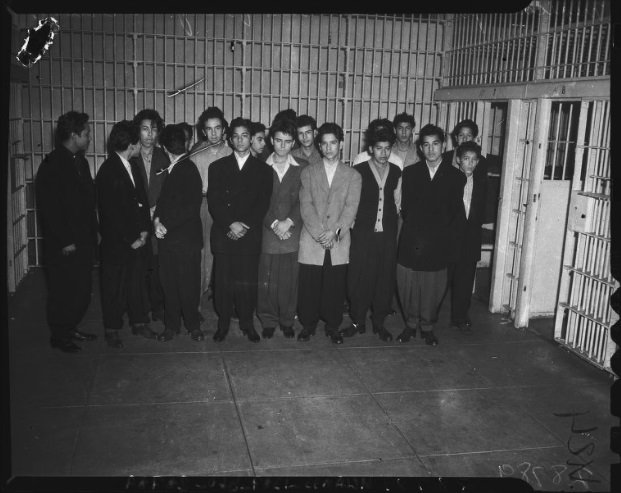
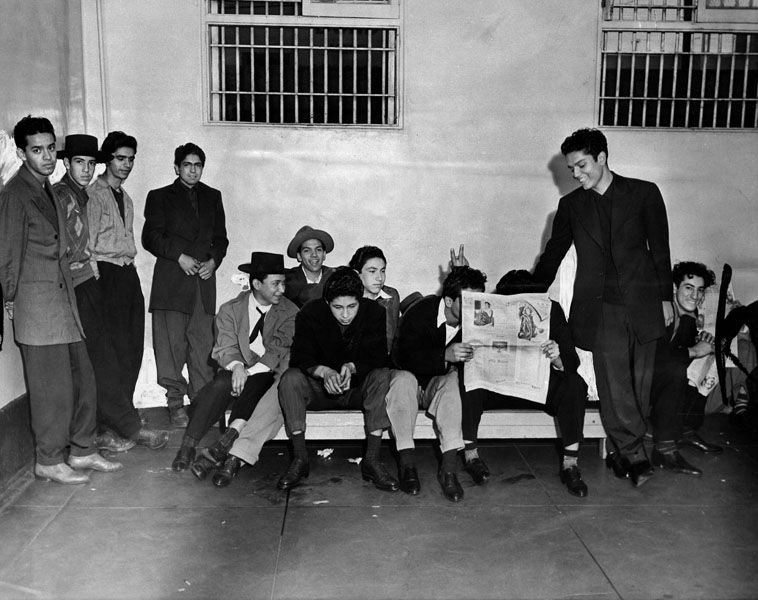
Zoot Suit Riots. Arrests and unrest in Los Angeles, 1943
Ultimately, swing demonstrates the duality of the jazz idiom: on one hand, discipline, community, and the drive for recognition; on the other, expression, exaggeration, and protest. It is in this tension between the stage and the street that the essential visual language of jazz is formed—a language that will subsequently evolve toward increasing individualization and symbolic density.
Bebop
The bebop era visually sounds different: the emphasis noticeably shifts from the «orchestral facade» to the individual figure of the musician. While appearance in swing was subservient to the overall logic of the ensemble, here it becomes more personal and focused. Even when there are several people in a photograph, the eye is more likely to be drawn to personal details—glasses, headwear, the way a tie is knotted, or a facial expression. Visual attention ceases to be distributed evenly and begins to concentrate on a single figure, on their character and distinct features.
The National Jazz Archive describes «hipster fashion» of the 1940s and 1950s as a set of recognizable markers: heavy frames or dark sunglasses, a beret, or a goatee. This collection of elements becomes a kind of visual lexicon of the era. In sources, it is linked to the circle of Thelonious Monk and the popularity of Dizzy Gillespie, whose images were actively reproduced in photographs and journalism. Because of this, even a small number of details begins to function as a stable sign that the viewer can easily decode.
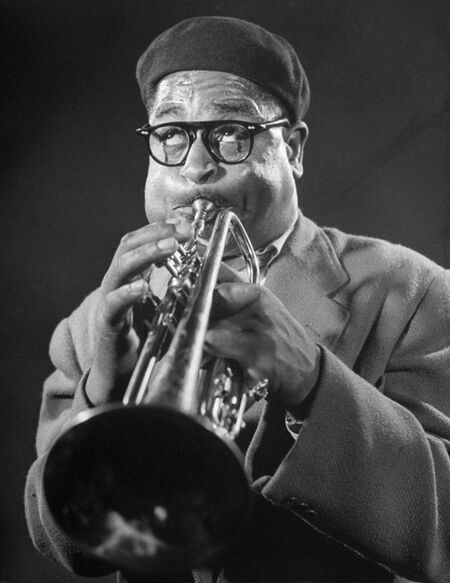
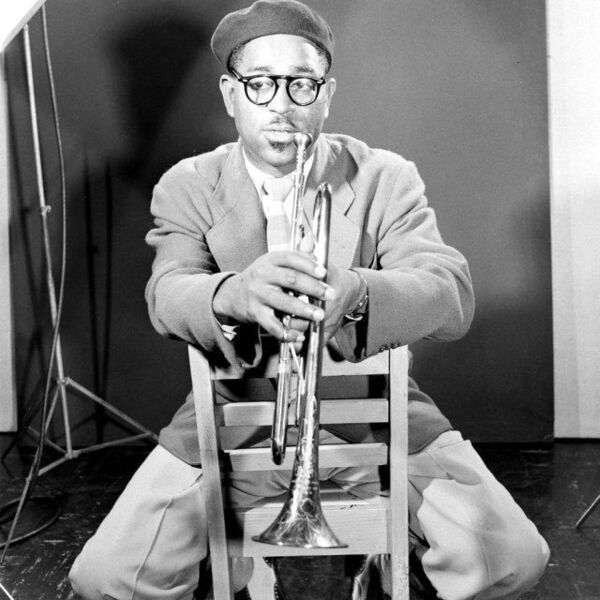
Dizzy Gillespie, New York, 1940s. Photograph by William P. Gottlieb