Costume, Gesture, and Props in 6th-Century Constantinople Spectacles
Navigation
- Subject and Action
- Corpus and Scope of Inquiry
- Artifact Corpus
- Obverse and Reverse
- Costume Composes the Figure
- Mappa Connects Object and Gesture
- Two Hands with Different Objects
- Chair Holds the Center
- Architecture Frames the Body
- The Administrator’s Stillness and the Performers' Movement
- Comedic Action on a Small Scale
- Music and Movement in Verona
- Horses Between the Consul and the Performance
- Generosity Takes Visible Form
- New Signifiers in Inherited Form
- Repetition Preserves the Role
- Role Contained in a Medallion
- Announcing Office Without Portraiture
- What the Object Does
- The Theatricality of Public Roles
- Bibliography
- Sources of Visual Material
Subject and Action
In the consular diptychs of the early 6th century, a grandly robed official is depicted alongside small figures of performers: they lead horses, play instruments, and participate in comedic scenes. This compositional structure allows for an examination of the theatricality of public life through the relationships between the individual, their attributes, and the spectacle they orchestrate.
This theme was chosen because it offers the opportunity to examine a subject through action. The ceremonial attire signifies office; the mappa—a signaling cloth—links hand movement to the beginning of the performance; and the chair and architectural frame delineate the official’s space. The investigation focuses on the material elements that render the public role recognizable.
The subject of the study is the portrayal of consular spectacles in early Byzantine art. The object of study concerns the functions of costume, gestures, attributes, and spatial framing in depictions of the consul and the performers. The main question is: how did these elements designate the official’s status and their relationship to the events before the public? The goal is to establish connections between the object, the action, and the spectator by comparing the diptychs.
The work addresses three objectives: to identify recurring attributes of the consul and their purpose; to compare the official’s posture with the actions of the performers; and to determine how the function of the diptych influenced the depiction of the spectacle.
The working hypothesis is that theatricality arises from the congruence between the public role and the material means by which it is presented. A single object can participate in the action while simultaneously signifying the owner’s authority.
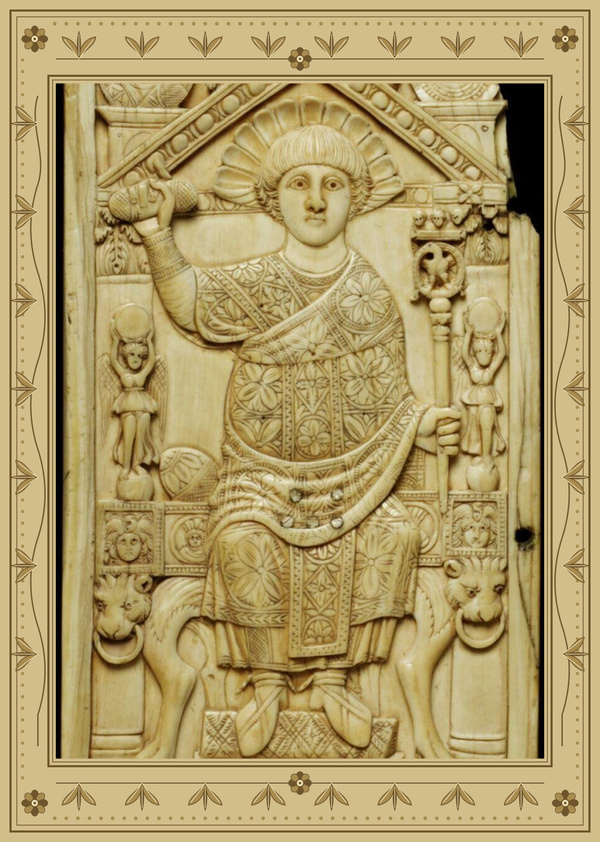
Fig. 1. Unknown Master. Anastasiou, 517. Figure of a treasurer, fragment. [I3]
Building and Scope of Research
The building is constrained by five complexes dating from 1506–1521: Areobind’s diptych from the Louvre, Clementina’s from Liverpool, the panels of Anastasia from London and Verona, and Justinian’s diptych from New York. This comprises eight surviving panels. The small building allows for a sequential comparison of costumes, gestures, seating arrangements, and performance stages. Two versions of Anastasia are particularly telling: the name and year match, but the composition of the lower scenes differs.
The selection is based on established dates and connections to the consulate, reproducibility availability, and the possibility of examining the function of a specific object. Full views display the structure of the monument, while enlargements detail the hands, costumes, and figures of the performers. Enlargements are designated as fragments; parts of a single diptych are considered part of the same complex.
The textual foundation includes museum catalogs and research by Anthony Eastman, Yash Elsner, and David Parrish. The catalogs are used for attribution and object identification. Eastman interprets the diptychs as messages to recipients; Elsner examines the repetition of motifs and the limits of documentation; Parrish focuses on the imagery of music and dance. These approaches pose questions to the material, and conclusions are drawn from comparing visible details. [1–3]
The investigation moves from attributes of the office to the means of performance, and finally to the diptych itself as a gift. The theatricality is understood as the organization of public presentation: a recognizable role, a conventional gesture, a designated space, and an addressee. The images allow for the study of the perception of spectacle but do not allow for the reconstruction of the sequence of acts, the audience reaction, or the layout of the actual venue.
Fig. 2. Unknown Master. Justinian, 521. Inscription, fragment. [I5]
Artifact Collection
All five ensembles are related to the consulate in Constantinople. Anastasius in the text is the consul of 517; Justinian is the future emperor who entered the consulate in 521. The geographical names in the captions indicate the current location of the monuments. [4–8]The corpus includes an expanded figure of the official, a condensed image in a medallion, and a description of the position without a portrait. These variations allow for an examination of which attributes retain meaning when the composition is changed.
Fig. 3. Unknown Master. Areobind, 506. Louvre, OA 9525 A and B. Two doors. [I1]Fig. 4. Unknown Master. Clémentine, 513. World Museum, M.10036. Two doors. [I2]
Fig. 5. Unknown Master. Anastasius, 517. Obverse. [I3]
Fig. 6. Unknown Master. Anastasius, 517. Biblioteca Capitolare, Verona. Clasp. [I4]
Fig. 7. Unknown Master. Justinian, 521. The Met, 17.190.52 and 53. Two hinged panels. [I5]
Front and back
The diptych consisted of two hinged panels. The images were on the exterior, while the recessed inner surfaces were intended for wax and inscription. The boundary of such a field is visible on the back of the London panel. The museum description indicates the original possibility of wax inscription; the preserved wax shown in the photograph is not present. [6]
The recipient sees a solemn portrait of the donor, holding the object and opening it. These actions relate to the use of the diptych. The mappa, chair, and scepter on the front side indicate the items handled by the depicted administrator.
Fig. 8. Unknown Master. Anastasius, 517. Front side. [I3]
Fig. 9. Unknown Master. Same door leaf, 517. Reverse side. [I3]
The costume builds the figure
On the London panel, Anastasia’s garment is patterned. A wide band crosses the chest, returns to the waist, and draws the eye toward the hand holding a scepter. The body contour is subordinate to the pattern of the robe. The museum identifies it as a trabes, a solemn consular costume. [6]
Clementina also features a sash and decorated fabric. In the Areobind medallion, the clothing remains discernible even when the figure is reduced to a bust: it helps identify her office without the chair or game setting. The relief allows for a comparison of the ornament and the direction of the bands, but not for the restoration of the original color or the fabric’s cut.
Fig. 10. Unknown Master. Anastasiy, 517. Costume, fragment. [I3]
Fig. 11. Unknown Master. Clementin, 513. Costume, fragment. [I2]
Fig. 12. Unknown Master. Areobind, 506. Bust, fragment. [I1]
Mappa connects the object and the gesture.
On the London and Verona panels, Anastasia raises her right hand, holding a piece of fabric, toward an architectural frame. Clementina’s mappa is positioned lower, around her knee. The attribute remains recognizable regardless of the hand’s position.The mappa served as a signal to begin the games. The raised fabric emphasizes the organizer’s readiness to commence the action; the lowered fabric continues to denote their authority. Therefore, in this depiction, the mappa retains its meaning even without the displayed signal.
Fig. 13. Unknown Master. Anastasiy, 517. Raised portfolio. [I3]
Fig. 14. Unknown Master. Anastasiy, 517. Raised portfolio. [I4]
Fig. 15. Unknown Master. Clementine, 513. Portfolio on the knee. [I2]
Two hands holding different objects
In one hand, Anastasia holds a mappa, and in the other, a scepter. The fabric is gathered into a compact volume, and a long shaft connects the hand to the top of the composition.On the London side, the scepter is crowned with an eagle inside a wreath; on the Clementine side, the finial contains a small portrait. These images link the consul to the concept of power. While the hand with the mappa is ready to signal, the scepter maintains a stable sign of status in its posture.