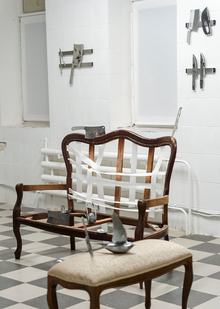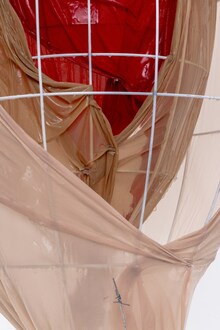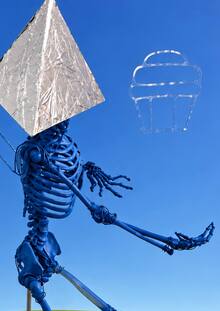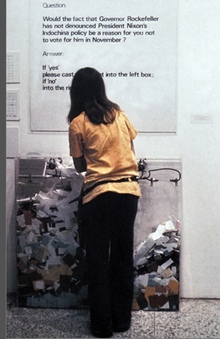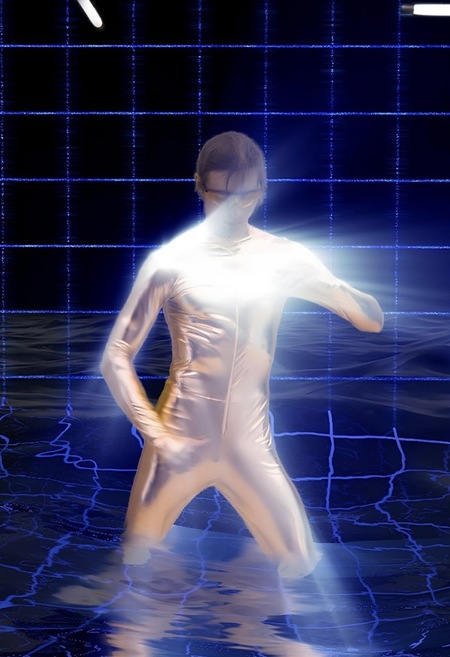
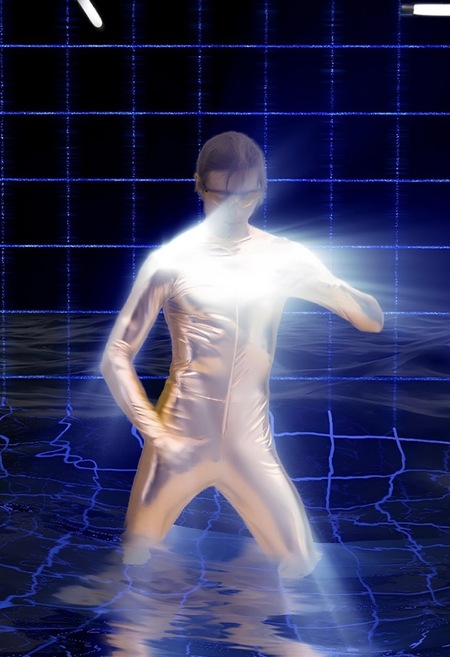
Art in the Age of Artificial Intelligence.Artificial intelligence does not negate art, but it changes its conditions: it becomes a new tool, a co-creator, and simultaneously a source of ethical conflict. The central question of this era is not, «can a machine create, ” but rather how humans maintain meaning, responsibility, and authorship in a creative field where algorithms can generate images in seconds.Illustration by Hito Steyerl
AI as a Tool
Generative models enable artists to rapidly sketch, visualize ideas, and experiment with styles, sound, video, and interactive forms. In this sense, AI can be compared to photography or a digital editor: the technology does not replace the artist; it expands their capabilities.
However, AI differs from previous tools because it does not merely execute a concept—it independently generates variations based on massive datasets of human creation. Consequently, the line between «tool» and «co-creator» becomes blurred: the human provides the idea, but the algorithm largely determines the specific visual outcome.
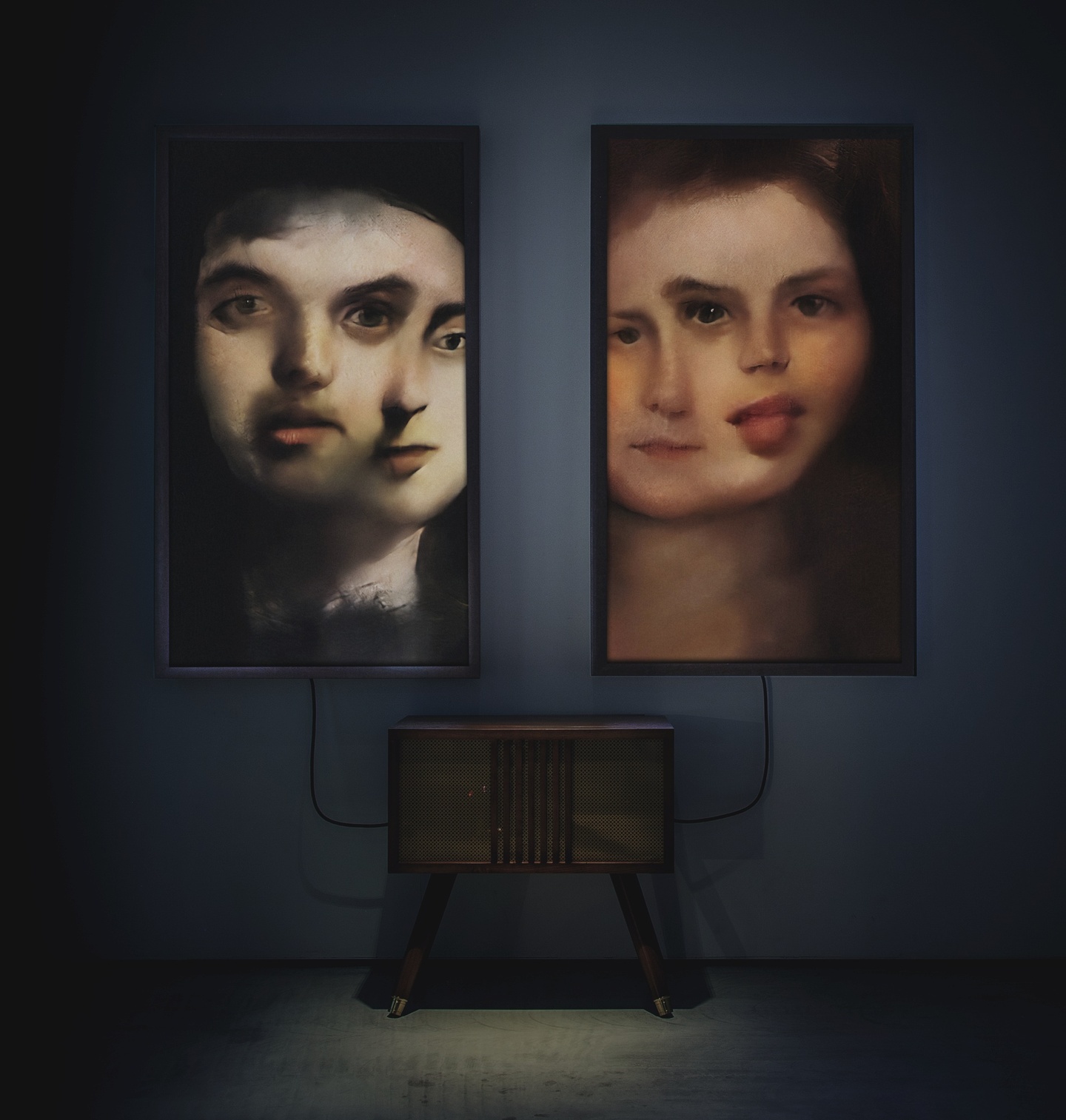
Mario Klingemann «Memorisw of Passersby I»
«These models have no intention of being creative.»
Mario Klingemann — a German artist and one of the pioneers of AI art. His central idea is that artificial intelligence is not merely a tool for creating beautiful images, but a method for exploring creativity itself, perception, and how the concept of the «author» is formed.Klingemann is skeptical of the romantic notion of creativity as the creation of something entirely new «out of nothing.» In his view, human creativity largely consists of establishing unexpected connections between already known images, ideas, and experiences.Therefore, he deems it fair that machines can also build something new based on existing human material. His task is to train the models on what humans have deemed interesting, unusual, or beautiful, and then allow them to explore the voids and unexpected combinations within that space.
The Klingemann Position Paradox
On one hand, he creates autonomous AI artists and investigates machine creativity. On the other hand, in an interview with Sotheby’s, he stated that he uses AI as a tool, considering the resulting works his own—much like an artist does not claim a hammer or a piano as a co-creator.
This indicates that he is not asserting, «AI is a complete artist.» Rather, his stance is more nuanced: AI can become a participant in the creative system, but the status of authorship is determined not just by image generation, but by the concept, the curation, the context, and societal recognition.
But what is authorship in the age of AI?Authorship is a central issue in the AI art era. If a person writes a prompt and a neural network generates an image, the author should be considered the human who formulated the concept, selected the result, and imbued it with cultural meaning—not the machine. UNESCO emphasizes that the responsibility for using AI always rests with people or organizations, not with the systems themselves.However, works entirely generated by AI often do not receive the same legal protection as human-created pieces. For example, in the United States, copyright is tied to human creativity, and a result wholly created by a generative model is not recognized as a protected work.The key argument is human authorship. The U.S. Copyright Office explicitly states that a machine or an automated process without human creative input cannot be the author; even a detailed text prompt alone does not create sufficient control over the expressive elements of the result.Nevertheless, a person can gain rights to their contribution to the work: for instance, if they significantly refined the image, creatively selected and composed AI-generated materials, or used their own work as a foundation. But protection extends only to the human input, not to the elements generated by the algorithm.
Mario Klingemann, «Mitosis» 2016
Can corporations become copyright holders?
Theoretically, a corporation can claim rights if the AI system is its product and the user agreement secures the company’s rights to the output. However, the current copyright model works differently: if the output is created by AI without human creative input, the company does not hold copyright—the protected object itself is absent.A corporation can control things other than «authorship»:Rights to the model itself—the source code, architecture, model weights, interface, and trademark.Terms of use—prohibitions on commercial application, requirements to disclose AI generation, and the transfer of a license to the company for user-generated content.Licenses for training data—agreements with copyright holders of images, texts, music, and video.Technical measures—filters, watermarks, and restrictions on the reproduction of protected works.In other words, the corporation can own the technology and regulate access to it, but it does not automatically become the author of every image created by a user.What Remains Human?
Even with powerful technologies, art is not merely about creating a beautiful image. What is human within it is the choice of subject, personal experience, ethical stance, context, vulnerability, memory, and the capacity to convey something vital about our time. An algorithm can mimic style, but it cannot live the experience that underpins a work of art.
Therefore, the most compelling approach is not AI replacing the artist, but AI collaborating with the artist—as a means of inquiry, technological critique, and the pursuit of new forms. In this approach, it is crucial to honestly specify where and how AI was utilized, respect sources, and maintain human authorship and decision-making.
Conclusion
Art in the age of AI is at an inflection point: technology democratizes creativity, but simultaneously challenges conventional notions of originality, authorship, and the value of labor. The future of art does not depend on banning or fully accepting AI, but on transparent guidelines—recognizing human contribution, protecting artists' rights, and honestly defining the role of algorithms.
Bibliography: 1.https://www.unesco.org/sites/default/files/medias/fichiers/2025/09/CULTAI_Report%20of%20the%20Independent%20Expert%20Group%20on%20Artificial%20Intelligence%20and%20Culture%20(final%20online%20version)%201.pdf 2. https://www.perplexity.ai/search/28dbecd1-8b77-43b1-8a70-c3469fb72a9f 3.https://link.springer.com/article/10.1007/s00146-025-02361-3 4.https://unesdoc.unesco.org/ark:/48223/pf0000386693 5. https://www.perplexity.ai/search/28dbecd1-8b77-43b1-8a70-c3469fb72a9f 6.https://copyright.gov/newsnet/2025/1060.html?loclr=eanco 7. https://spbu.ru/news-events/novosti/tatyana-chernigovskaya-nikto-ne-obeschal-chto-iskusstvennyy-intellekt-budet-na 8.https://beyondtellerrand.com/events/dusseldorf-2017/speakers/mario-klingemann 9.https://compart.uni-bremen.de/content/4-teaching/0-sommer-20/1-neural-networks-aesthetics/3-material/paper-2018-klingemann_ai-artist.pdf 10.https://www.perplexity.ai/search/28dbecd1-8b77-43b1-8a70-c3469fb72a9f 11.https://www.sothebys.com/en/articles/artist-mario-klingemann-on-artificial-intelligence-art-tech-and-our-future