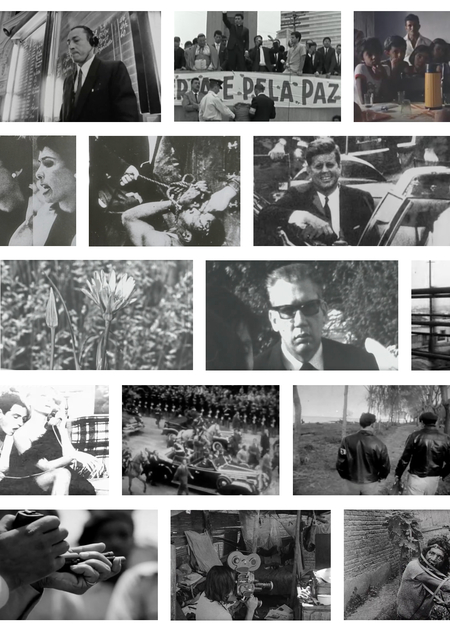
Concept
Documentary film is traditionally perceived as a means of fixing reality and preserving testimonies about real events. However, the on-screen image is never entirely neutral: the director chooses the point of view, the duration of the shot, the sequence of scenes, and the editing techniques. Thus, a documentary film not only reflects reality but also shapes a specific perspective on it.This is particularly evident in the Latin American documentary cinema of the second half of the 20th century. Political coups, revolutionary movements, social inequality, and the struggle for national identity influenced the development of the region’s cinema. During the 1960s–1980s, documentary film became an important tool for social and political discourse. Directors sought not merely to capture what was happening, but to find new ways to speak about social reality, engage with the audience, and influence their perception.During this period, various experimental approaches to the documentary form took shape. The camera often places itself directly within political events; editing transforms into a means of creating expressive visual juxtapositions, and interviews and personal testimonies become a space for dialogue between the director and the subject. Some filmmakers intentionally blur the line between documentary and staged imagery, compelling the viewer to question the authenticity of what they see and how screen reality is constructed.
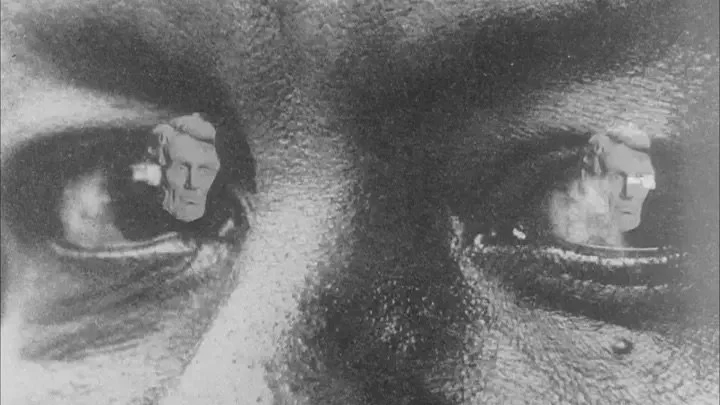
Fig. 1. A scene from the film «Now!» (1965), directed by Santiago Álvarez.
This study examines documentary cinema from Argentina, Brazil, Chile, Cuba, and Colombia. Using the works of various directors as case studies, it explores how the camera interacts with reality, the political potential of editing, the role of the viewer, and experimental forms of narrative. The main historical focus is on the 1960s–1980s, although individual films are considered within a broader temporal context that allows for tracing the evolution and reinterpretation of these techniques.
The object of this research is Latin American documentary cinema, and the subject is experimental methods of visual narration. The central research question is: how do Latin American directors alter conventional modes of documentary representation, transforming the mere capture of reality into an autonomous artistic and political statement?
The research hypothesis posits that the experimental methods in Latin American documentary cinema are linked not only to artistic exploration but also to the necessity of finding new ways to interpret historical and social processes. By modifying the conventional form of documentary narration, directors reveal the subjectivity of the camera, provide a voice to the event participants, and involve the viewer in a critical contemplation of what is witnessed.
The study is built upon the visual analysis of individual shots and sequences from the films. Special attention is paid to composition, camera movement, editing, the interaction between image and sound, and the presence of the author within the screen space. Comparing diverse cinematic practices will reveal how formal experimentation expands the potential of documentary film.
The Witness Camera Method. Chile
In the early 1970s, Chile was undergoing massive political and social transformations. These events became the foundation for documentary film, which sought to record history at the very moment it was being made. In the films The First Year (1972) and Battle for Chile (1975–1979), Patricio Guzmán places the camera at the center of the action. It follows demonstrators, immerses itself among workers, and documents the political clashes. The camera becomes a witness to historical events, and the viewer gains the ability to observe them not from the outside, but from within.
Fig. 2. Stills from the film «Battle for Chile» (1975–1979), directed by Patricio Guzmán.
Fig. 3. Stills from the film «Battle for Chile» (1975–1979), directed by Patricio Guzmán.
In «Battle for Chile, ” the camera does not merely document mass events. It moves close to the rally participants, isolating individuals from the crowd to record their statements. The use of close-ups and specific angles allows the focus to rest on the faces and emotions of the figures. As a result, the political event is revealed not only through the overall progression of the action but also through the personal testimonies of those involved. The viewer feels immediately present at the scene and gets the opportunity to hear diverse voices within a single historical moment.
Fig. 4. Stills from the film «First Year» (1972), directed by Patricio Guzmán.
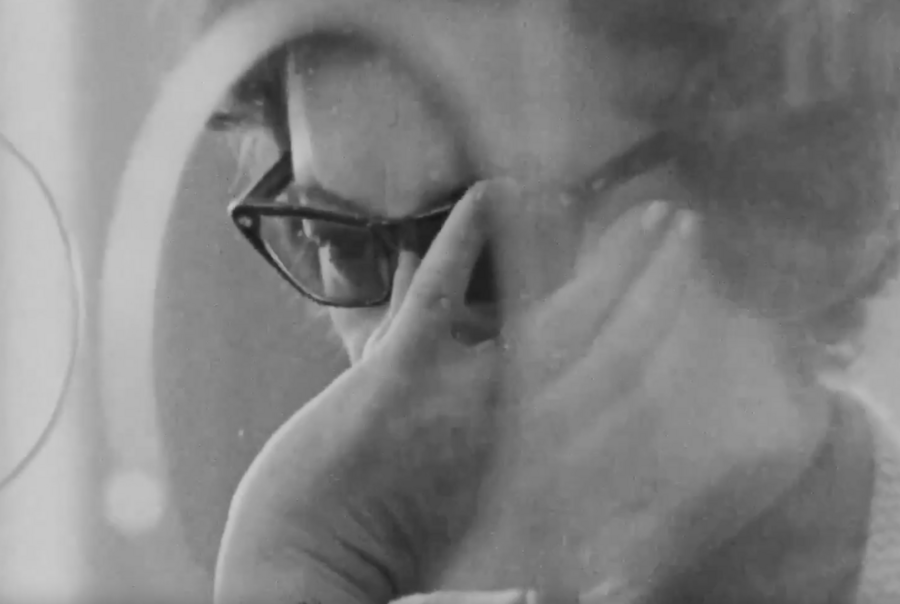
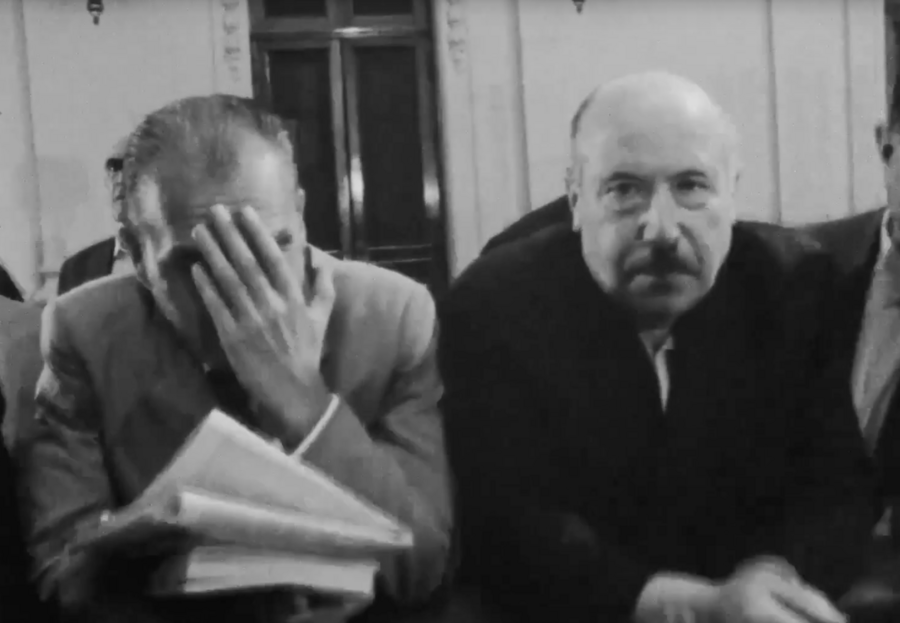
Fig. 5. Stills from the film «First Year» (1972), directed by Patricio Guzmán.
In the film «First Year, ” Patricio Guzman turns to the everyday lives of people, showing how political and economic changes are reflected in their behavior and relationships. The camera lingers on faces, gestures, and details of the surrounding environment. Rather than limiting itself to official statements and political events, the director focuses on human reactions and daily experience. Thus, the story unfolds through the lives of people directly experiencing the changes happening in the country.
Fig. 6. Stills from the film «Battle for Chile» (1975–1979), directed by Patricio Guzmán.
Fig. 7. Stills from the film «The First Year» (1972), directed by Patricio Guzmán.
In Chilean documentary cinema, the vérité camera method is intertwined with a specific historical context—the period of political transformations under Salvador Allende and the subsequent crisis. In The First Year, the camera observes how these changes are reflected in people’s daily lives, while Battle for Chile documents the escalating political confrontation. The crucial element is not the mere alternation between wide and establishing shots—a trope common to documentaries from various countries—but rather that Guzmán’s camera becomes an active participant in the unfolding history. It does not simply observe events; it resides within the social fabric of Chile, gathering testimony from people directly experiencing the changes.
«Battle of Chile» (1975–1979), dir. Patricio Guzmán.
«Battle of Chile» (1975–1979), dir. Patricio Guzmán.