HSE Students & HUMANIST
Project Goals and Mission:
In collaboration with a team of 1st and 2nd Year Students, develop and implement the design for a window display and an art object for the brand HUMANIST. The project aimed to create expressive visual styling for the space that supports the brand’s idea and message. Our task was to develop a concept for the window display and art object based on the brand’s visual language and philosophy.
Concept
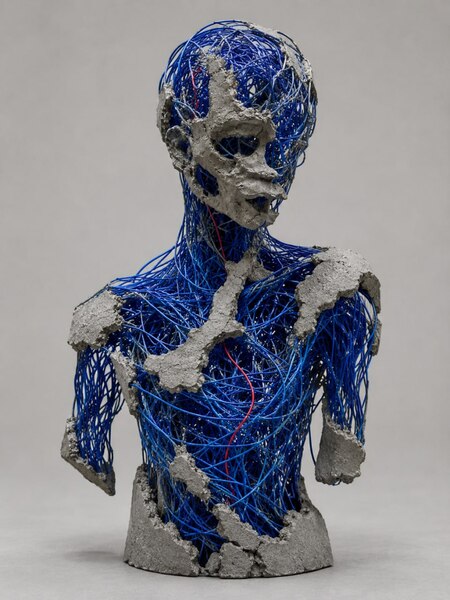
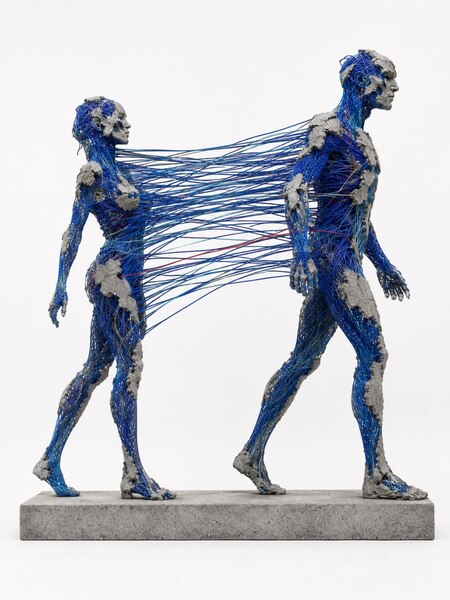
The core concept for the art object for the HUMANIST brand is the image of urban energy. Blue wires symbolize the continuous flow of electricity coursing through the city’s «veins, ” bursting forth from the concrete and metal to instill confidence and a drive for motion within the individual.
After discussion with the brand team, the key focus became the image of a person who transforms the city’s ambient energy into personal strength, directing it toward development, self-expression, and achieving goals.
The rich blue color links the art object to the visual code of the HUMANIST brand, drawing attention and reinforcing associations with electrical charge, technological sophistication, and the dynamism of a metropolis. The metal mesh symbolizes structure and the inner framework of the personality, while the wires represent thoughts, emotions, goals, and connections from which the modern person is formed.
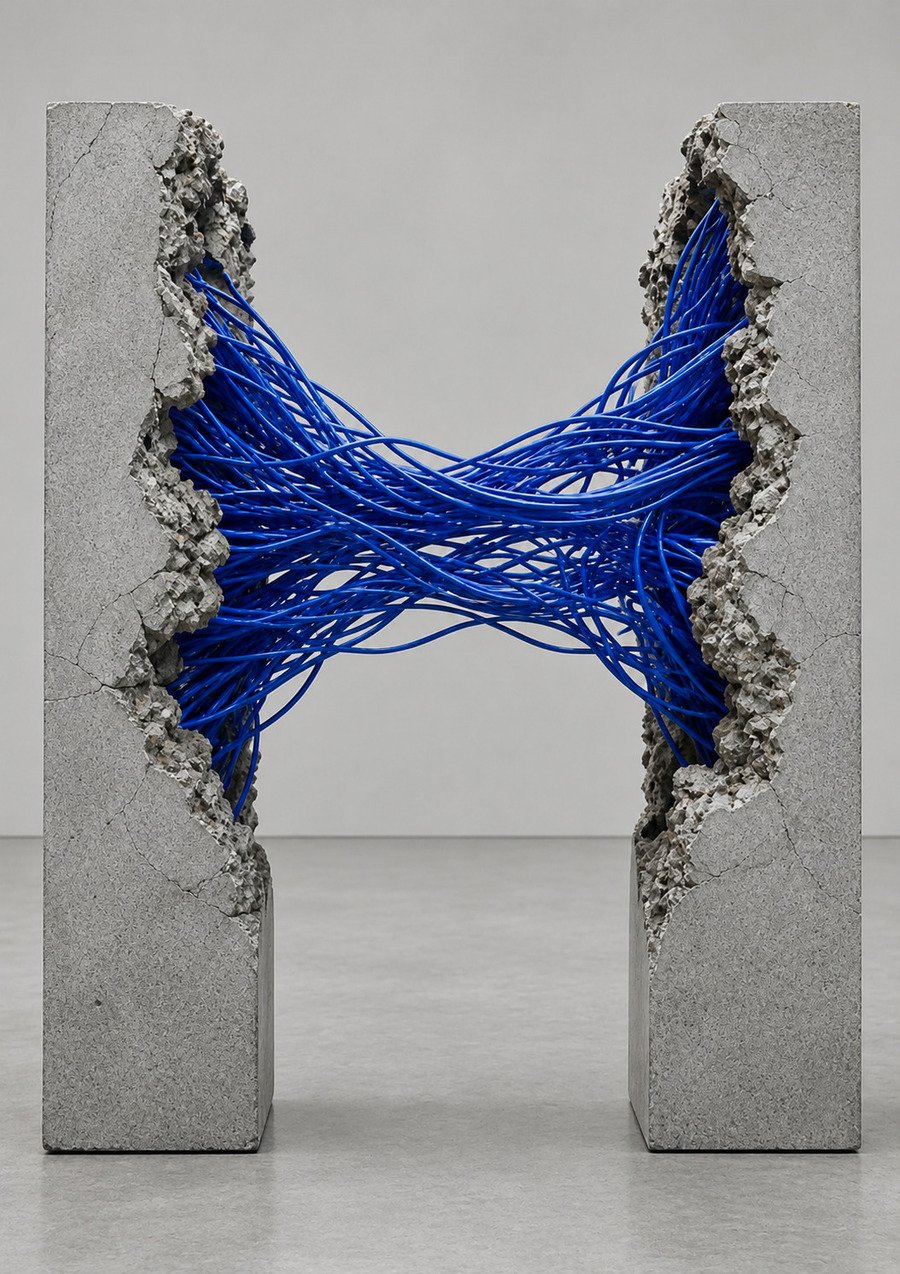
The city’s energy bursts through the concrete walls
Idea Development
Replacing concrete with a metal mesh
Key Focus:Fashion design curators Nikita Zelepukhin and Kirill Gavrilov assembled a team of students to execute a project to design the space for the HUMANIST store. The work involved several stages: analyzing the brand’s visual concept, developing ideas for the window display, creating sketches and design proposals, preparing design mockups, refining them based on discussions with the team and curators, as well as the direct realization of the approved art object.Polina Polonik worked on the concept and sketches for the art object, presented the idea, and participated in its approval. Maria Biryukova, along with Polina, participated in developing the art object’s concept. Darya Popova developed the technology for realizing the art object and, together with Anna Romanova, constructed the frame from metal mesh and intertwined wires that delineated the features of a face, neck, shoulders, and hair.During the process, the team created mockups of the art object’s elements, sought optimal options for shape, color, and materials, and verified how well the chosen solutions aligned with the overall concept and realizable capabilities. Special attention was paid to ensuring that the final piece maintained a connection to the original idea, was visually striking within the store space, and interacted organically with the brand’s collection. The resulting solution—an art object for the HUMANIST store—was executed based on the approved concept and adapted to the store’s space. It combined elements of handcraft, decorative composition, and visual storytelling related to the rhythms of urbanization and the aesthetics of freedom.
Visualizing the idea based on the concept
AI Visualization of an Art Object
Creation of an Art Object
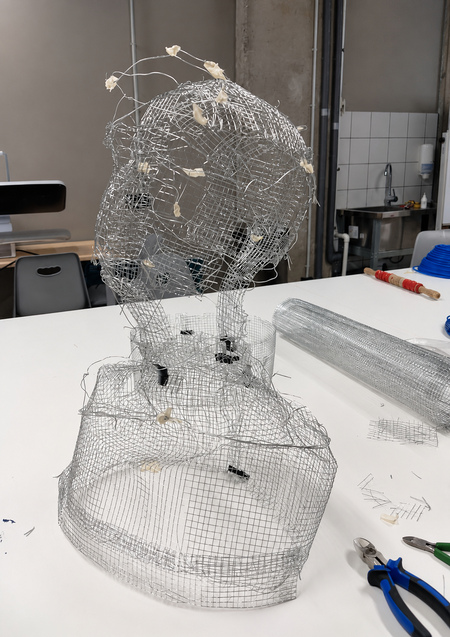
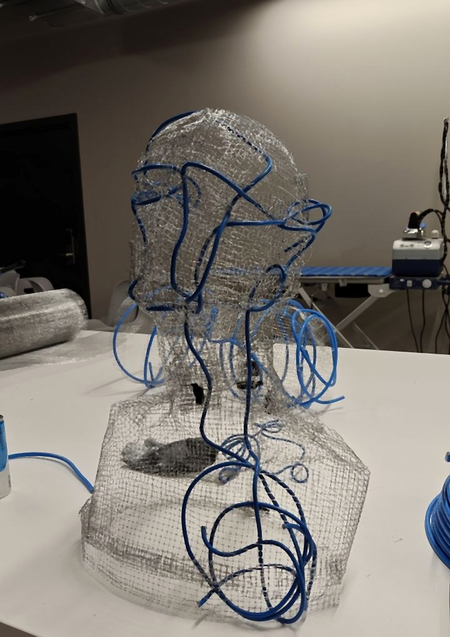
As primary materials, the brand provided metal mesh and wires of various colors and diameters. The metal mesh formed the framework of the art object: using hand-shaping techniques, it was given the anatomical contours of a human torso and head. Then, the surface of the framework was successively wrapped with wires, securing them to the mesh and weaving them together.
The framework was based on a plaster cast of Michelangelo’s David.
Initial stage of work
Creating a framework from a mesh
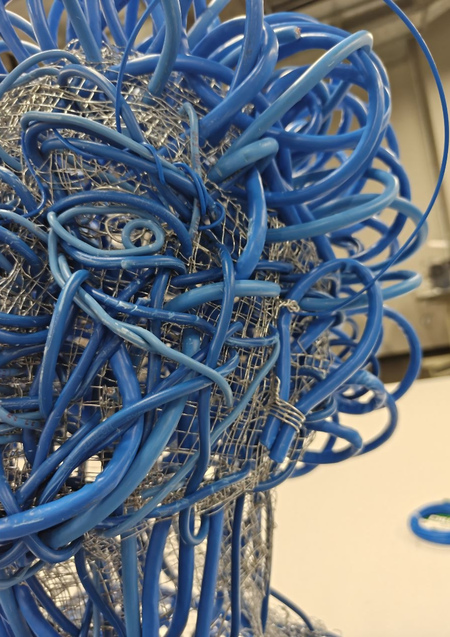
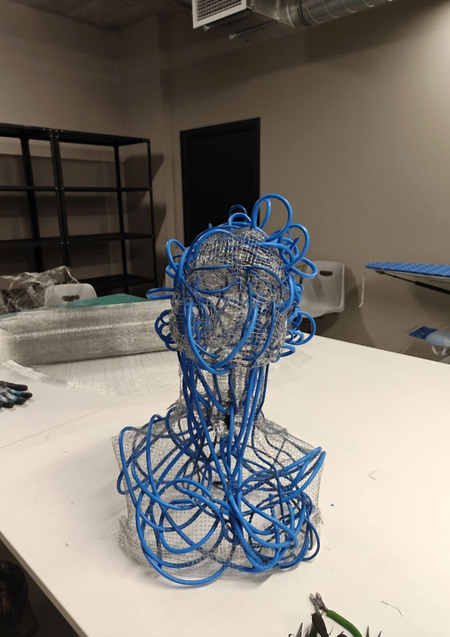
The process of weaving a core from wires of various colors and sizes
the process of weaving wire through a metal mesh
Art object in the retail space
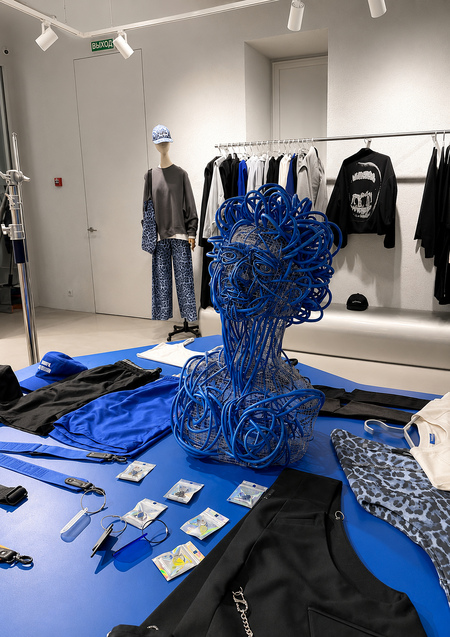
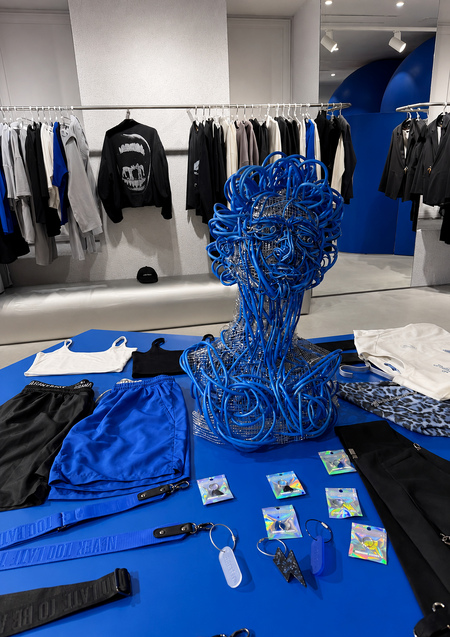
creativeteam: Nikita Zelepukhin Kirill Gavrilov Polina Polinik Maria Biryukova Darya Popova Anna Romanova