Table of Contents
1.Concept 2.Anatomy in Renaissance 3.Michelangelo and Anatomy 4.Madonna of the Stairs 5.Battle of the Centaurs 6.Pietà 7.Bacchus 8.David 9.Moses 10.Slave 11.The Deposition (Florentine Pietà) 12.Rondanini Pietà 13.Brutus 14.Conclusion
Concept
Michelangelo’s sculptures don’t just sit there—they live. His work captures something more than just the human body. It captures the energy of life itself. His figures feel like they’re about to move, like they’re holding their breath or bracing for something. The detail is astonishing the way muscles stretch, tendons pull, skin folds—it’s so real, it almost feels impossible. But Michelangelo wasn’t just about technical skill. For him, the body was a way to tell a story, to reveal emotion and spirit. He wasn’t content to just copy what he saw; he wanted to understand how the body worked, how it carried the soul. That’s why he went to extraordinary lengths, even secretly dissecting corpses to learn how flesh, bone, and muscle all fit together.
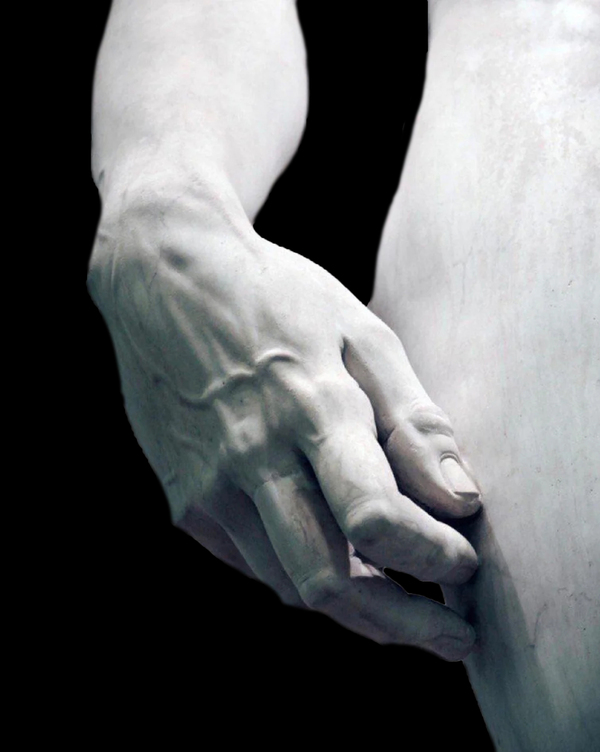
When you look at David, you can see all of this in action. At first, you notice how perfect he is, every muscle and sinew carved with incredible precision. But the longer you look, the more you see the tension in his stance, the way his body twists ever so slightly, as if he’s caught mid-thought. There’s strength in him, yes, but also vulnerability—like he knows the challenge ahead is massive, but he’s ready to face it anyway. That’s what makes David so compelling. He’s not just a statue of a hero; he is a hero, full of the same doubts and resolve that anyone might feel before a fight.
And then there’s the Pietà. It’s one of those works that stays with you. Mary holding the body of Christ—there’s something almost unbearably tender about it. Her face is calm, but it’s the kind of calm that comes from deep, overwhelming grief. You can feel the weight of his body in her lap, the lifelessness of it. And yet, the sculpture isn’t just sad—it’s peaceful too. Michelangelo captured something profoundly human in this piece: the balance between heartbreak and acceptance, between loss and love. He turned cold marble into something that feels soft, even warm. You can almost sense the quiet in the moment he’s showing you.
Michelangelo was inspired by classical ideals, by the perfect proportions and harmony of Greek and Roman art. But he didn’t stop there. His work isn’t detached or serene like a lot of classical art; it’s full of raw energy. His figures don’t just look alive—they feel alive. He used his deep understanding of anatomy to make his sculptures move you. Every muscle and vein is there for a reason. It’s not just about making the figure look real, it’s about making you feel the tension in their body, the power or the pain they’re holding inside.
Moses is a perfect example. He’s sitting, but everything about him feels charged. His muscles are tight, his hands look like they could snap into action at any moment, and his expression is fierce. There’s frustration in his face, but also wisdom and authority. You can sense the weight he’s carrying—the responsibility, the divine mission, the human struggle. Michelangelo didn’t just carve a leader; he carved a man wrestling with something much bigger than himself.
What’s amazing is how Michelangelo got there. His secret dissections weren’t just about breaking the rules or satisfying his curiosity. He was trying to understand life on the deepest level. He wanted to see how everything worked, how movement happened, how the body carried emotion. But he didn’t stop at the physical. He went beyond it, combining his knowledge with an artist’s intuition to create figures that feel more human than human. His sculptures aren’t perfect in the sense of being flawless—they’re perfect because they’re alive, because they’re filled with emotion and story.
What makes Michelangelo’s art timeless is how deeply it connects with us. His work isn’t just about beauty or technical skill, though he had plenty of both. It’s about the things we all share—strength, vulnerability, grief, hope, struggle. He used the body to speak to something universal, something that still resonates centuries later. His sculptures remind us that even in stone, there’s a way to capture life, to freeze a moment so real it feels like it could breathe. Michelangelo wasn’t just a genius. He was a storyteller, carving humanity itself into marble. That’s why his work will always feel alive.
Anatomy in Renaissance
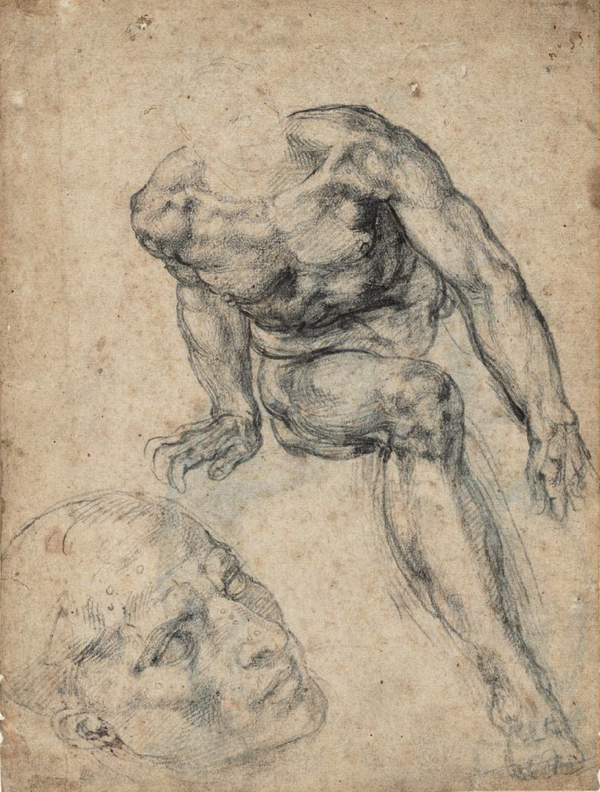
Michelangelo, Seated male nude, separate study of his right arm
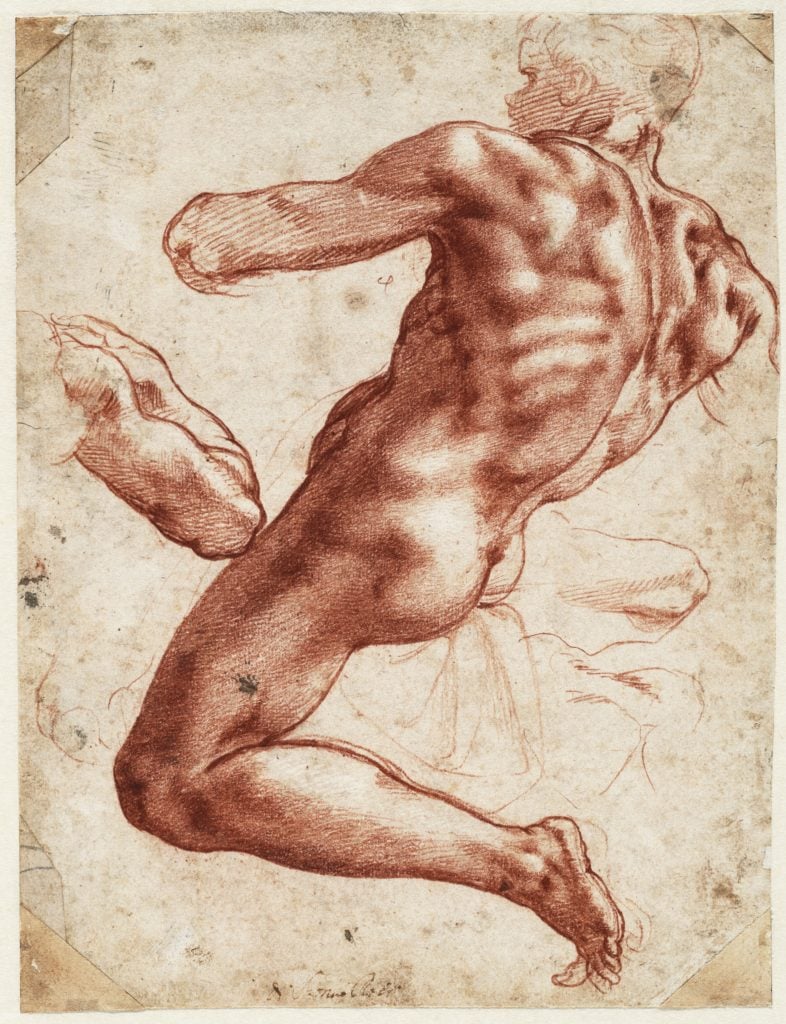
Michelangelo, Various figure studies
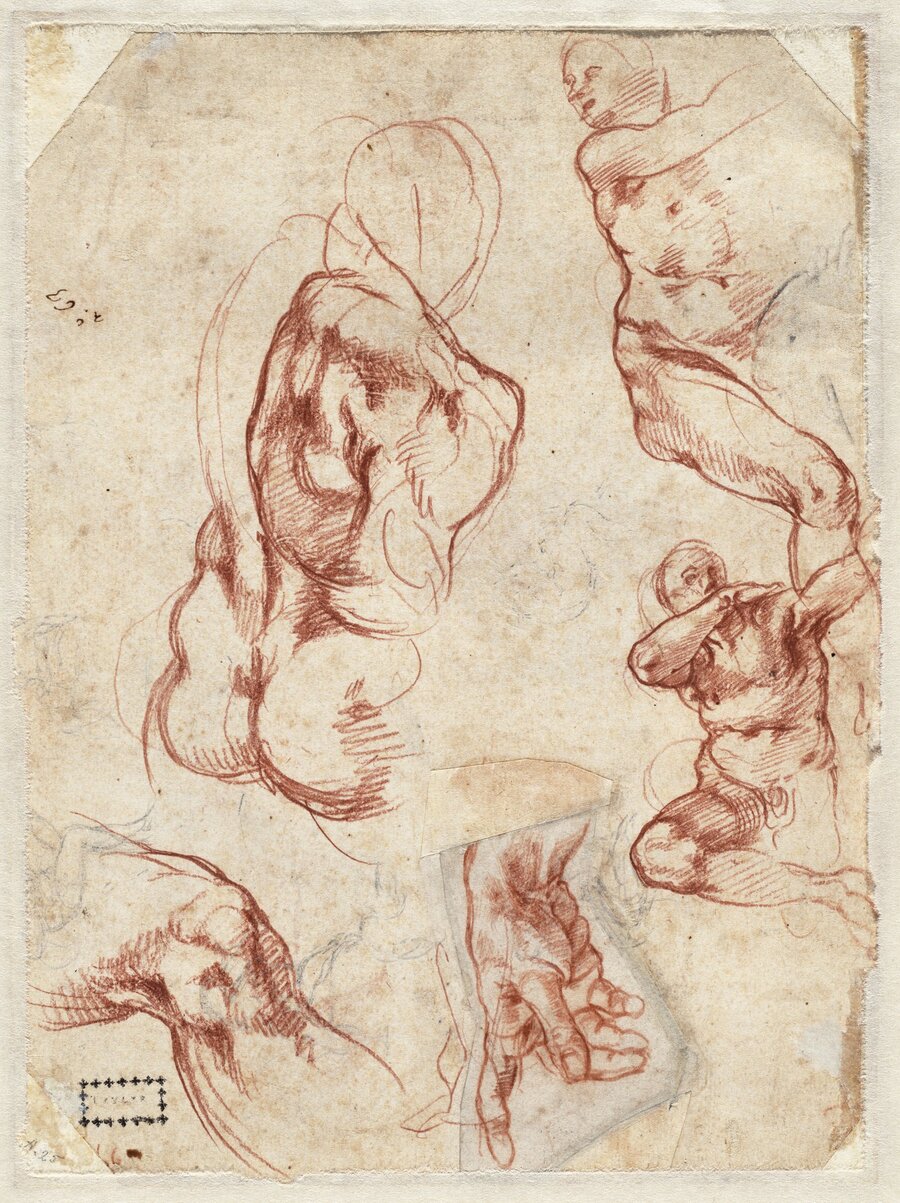
The Renaissance was a complete rebirth and development period that included innovations in all aspects, such as political, economic, philosophical, cultural, artistic, and scientific.
Michelangelo, Male nude, turning to the right; studies of anatomical details
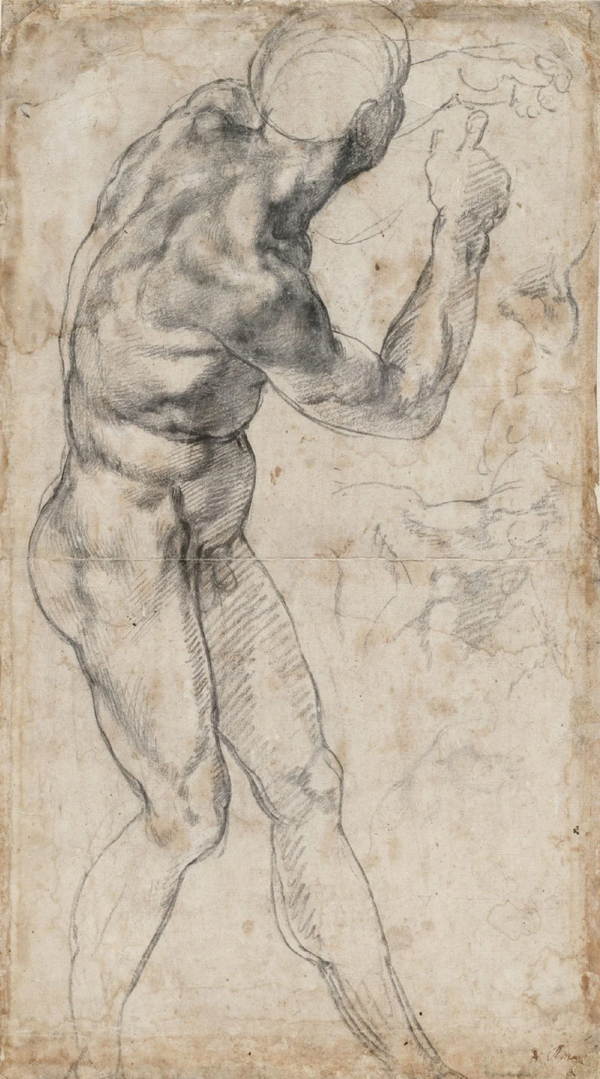
Michelangelo, Four studies, including two for a crucified figure
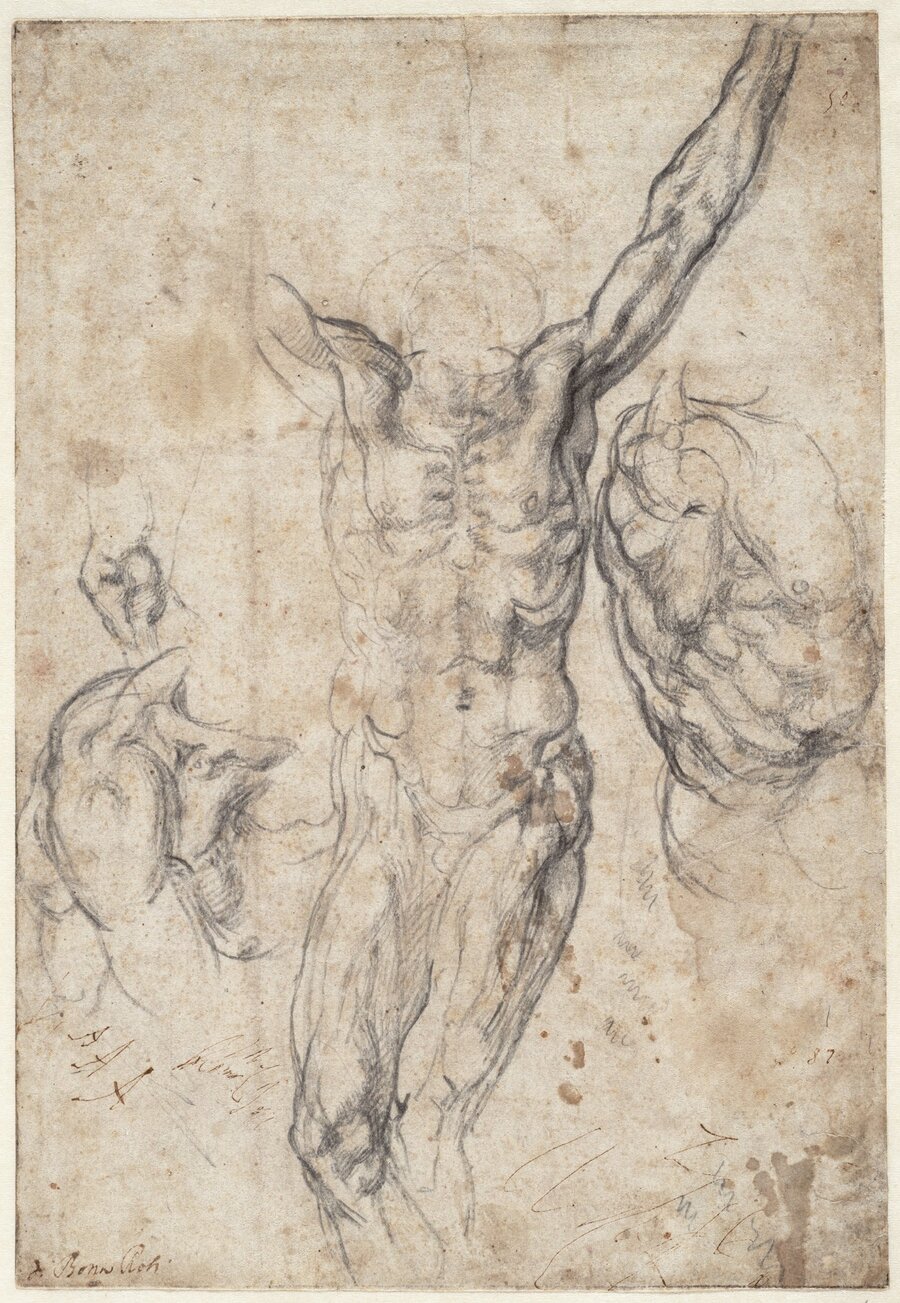
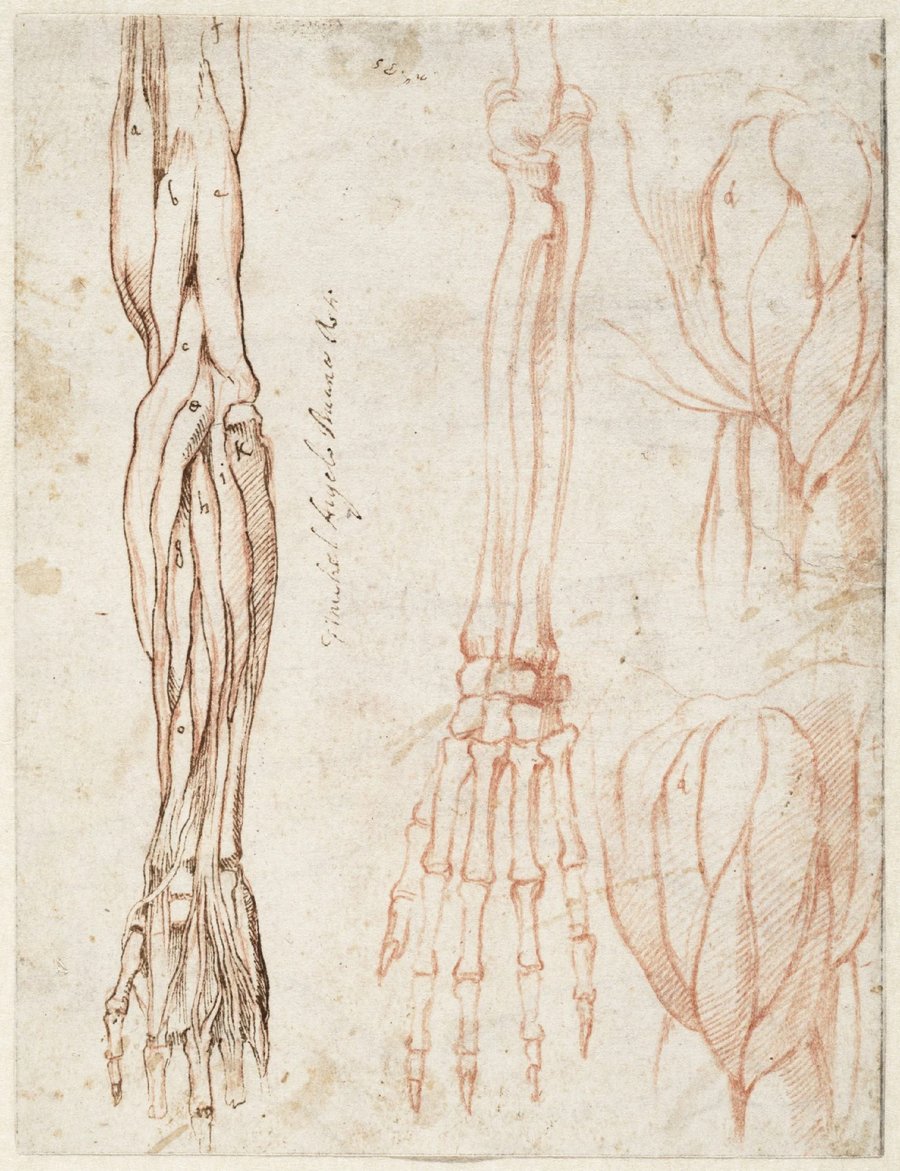
The Renaissance was like a laboratory for extensive scientific and artistic creation, covering the study of the human body for medical and artistic purposes. Alongside the quest for scientific naturalism among renaissance artists, scientific knowledge, particularly regarding anatomy, became increasingly significant in artistic creation.
Michelangelo, Studies of a left arm and a shoulder
Michelangelo, Studies of a neck and shoulder, from the back and side
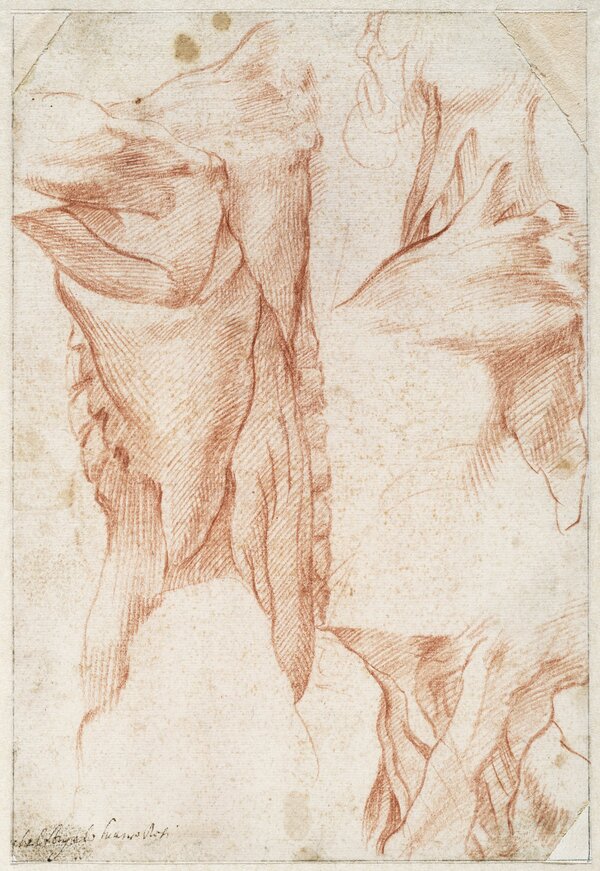
Thus, numerous artists had to conduct anatomical studies to understand the human form and provide material for their artworks. As a result, there was a new situation in which renaissance artists led medical progress and promoted anatomical development.
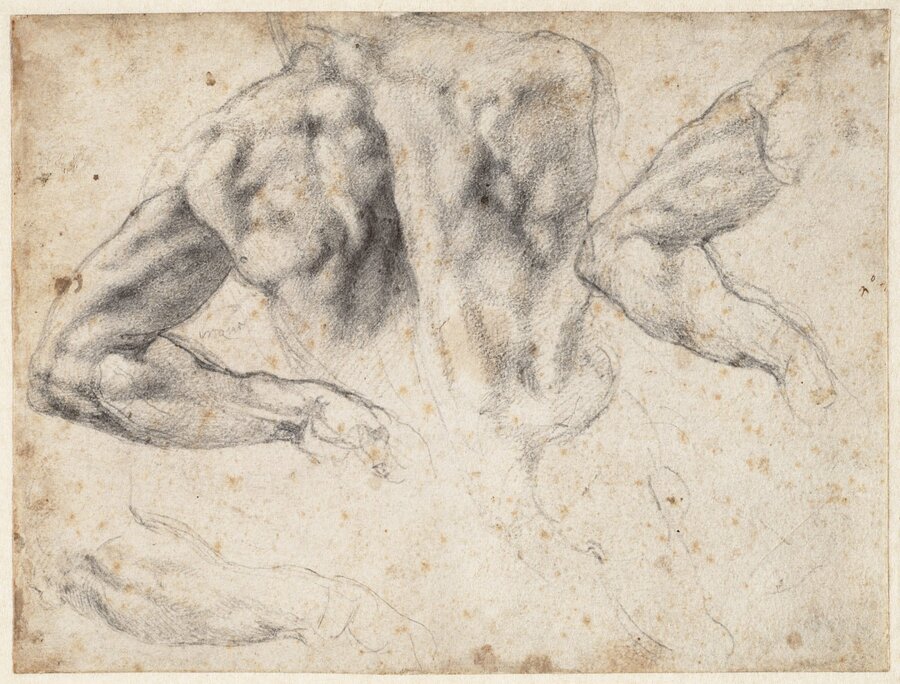
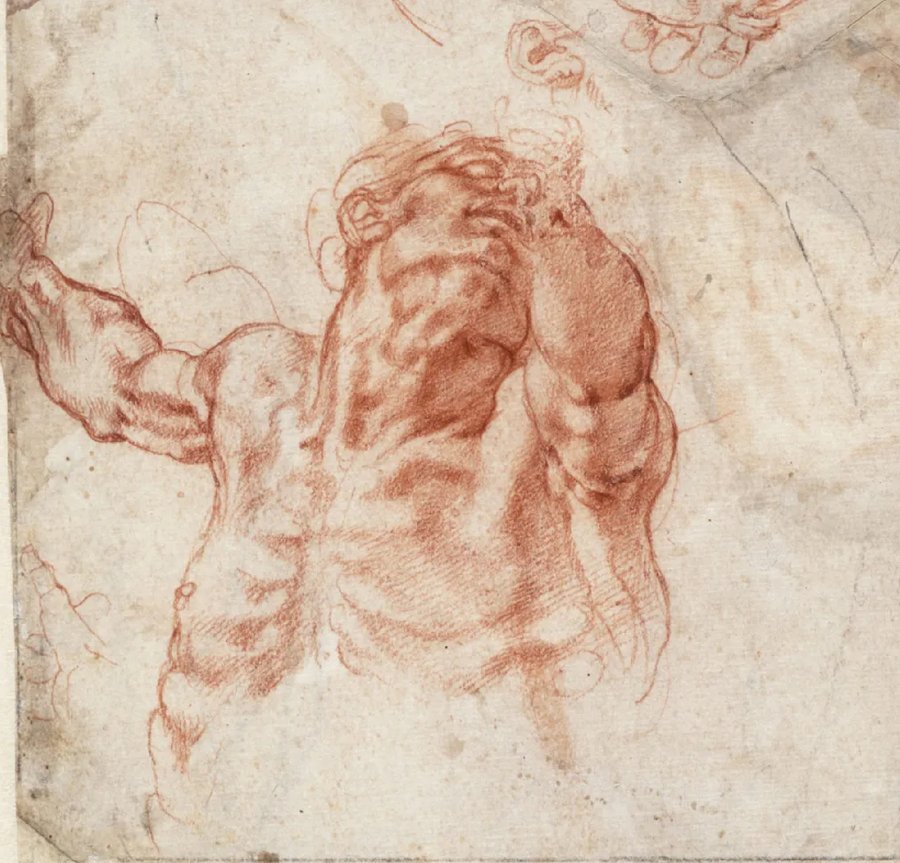
Michelangelo, Study of the back and left arm of a male nude
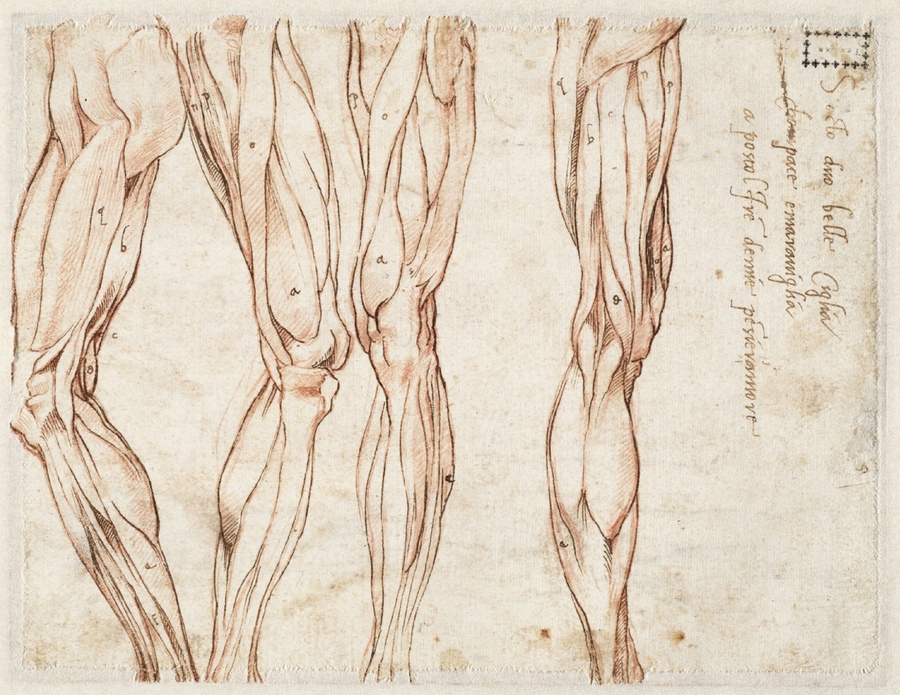
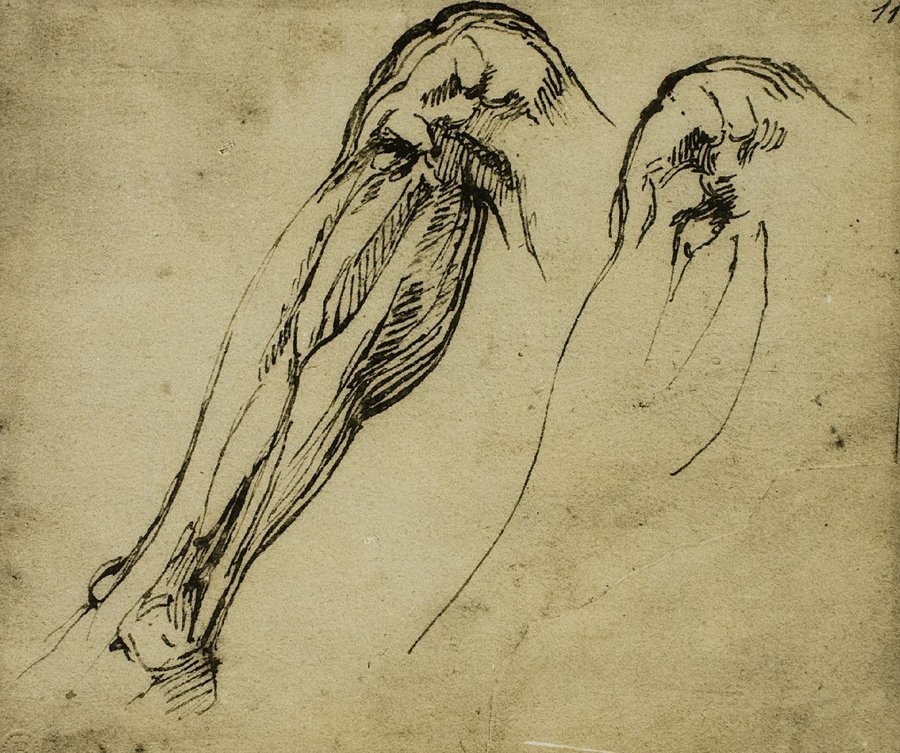
Michelangelo, Studies of a knee
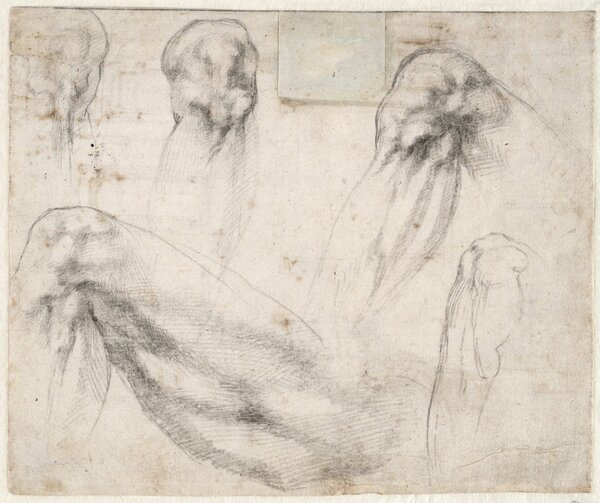
At that time, there were strict restrictions on human dissection, for instance, prohibiting private dissections and only allowing public dissections by local physicians, as well as limiting the origin of cadavers, with only the bodies of criminals allowed to be dissected.Despite this, many artists spared no effort to find ways to study human anatomy, of whom Michelangelo was one.
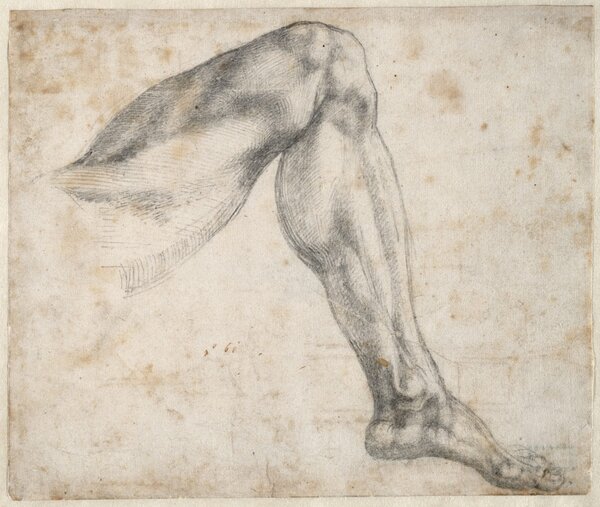
Michelangelo, Studies of leg
Michelangelo and Anatomy
Michelangelo, Studies of the upper body of a women
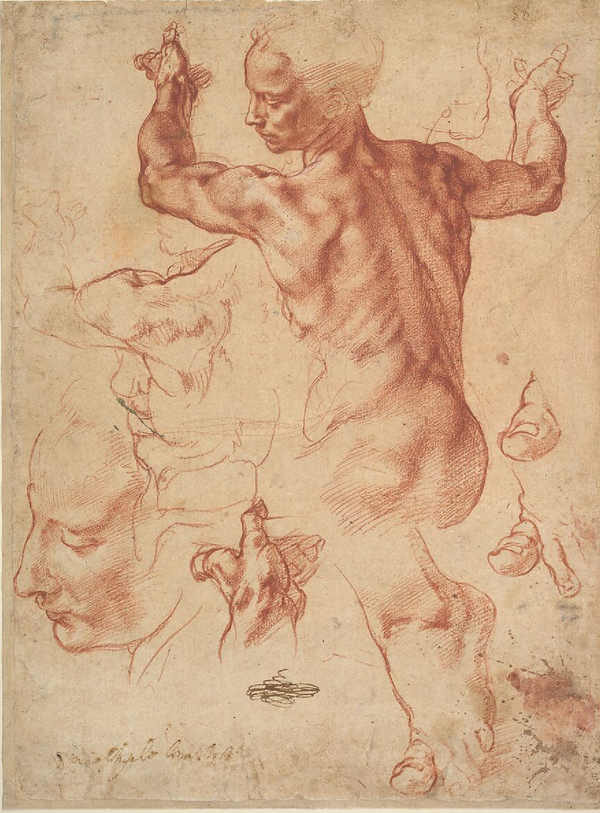
Michelangelo, Studies of the upper body of a man
As one of the most representative figures of the Renaissance, Michelangelo’s research covered many fields, such as natural science and art, and he made a breakthrough in applying anatomy to his artworks.
Michelangelo, Studies of a knee
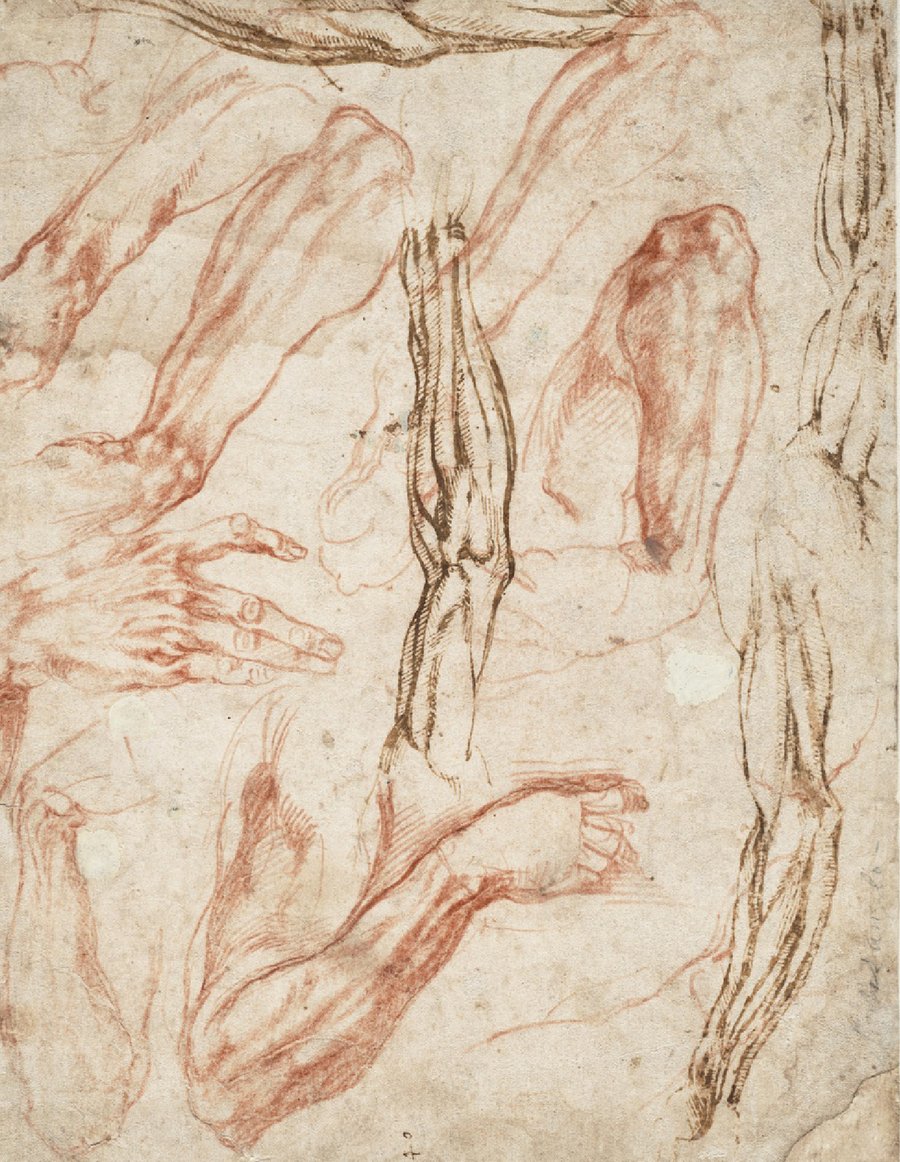
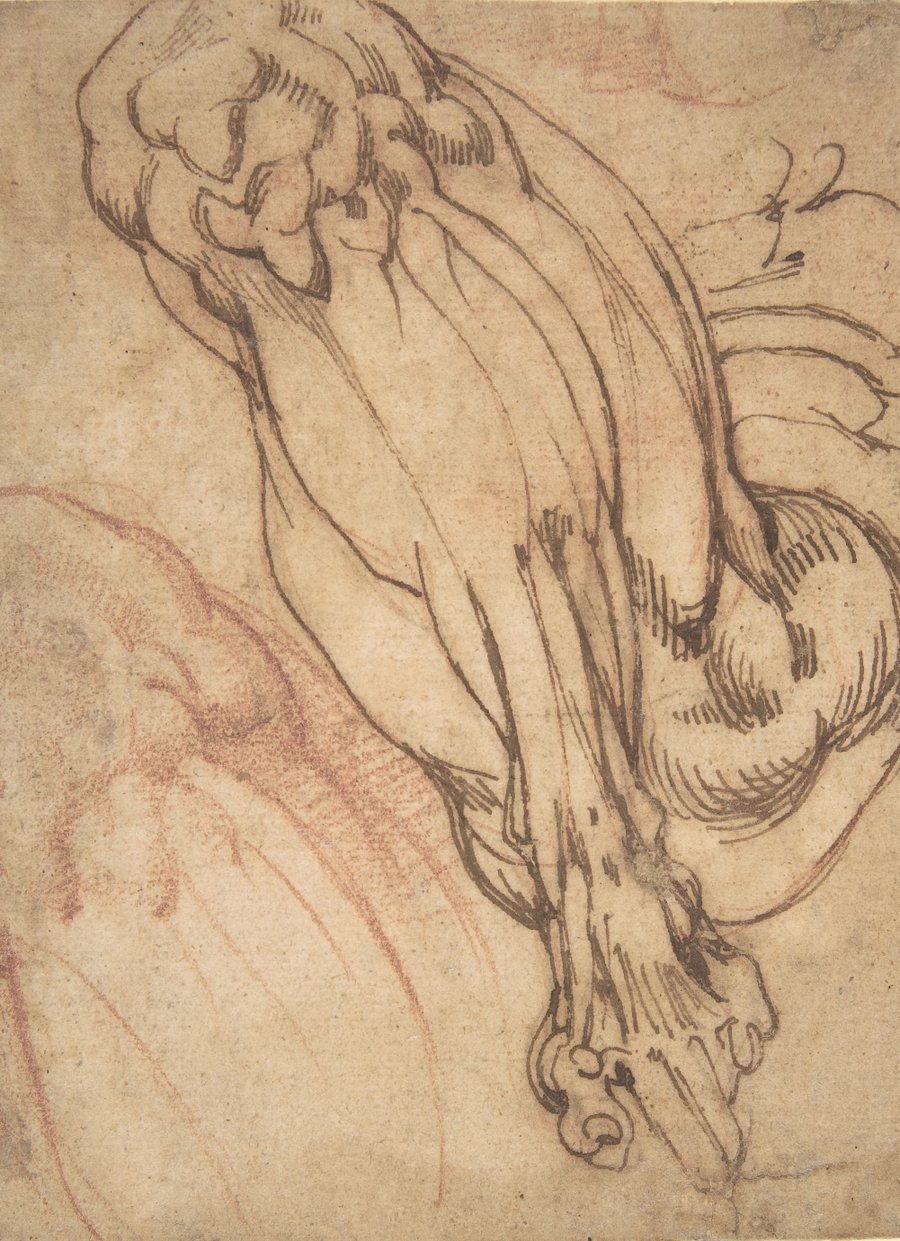
He was eager to explore all the anatomical principles and rules related to art. His keen interest in Michelangelo in anatomy gave him a deeper insight into the human body, which was conducive to his progress in artistic creation.
Michelangelo, A man abducting a woman
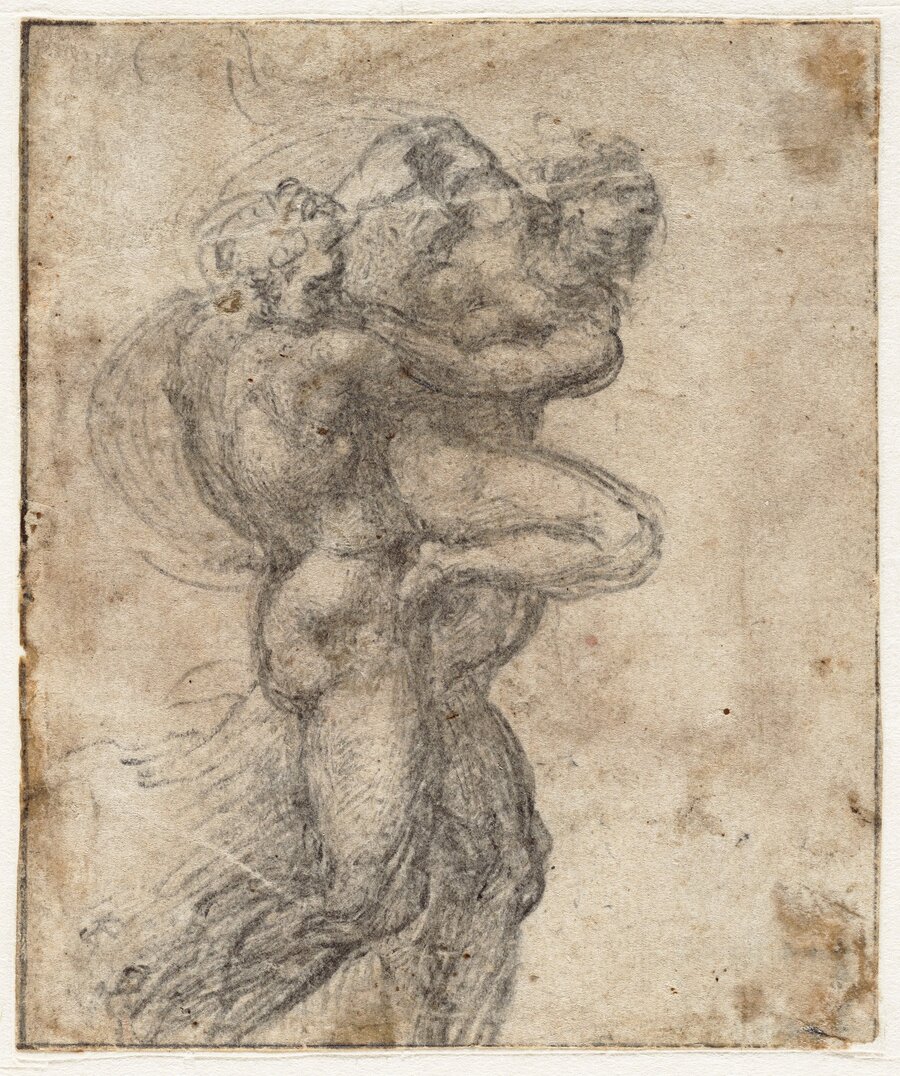
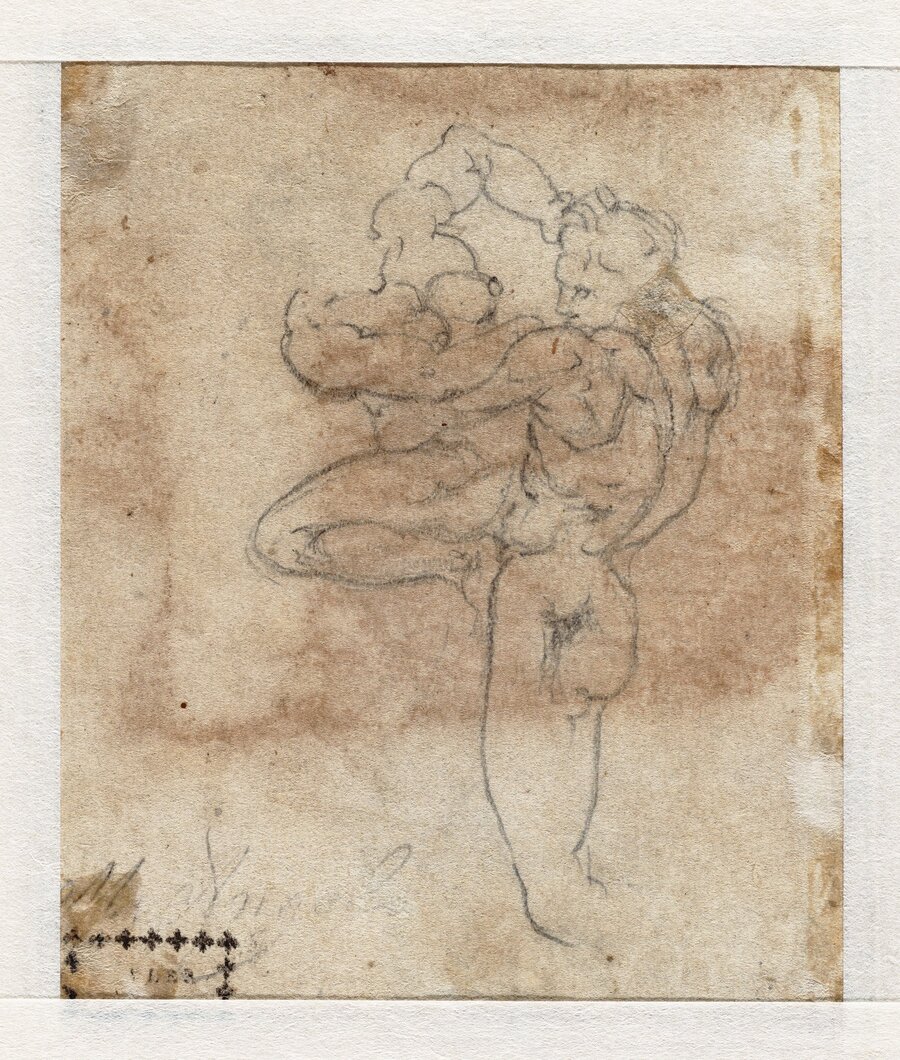
In The Life of an Artists, Vasari writes that Michelangelo was extremely drawn to artistic tasks. In order to achieve complete perfection, he conducted countless anatomical studies, dissecting cadavers to understand the constructive principle and the combinations of bones, muscles, veins, and nerves, as well as the various movements and all the postures of the human body.
Michelangelo, Studies of a man body and a knee
Madonna of the Stairs
This low-relief sculpture presents the Virgin Mary gently holding the infant Jesus. Inspired by Donatello’s relief techniques, the piece demonstrates Michelangelo’s budding style, using delicate lines to evoke an intimate connection between mother and child.